Company dynamics
2026-07-14
Another Year, Another Milestone: Thank You, Shanghai!
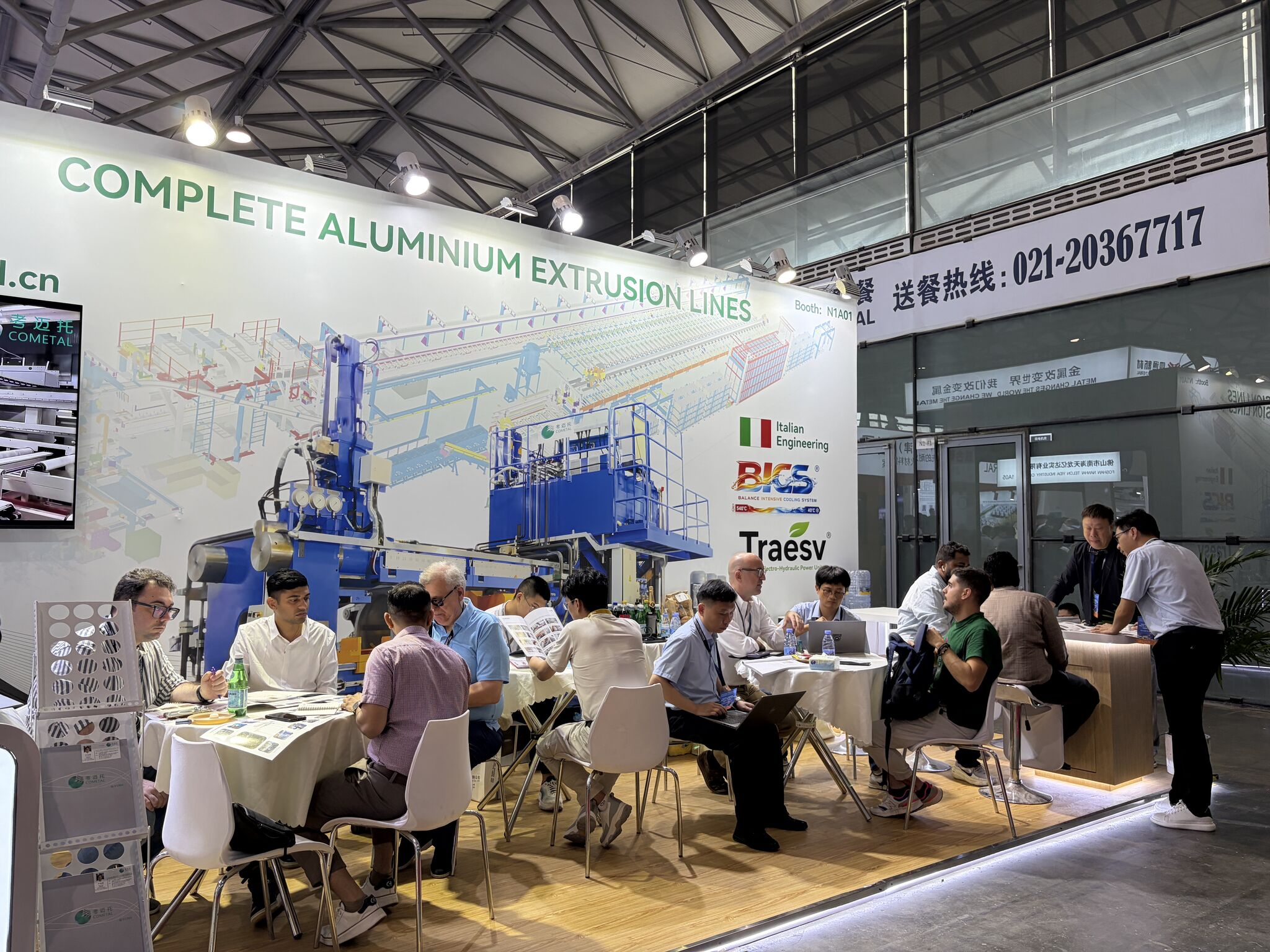
<p><span style="color: rgba(0, 0, 0, 0.9); font-family: -apple-system, system-ui, BlinkMacSystemFont, "Segoe UI", Roboto, "Helvetica Neue", "Fira Sans", Ubuntu, Oxygen, "Oxygen Sans", Cantarell, "Droid Sans", "Apple Color Emoji", "Segoe UI Emoji", "Segoe UI Emoji", "Segoe UI Symbol", "Lucida Grande", Helvetica, Arial, sans-serif; font-size: 14px; background-color: rgb(255, 255, 255);">The annual Aluminum China exhibition has come to a successful close. As we reflect on these past few days in Shanghai, we are filled with gratitude for the meaningful connections we’ve made.</span><span style="box-sizing: inherit; margin: 0px; padding: 0px; border-color: rgba(0, 0, 0, 0.9); border-style: none; border-width: 0px; border-image: none 100% / 1 / 0 stretch; font-size: 14px; vertical-align: baseline; background: none 0% 0% / auto repeat scroll padding-box border-box rgb(255, 255, 255); outline: rgba(0, 0, 0, 0.9) none 0px; font-family: -apple-system, system-ui, BlinkMacSystemFont, "Segoe UI", Roboto, "Helvetica Neue", "Fira Sans", Ubuntu, Oxygen, "Oxygen Sans", Cantarell, "Droid Sans", "Apple Color Emoji", "Segoe UI Emoji", "Segoe UI Emoji", "Segoe UI Symbol", "Lucida Grande", Helvetica, Arial, sans-serif; color: rgba(0, 0, 0, 0.9); line-height: inherit !important;"><br style="box-sizing: inherit; line-height: inherit !important;"/></span><span style="color: rgba(0, 0, 0, 0.9); font-family: -apple-system, system-ui, BlinkMacSystemFont, "Segoe UI", Roboto, "Helvetica Neue", "Fira Sans", Ubuntu, Oxygen, "Oxygen Sans", Cantarell, "Droid Sans", "Apple Color Emoji", "Segoe UI Emoji", "Segoe UI Emoji", "Segoe UI Symbol", "Lucida Grande", Helvetica, Arial, sans-serif; font-size: 14px; background-color: rgb(255, 255, 255);">Our booth became more than just a display; it turned into a hub for "annual reunions." As many of our long-term clients told us, "Meeting Cometal here in Shanghai has become a tradition." This sentiment is exactly what drives us forward. It’s more than just business; it’s a shared journey of innovation and growth in the aluminum extrusion industry.</span><span style="box-sizing: inherit; margin: 0px; padding: 0px; border-color: rgba(0, 0, 0, 0.9); border-style: none; border-width: 0px; border-image: none 100% / 1 / 0 stretch; font-size: 14px; vertical-align: baseline; background: none 0% 0% / auto repeat scroll padding-box border-box rgb(255, 255, 255); outline: rgba(0, 0, 0, 0.9) none 0px; font-family: -apple-system, system-ui, BlinkMacSystemFont, "Segoe UI", Roboto, "Helvetica Neue", "Fira Sans", Ubuntu, Oxygen, "Oxygen Sans", Cantarell, "Droid Sans", "Apple Color Emoji", "Segoe UI Emoji", "Segoe UI Emoji", "Segoe UI Symbol", "Lucida Grande", Helvetica, Arial, sans-serif; color: rgba(0, 0, 0, 0.9); line-height: inherit !important;"><br style="box-sizing: inherit; line-height: inherit !important;"/></span><span style="color: rgba(0, 0, 0, 0.9); font-family: -apple-system, system-ui, BlinkMacSystemFont, "Segoe UI", Roboto, "Helvetica Neue", "Fira Sans", Ubuntu, Oxygen, "Oxygen Sans", Cantarell, "Droid Sans", "Apple Color Emoji", "Segoe UI Emoji", "Segoe UI Emoji", "Segoe UI Symbol", "Lucida Grande", Helvetica, Arial, sans-serif; font-size: 14px; background-color: rgb(255, 255, 255);">From catching up with old friends to discussing new projects and technical challenges with potential partners, the energy was incredible. We were especially excited to hear about the new production requirements and expansion plans our clients are tackling.</span><span style="box-sizing: inherit; margin: 0px; padding: 0px; border-color: rgba(0, 0, 0, 0.9); border-style: none; border-width: 0px; border-image: none 100% / 1 / 0 stretch; font-size: 14px; vertical-align: baseline; background: none 0% 0% / auto repeat scroll padding-box border-box rgb(255, 255, 255); outline: rgba(0, 0, 0, 0.9) none 0px; font-family: -apple-system, system-ui, BlinkMacSystemFont, "Segoe UI", Roboto, "Helvetica Neue", "Fira Sans", Ubuntu, Oxygen, "Oxygen Sans", Cantarell, "Droid Sans", "Apple Color Emoji", "Segoe UI Emoji", "Segoe UI Emoji", "Segoe UI Symbol", "Lucida Grande", Helvetica, Arial, sans-serif; color: rgba(0, 0, 0, 0.9); line-height: inherit !important;"><br style="box-sizing: inherit; line-height: inherit !important;"/></span><span style="color: rgba(0, 0, 0, 0.9); font-family: -apple-system, system-ui, BlinkMacSystemFont, "Segoe UI", Roboto, "Helvetica Neue", "Fira Sans", Ubuntu, Oxygen, "Oxygen Sans", Cantarell, "Droid Sans", "Apple Color Emoji", "Segoe UI Emoji", "Segoe UI Emoji", "Segoe UI Symbol", "Lucida Grande", Helvetica, Arial, sans-serif; font-size: 14px; background-color: rgb(255, 255, 255);">At Cometal, we believe our success is measured by yours. Whether you are a partner of many years or a new contact we met this week, thank you for trusting us with your extrusion needs.</span><span style="box-sizing: inherit; margin: 0px; padding: 0px; border-color: rgba(0, 0, 0, 0.9); border-style: none; border-width: 0px; border-image: none 100% / 1 / 0 stretch; font-size: 14px; vertical-align: baseline; background: none 0% 0% / auto repeat scroll padding-box border-box rgb(255, 255, 255); outline: rgba(0, 0, 0, 0.9) none 0px; font-family: -apple-system, system-ui, BlinkMacSystemFont, "Segoe UI", Roboto, "Helvetica Neue", "Fira Sans", Ubuntu, Oxygen, "Oxygen Sans", Cantarell, "Droid Sans", "Apple Color Emoji", "Segoe UI Emoji", "Segoe UI Emoji", "Segoe UI Symbol", "Lucida Grande", Helvetica, Arial, sans-serif; color: rgba(0, 0, 0, 0.9); line-height: inherit !important;"><br style="box-sizing: inherit; line-height: inherit !important;"/></span><span style="color: rgba(0, 0, 0, 0.9); font-family: -apple-system, system-ui, BlinkMacSystemFont, "Segoe UI", Roboto, "Helvetica Neue", "Fira Sans", Ubuntu, Oxygen, "Oxygen Sans", Cantarell, "Droid Sans", "Apple Color Emoji", "Segoe UI Emoji", "Segoe UI Emoji", "Segoe UI Symbol", "Lucida Grande", Helvetica, Arial, sans-serif; font-size: 14px; background-color: rgb(255, 255, 255);">Our team is already back in Foshan, processing all the inquiries and feedback from the show. We will be reaching out soon to turn these conversations into actionable solutions for your production lines.</span><span style="box-sizing: inherit; margin: 0px; padding: 0px; border-color: rgba(0, 0, 0, 0.9); border-style: none; border-width: 0px; border-image: none 100% / 1 / 0 stretch; font-size: 14px; vertical-align: baseline; background: none 0% 0% / auto repeat scroll padding-box border-box rgb(255, 255, 255); outline: rgba(0, 0, 0, 0.9) none 0px; font-family: -apple-system, system-ui, BlinkMacSystemFont, "Segoe UI", Roboto, "Helvetica Neue", "Fira Sans", Ubuntu, Oxygen, "Oxygen Sans", Cantarell, "Droid Sans", "Apple Color Emoji", "Segoe UI Emoji", "Segoe UI Emoji", "Segoe UI Symbol", "Lucida Grande", Helvetica, Arial, sans-serif; color: rgba(0, 0, 0, 0.9); line-height: inherit !important;"><br style="box-sizing: inherit; line-height: inherit !important;"/></span><span style="color: rgba(0, 0, 0, 0.9); font-family: -apple-system, system-ui, BlinkMacSystemFont, "Segoe UI", Roboto, "Helvetica Neue", "Fira Sans", Ubuntu, Oxygen, "Oxygen Sans", Cantarell, "Droid Sans", "Apple Color Emoji", "Segoe UI Emoji", "Segoe UI Emoji", "Segoe UI Symbol", "Lucida Grande", Helvetica, Arial, sans-serif; font-size: 14px; background-color: rgb(255, 255, 255);">See you next year, or better yet—see you at your factory!</span></p><p><a class="GVhQpAUZPmbNntedqtXaIqgidncVcYxvCOHpbM " tabindex="0" href="https://www.linkedin.com/search/results/all/?keywords=%23cometal&origin=HASH_TAG_FROM_FEED" data-test-app-aware-link="" style="box-sizing: inherit; margin: 0px; padding: 0px; font-size: 14px; vertical-align: baseline; background: none 0% 0% / auto repeat scroll padding-box border-box rgb(255, 255, 255); text-decoration: rgb(10, 102, 194); font-weight: 600; border-color: rgb(10, 102, 194); border-style: none; border-width: 0px; border-image: none 100% / 1 / 0 stretch; color: rgb(10, 102, 194); font-family: -apple-system, system-ui, BlinkMacSystemFont, "Segoe UI", Roboto, "Helvetica Neue", "Fira Sans", Ubuntu, Oxygen, "Oxygen Sans", Cantarell, "Droid Sans", "Apple Color Emoji", "Segoe UI Emoji", "Segoe UI Emoji", "Segoe UI Symbol", "Lucida Grande", Helvetica, Arial, sans-serif; touch-action: manipulation; position: relative; word-break: normal; overflow-wrap: normal; white-space: normal; display: inline-block; line-height: inherit !important;"><span class="visually-hidden" style="box-sizing: inherit; vertical-align: baseline; background: none 0% 0% / auto repeat scroll padding-box border-box rgba(0, 0, 0, 0); outline: rgb(10, 102, 194) none 0px; overflow: hidden; clip: rect(1px, 1px, 1px, 1px); margin: -1px !important; padding: 0px !important; border: 0px !important; width: 1px !important; height: 1px !important; display: block !important; position: absolute !important; line-height: inherit !important;">hashtag</span><span style="box-sizing: inherit; margin: 0px; padding: 0px; border-color: rgb(10, 102, 194); border-style: none; border-width: 0px; border-image: none 100% / 1 / 0 stretch; vertical-align: baseline; background: none 0% 0% / auto repeat scroll padding-box border-box rgba(0, 0, 0, 0); outline: rgb(10, 102, 194) none 0px; line-height: inherit !important;"><span aria-hidden="true" style="box-sizing: inherit; margin: 0px; padding: 0px; border-color: rgb(10, 102, 194); border-style: none; border-width: 0px; border-image: none 100% / 1 / 0 stretch; vertical-align: baseline; background: none 0% 0% / auto repeat scroll padding-box border-box rgba(0, 0, 0, 0); outline: rgb(10, 102, 194) none 0px; line-height: inherit !important;">#</span>Cometal</span></a><span class="white-space-pre" style="box-sizing: inherit; margin: 0px; padding: 0px; border-color: rgba(0, 0, 0, 0.9); border-style: none; border-width: 0px; border-image: none 100% / 1 / 0 stretch; font-size: 14px; vertical-align: baseline; background: none 0% 0% / auto repeat scroll padding-box border-box rgb(255, 255, 255); outline: rgba(0, 0, 0, 0.9) none 0px; font-family: -apple-system, system-ui, BlinkMacSystemFont, "Segoe UI", Roboto, "Helvetica Neue", "Fira Sans", Ubuntu, Oxygen, "Oxygen Sans", Cantarell, "Droid Sans", "Apple Color Emoji", "Segoe UI Emoji", "Segoe UI Emoji", "Segoe UI Symbol", "Lucida Grande", Helvetica, Arial, sans-serif; color: rgba(0, 0, 0, 0.9); white-space: pre !important; line-height: inherit !important;"> </span><a class="GVhQpAUZPmbNntedqtXaIqgidncVcYxvCOHpbM " tabindex="0" href="https://www.linkedin.com/search/results/all/?keywords=%23aluminumextrusion&origin=HASH_TAG_FROM_FEED" data-test-app-aware-link="" style="box-sizing: inherit; margin: 0px; padding: 0px; font-size: 14px; vertical-align: baseline; background: none 0% 0% / auto repeat scroll padding-box border-box rgb(255, 255, 255); text-decoration: rgb(10, 102, 194); font-weight: 600; border-color: rgb(10, 102, 194); border-style: none; border-width: 0px; border-image: none 100% / 1 / 0 stretch; color: rgb(10, 102, 194); font-family: -apple-system, system-ui, BlinkMacSystemFont, "Segoe UI", Roboto, "Helvetica Neue", "Fira Sans", Ubuntu, Oxygen, "Oxygen Sans", Cantarell, "Droid Sans", "Apple Color Emoji", "Segoe UI Emoji", "Segoe UI Emoji", "Segoe UI Symbol", "Lucida Grande", Helvetica, Arial, sans-serif; touch-action: manipulation; position: relative; word-break: normal; overflow-wrap: normal; white-space: normal; display: inline-block; line-height: inherit !important;"><span class="visually-hidden" style="box-sizing: inherit; vertical-align: baseline; background: none 0% 0% / auto repeat scroll padding-box border-box rgba(0, 0, 0, 0); outline: rgb(10, 102, 194) none 0px; overflow: hidden; clip: rect(1px, 1px, 1px, 1px); margin: -1px !important; padding: 0px !important; border: 0px !important; width: 1px !important; height: 1px !important; display: block !important; position: absolute !important; line-height: inherit !important;">hashtag</span><span style="box-sizing: inherit; margin: 0px; padding: 0px; border-color: rgb(10, 102, 194); border-style: none; border-width: 0px; border-image: none 100% / 1 / 0 stretch; vertical-align: baseline; background: none 0% 0% / auto repeat scroll padding-box border-box rgba(0, 0, 0, 0); outline: rgb(10, 102, 194) none 0px; line-height: inherit !important;"><span aria-hidden="true" style="box-sizing: inherit; margin: 0px; padding: 0px; border-color: rgb(10, 102, 194); border-style: none; border-width: 0px; border-image: none 100% / 1 / 0 stretch; vertical-align: baseline; background: none 0% 0% / auto repeat scroll padding-box border-box rgba(0, 0, 0, 0); outline: rgb(10, 102, 194) none 0px; line-height: inherit !important;">#</span>AluminumExtrusion</span></a><span class="white-space-pre" style="box-sizing: inherit; margin: 0px; padding: 0px; border-color: rgba(0, 0, 0, 0.9); border-style: none; border-width: 0px; border-image: none 100% / 1 / 0 stretch; font-size: 14px; vertical-align: baseline; background: none 0% 0% / auto repeat scroll padding-box border-box rgb(255, 255, 255); outline: rgba(0, 0, 0, 0.9) none 0px; font-family: -apple-system, system-ui, BlinkMacSystemFont, "Segoe UI", Roboto, "Helvetica Neue", "Fira Sans", Ubuntu, Oxygen, "Oxygen Sans", Cantarell, "Droid Sans", "Apple Color Emoji", "Segoe UI Emoji", "Segoe UI Emoji", "Segoe UI Symbol", "Lucida Grande", Helvetica, Arial, sans-serif; color: rgba(0, 0, 0, 0.9); white-space: pre !important; line-height: inherit !important;"> </span><a class="GVhQpAUZPmbNntedqtXaIqgidncVcYxvCOHpbM " tabindex="0" href="https://www.linkedin.com/search/results/all/?keywords=%23aluminumchina2026&origin=HASH_TAG_FROM_FEED" data-test-app-aware-link="" style="box-sizing: inherit; margin: 0px; padding: 0px; font-size: 14px; vertical-align: baseline; background: none 0% 0% / auto repeat scroll padding-box border-box rgb(255, 255, 255); text-decoration: rgb(10, 102, 194); font-weight: 600; border-color: rgb(10, 102, 194); border-style: none; border-width: 0px; border-image: none 100% / 1 / 0 stretch; color: rgb(10, 102, 194); font-family: -apple-system, system-ui, BlinkMacSystemFont, "Segoe UI", Roboto, "Helvetica Neue", "Fira Sans", Ubuntu, Oxygen, "Oxygen Sans", Cantarell, "Droid Sans", "Apple Color Emoji", "Segoe UI Emoji", "Segoe UI Emoji", "Segoe UI Symbol", "Lucida Grande", Helvetica, Arial, sans-serif; touch-action: manipulation; position: relative; word-break: normal; overflow-wrap: normal; white-space: normal; display: inline-block; line-height: inherit !important;"><span class="visually-hidden" style="box-sizing: inherit; vertical-align: baseline; background: none 0% 0% / auto repeat scroll padding-box border-box rgba(0, 0, 0, 0); outline: rgb(10, 102, 194) none 0px; overflow: hidden; clip: rect(1px, 1px, 1px, 1px); margin: -1px !important; padding: 0px !important; border: 0px !important; width: 1px !important; height: 1px !important; display: block !important; position: absolute !important; line-height: inherit !important;">hashtag</span><span style="box-sizing: inherit; margin: 0px; padding: 0px; border-color: rgb(10, 102, 194); border-style: none; border-width: 0px; border-image: none 100% / 1 / 0 stretch; vertical-align: baseline; background: none 0% 0% / auto repeat scroll padding-box border-box rgba(0, 0, 0, 0); outline: rgb(10, 102, 194) none 0px; line-height: inherit !important;"><span aria-hidden="true" style="box-sizing: inherit; margin: 0px; padding: 0px; border-color: rgb(10, 102, 194); border-style: none; border-width: 0px; border-image: none 100% / 1 / 0 stretch; vertical-align: baseline; background: none 0% 0% / auto repeat scroll padding-box border-box rgba(0, 0, 0, 0); outline: rgb(10, 102, 194) none 0px; line-height: inherit !important;">#</span>AluminumChina2026</span></a><span class="white-space-pre" style="box-sizing: inherit; margin: 0px; padding: 0px; border-color: rgba(0, 0, 0, 0.9); border-style: none; border-width: 0px; border-image: none 100% / 1 / 0 stretch; font-size: 14px; vertical-align: baseline; background: none 0% 0% / auto repeat scroll padding-box border-box rgb(255, 255, 255); outline: rgba(0, 0, 0, 0.9) none 0px; font-family: -apple-system, system-ui, BlinkMacSystemFont, "Segoe UI", Roboto, "Helvetica Neue", "Fira Sans", Ubuntu, Oxygen, "Oxygen Sans", Cantarell, "Droid Sans", "Apple Color Emoji", "Segoe UI Emoji", "Segoe UI Emoji", "Segoe UI Symbol", "Lucida Grande", Helvetica, Arial, sans-serif; color: rgba(0, 0, 0, 0.9); white-space: pre !important; line-height: inherit !important;"> </span><a class="GVhQpAUZPmbNntedqtXaIqgidncVcYxvCOHpbM " tabindex="0" href="https://www.linkedin.com/search/results/all/?keywords=%23industryinnovation&origin=HASH_TAG_FROM_FEED" data-test-app-aware-link="" style="box-sizing: inherit; margin: 0px; padding: 0px; font-size: 14px; vertical-align: baseline; background: none 0% 0% / auto repeat scroll padding-box border-box rgb(255, 255, 255); text-decoration: rgb(10, 102, 194); font-weight: 600; border-color: rgb(10, 102, 194); border-style: none; border-width: 0px; border-image: none 100% / 1 / 0 stretch; color: rgb(10, 102, 194); font-family: -apple-system, system-ui, BlinkMacSystemFont, "Segoe UI", Roboto, "Helvetica Neue", "Fira Sans", Ubuntu, Oxygen, "Oxygen Sans", Cantarell, "Droid Sans", "Apple Color Emoji", "Segoe UI Emoji", "Segoe UI Emoji", "Segoe UI Symbol", "Lucida Grande", Helvetica, Arial, sans-serif; touch-action: manipulation; position: relative; word-break: normal; overflow-wrap: normal; white-space: normal; display: inline-block; line-height: inherit !important;"><span class="visually-hidden" style="box-sizing: inherit; vertical-align: baseline; background: none 0% 0% / auto repeat scroll padding-box border-box rgba(0, 0, 0, 0); outline: rgb(10, 102, 194) none 0px; overflow: hidden; clip: rect(1px, 1px, 1px, 1px); margin: -1px !important; padding: 0px !important; border: 0px !important; width: 1px !important; height: 1px !important; display: block !important; position: absolute !important; line-height: inherit !important;">hashtag</span><span style="box-sizing: inherit; margin: 0px; padding: 0px; border-color: rgb(10, 102, 194); border-style: none; border-width: 0px; border-image: none 100% / 1 / 0 stretch; vertical-align: baseline; background: none 0% 0% / auto repeat scroll padding-box border-box rgba(0, 0, 0, 0); outline: rgb(10, 102, 194) none 0px; line-height: inherit !important;"><span aria-hidden="true" style="box-sizing: inherit; margin: 0px; padding: 0px; border-color: rgb(10, 102, 194); border-style: none; border-width: 0px; border-image: none 100% / 1 / 0 stretch; vertical-align: baseline; background: none 0% 0% / auto repeat scroll padding-box border-box rgba(0, 0, 0, 0); outline: rgb(10, 102, 194) none 0px; line-height: inherit !important;">#</span>IndustryInnovation</span></a><span class="white-space-pre" style="box-sizing: inherit; margin: 0px; padding: 0px; border-color: rgba(0, 0, 0, 0.9); border-style: none; border-width: 0px; border-image: none 100% / 1 / 0 stretch; font-size: 14px; vertical-align: baseline; background: none 0% 0% / auto repeat scroll padding-box border-box rgb(255, 255, 255); outline: rgba(0, 0, 0, 0.9) none 0px; font-family: -apple-system, system-ui, BlinkMacSystemFont, "Segoe UI", Roboto, "Helvetica Neue", "Fira Sans", Ubuntu, Oxygen, "Oxygen Sans", Cantarell, "Droid Sans", "Apple Color Emoji", "Segoe UI Emoji", "Segoe UI Emoji", "Segoe UI Symbol", "Lucida Grande", Helvetica, Arial, sans-serif; color: rgba(0, 0, 0, 0.9); white-space: pre !important; line-height: inherit !important;"> </span><a class="GVhQpAUZPmbNntedqtXaIqgidncVcYxvCOHpbM " tabindex="0" href="https://www.linkedin.com/search/results/all/?keywords=%23extrusiontechnology&origin=HASH_TAG_FROM_FEED" data-test-app-aware-link="" style="box-sizing: inherit; margin: 0px; padding: 0px; font-size: 14px; vertical-align: baseline; background: none 0% 0% / auto repeat scroll padding-box border-box rgb(255, 255, 255); text-decoration: rgb(10, 102, 194); font-weight: 600; border-color: rgb(10, 102, 194); border-style: none; border-width: 0px; border-image: none 100% / 1 / 0 stretch; color: rgb(10, 102, 194); font-family: -apple-system, system-ui, BlinkMacSystemFont, "Segoe UI", Roboto, "Helvetica Neue", "Fira Sans", Ubuntu, Oxygen, "Oxygen Sans", Cantarell, "Droid Sans", "Apple Color Emoji", "Segoe UI Emoji", "Segoe UI Emoji", "Segoe UI Symbol", "Lucida Grande", Helvetica, Arial, sans-serif; touch-action: manipulation; position: relative; word-break: normal; overflow-wrap: normal; white-space: normal; display: inline-block; line-height: inherit !important;"><span class="visually-hidden" style="box-sizing: inherit; vertical-align: baseline; background: none 0% 0% / auto repeat scroll padding-box border-box rgba(0, 0, 0, 0); outline: rgb(10, 102, 194) none 0px; overflow: hidden; clip: rect(1px, 1px, 1px, 1px); margin: -1px !important; padding: 0px !important; border: 0px !important; width: 1px !important; height: 1px !important; display: block !important; position: absolute !important; line-height: inherit !important;">hashtag</span><span style="box-sizing: inherit; margin: 0px; padding: 0px; border-color: rgb(10, 102, 194); border-style: none; border-width: 0px; border-image: none 100% / 1 / 0 stretch; vertical-align: baseline; background: none 0% 0% / auto repeat scroll padding-box border-box rgba(0, 0, 0, 0); outline: rgb(10, 102, 194) none 0px; line-height: inherit !important;"><span aria-hidden="true" style="box-sizing: inherit; margin: 0px; padding: 0px; border-color: rgb(10, 102, 194); border-style: none; border-width: 0px; border-image: none 100% / 1 / 0 stretch; vertical-align: baseline; background: none 0% 0% / auto repeat scroll padding-box border-box rgba(0, 0, 0, 0); outline: rgb(10, 102, 194) none 0px; line-height: inherit !important;">#</span>ExtrusionTechnology</span></a><span class="white-space-pre" style="box-sizing: inherit; margin: 0px; padding: 0px; border-color: rgba(0, 0, 0, 0.9); border-style: none; border-width: 0px; border-image: none 100% / 1 / 0 stretch; font-size: 14px; vertical-align: baseline; background: none 0% 0% / auto repeat scroll padding-box border-box rgb(255, 255, 255); outline: rgba(0, 0, 0, 0.9) none 0px; font-family: -apple-system, system-ui, BlinkMacSystemFont, "Segoe UI", Roboto, "Helvetica Neue", "Fira Sans", Ubuntu, Oxygen, "Oxygen Sans", Cantarell, "Droid Sans", "Apple Color Emoji", "Segoe UI Emoji", "Segoe UI Emoji", "Segoe UI Symbol", "Lucida Grande", Helvetica, Arial, sans-serif; color: rgba(0, 0, 0, 0.9); white-space: pre !important; line-height: inherit !important;"> </span><a class="GVhQpAUZPmbNntedqtXaIqgidncVcYxvCOHpbM " tabindex="0" href="https://www.linkedin.com/search/results/all/?keywords=%23manufacturingexcellence&origin=HASH_TAG_FROM_FEED" data-test-app-aware-link="" style="box-sizing: inherit; margin: 0px; padding: 0px; font-size: 14px; vertical-align: baseline; background: none 0% 0% / auto repeat scroll padding-box border-box rgb(255, 255, 255); text-decoration: rgb(10, 102, 194); font-weight: 600; border-color: rgb(10, 102, 194); border-style: none; border-width: 0px; border-image: none 100% / 1 / 0 stretch; color: rgb(10, 102, 194); font-family: -apple-system, system-ui, BlinkMacSystemFont, "Segoe UI", Roboto, "Helvetica Neue", "Fira Sans", Ubuntu, Oxygen, "Oxygen Sans", Cantarell, "Droid Sans", "Apple Color Emoji", "Segoe UI Emoji", "Segoe UI Emoji", "Segoe UI Symbol", "Lucida Grande", Helvetica, Arial, sans-serif; touch-action: manipulation; position: relative; word-break: normal; overflow-wrap: normal; white-space: normal; display: inline-block; line-height: inherit !important;"><span class="visually-hidden" style="box-sizing: inherit; vertical-align: baseline; background: none 0% 0% / auto repeat scroll padding-box border-box rgba(0, 0, 0, 0); outline: rgb(10, 102, 194) none 0px; overflow: hidden; clip: rect(1px, 1px, 1px, 1px); margin: -1px !important; padding: 0px !important; border: 0px !important; width: 1px !important; height: 1px !important; display: block !important; position: absolute !important; line-height: inherit !important;">hashtag</span><span style="box-sizing: inherit; margin: 0px; padding: 0px; border-color: rgb(10, 102, 194); border-style: none; border-width: 0px; border-image: none 100% / 1 / 0 stretch; vertical-align: baseline; background: none 0% 0% / auto repeat scroll padding-box border-box rgba(0, 0, 0, 0); outline: rgb(10, 102, 194) none 0px; line-height: inherit !important;"><span aria-hidden="true" style="box-sizing: inherit; margin: 0px; padding: 0px; border-color: rgb(10, 102, 194); border-style: none; border-width: 0px; border-image: none 100% / 1 / 0 stretch; vertical-align: baseline; background: none 0% 0% / auto repeat scroll padding-box border-box rgba(0, 0, 0, 0); outline: rgb(10, 102, 194) none 0px; line-height: inherit !important;">#</span>ManufacturingExcellence</span></a><span class="white-space-pre" style="box-sizing: inherit; margin: 0px; padding: 0px; border-color: rgba(0, 0, 0, 0.9); border-style: none; border-width: 0px; border-image: none 100% / 1 / 0 stretch; font-size: 14px; vertical-align: baseline; background: none 0% 0% / auto repeat scroll padding-box border-box rgb(255, 255, 255); outline: rgba(0, 0, 0, 0.9) none 0px; font-family: -apple-system, system-ui, BlinkMacSystemFont, "Segoe UI", Roboto, "Helvetica Neue", "Fira Sans", Ubuntu, Oxygen, "Oxygen Sans", Cantarell, "Droid Sans", "Apple Color Emoji", "Segoe UI Emoji", "Segoe UI Emoji", "Segoe UI Symbol", "Lucida Grande", Helvetica, Arial, sans-serif; color: rgba(0, 0, 0, 0.9); white-space: pre !important; line-height: inherit !important;"> </span><a class="GVhQpAUZPmbNntedqtXaIqgidncVcYxvCOHpbM " tabindex="0" href="https://www.linkedin.com/search/results/all/?keywords=%23globalpartnership&origin=HASH_TAG_FROM_FEED" data-test-app-aware-link="" style="box-sizing: inherit; margin: 0px; padding: 0px; font-size: 14px; vertical-align: baseline; background: none 0% 0% / auto repeat scroll padding-box border-box rgb(255, 255, 255); text-decoration: rgb(10, 102, 194); font-weight: 600; border-color: rgb(10, 102, 194); border-style: none; border-width: 0px; border-image: none 100% / 1 / 0 stretch; color: rgb(10, 102, 194); font-family: -apple-system, system-ui, BlinkMacSystemFont, "Segoe UI", Roboto, "Helvetica Neue", "Fira Sans", Ubuntu, Oxygen, "Oxygen Sans", Cantarell, "Droid Sans", "Apple Color Emoji", "Segoe UI Emoji", "Segoe UI Emoji", "Segoe UI Symbol", "Lucida Grande", Helvetica, Arial, sans-serif; touch-action: manipulation; position: relative; word-break: normal; overflow-wrap: normal; white-space: normal; display: inline-block; line-height: inherit !important;"><span class="visually-hidden" style="box-sizing: inherit; vertical-align: baseline; background: none 0% 0% / auto repeat scroll padding-box border-box rgba(0, 0, 0, 0); outline: rgb(10, 102, 194) none 0px; overflow: hidden; clip: rect(1px, 1px, 1px, 1px); margin: -1px !important; padding: 0px !important; border: 0px !important; width: 1px !important; height: 1px !important; display: block !important; position: absolute !important; line-height: inherit !important;">hashtag</span><span style="box-sizing: inherit; margin: 0px; padding: 0px; border-color: rgb(10, 102, 194); border-style: none; border-width: 0px; border-image: none 100% / 1 / 0 stretch; vertical-align: baseline; background: none 0% 0% / auto repeat scroll padding-box border-box rgba(0, 0, 0, 0); outline: rgb(10, 102, 194) none 0px; line-height: inherit !important;"><span aria-hidden="true" style="box-sizing: inherit; margin: 0px; padding: 0px; border-color: rgb(10, 102, 194); border-style: none; border-width: 0px; border-image: none 100% / 1 / 0 stretch; vertical-align: baseline; background: none 0% 0% / auto repeat scroll padding-box border-box rgba(0, 0, 0, 0); outline: rgb(10, 102, 194) none 0px; line-height: inherit !important;">#</span>GlobalPartnership</span></a></p>
Company dynamics
2026-11-05
25 MN vs 55 MN vs 125 MN Aluminum Extrusion Lines: Application Fit and Procurement Checks
<h2 style="page-break-after:avoid"><strong><span style="font-family: Calibri;color: rgb(31, 78, 121);font-size: 27px">Why Press Tonnage Is Only One Procurement Input</span></strong></h2><p><span style="font-family: Calibri;color: rgb(35, 35, 35);font-size: 17px">Press tonnage describes the nominal force available at the extrusion stem, but it does not define the commercial capability of an aluminum extrusion line. A 55 MN press can be a poor fit for a plant with short cooling beds and limited stretcher capacity, while a 25 MN line can outperform a larger press on a narrow family of small profiles if its billet handling and die changes are better organized. Procurement teams therefore need to compare press capacity with the complete material and product route.</span></p><p><span style="font-family: Calibri;color: rgb(35, 35, 35);font-size: 17px">The useful comparison starts with the intended product envelope and works backward through die load, billet size, container conditions, quench requirements, puller control, stretching, sawing, stacking, and aging. This sequence prevents a common purchasing error: buying the largest press that fits the budget and then discovering that the surrounding line cannot convert its force into stable output. The comparison should use verified operating assumptions rather than catalog tonnage alone.</span></p><h3 style="page-break-after:avoid"><strong><span style="font-family: Calibri;color: rgb(47, 85, 151);font-size: 21px">Capacity, Geometry, and Product Mix</span></strong></h3><h4 style="page-break-after:avoid"><strong><span style="font-family: Calibri;color: rgb(59, 78, 99);font-size: 19px">Profile Envelope and Extrusion Ratio</span></strong></h4><p><span style="font-family: Calibri;color: rgb(35, 35, 35);font-size: 17px">Extrusion ratio is the relationship between billet cross-section and finished profile cross-section. It rises when a larger billet is forced through a smaller die opening, which increases deformation work and sensitivity to alloy, temperature, die design, and press speed. A press with high nominal force may still produce unacceptable surface quality if the die set, container temperature, or quench path is poorly matched to the profile. A lower-force line may be preferable when the product mix is dominated by simple, thin-wall sections that need precise handling rather than maximum pressure.</span></p><p><span style="font-family: Calibri;color: rgb(35, 35, 35);font-size: 17px">The product envelope should be assessed as a family, not as one showcase profile. Buyers should provide drawings for the smallest, largest, thinnest, widest, and most asymmetric shapes expected over the next three to five years. The supplier should then identify which profiles require a larger container, specialized die support, billet heating control, or downstream tension. This evidence is more valuable than a broad statement that a line can handle many profile types because it shows where the proposed configuration reaches its technical limits.</span></p><h4 style="page-break-after:avoid"><strong><span style="font-family: Calibri;color: rgb(59, 78, 99);font-size: 19px">Billet Diameter and Container Pressure</span></strong></h4><p><span style="font-family: Calibri;color: rgb(35, 35, 35);font-size: 17px">Billet diameter affects the available billet mass, the container bore, and the pressure required to achieve a target extrusion speed. Increasing billet size can improve yield per billet and reduce loading frequency, but it also changes the thermal mass, the dummy block interface, and the amount of discard. The press frame and container must be evaluated together because a larger container does not automatically create a better production system. It changes the operating window and the maintenance burden.</span></p><p><span style="font-family: Calibri;color: rgb(35, 35, 35);font-size: 17px">Container pressure, temperature uniformity, and alignment deserve explicit review during procurement. AEC process guidance treats billet preparation and press setup as linked stages, not isolated equipment decisions. The buyer should ask for the design pressure basis, container liner condition, cooling arrangement, and spare-part plan. These details determine whether the line can maintain repeatable dimensions after months of production rather than only during acceptance trials.</span></p><h4 style="page-break-after:avoid"><strong><span style="font-family: Calibri;color: rgb(59, 78, 99);font-size: 19px">Throughput, Cycle Time, and Handling Length</span></strong></h4><p><span style="font-family: Calibri;color: rgb(35, 35, 35);font-size: 17px">Throughput is created by the interaction of press cycle, quench, puller travel, cooling-bed length, stretcher opening, saw capacity, and stacker logic. A larger press that runs at a long cycle because the billet furnace or puller cannot keep pace does not deliver proportional value. Similarly, a finishing saw sized for a short cooling bed can become the hidden bottleneck when the product mix includes long architectural profiles.</span></p><p><span style="font-family: Calibri;color: rgb(35, 35, 35);font-size: 17px">A practical procurement model uses the intended mix to calculate a realistic cycle-time range and then checks every station against that range. The calculation should include die changes, billet loading, butt removal, quench delay, stretching, saw changes, and packaging. If the supplier provides only a headline tons-per-hour figure, the buyer should request the assumptions, product examples, and station-by-station cycle logic behind it.</span></p><h2 style="page-break-after:avoid"><strong><span style="font-family: Calibri;color: rgb(31, 78, 121);font-size: 27px"> </span></strong></h2><h2 style="page-break-after:avoid"><strong><span style="font-family: Calibri;color: rgb(31, 78, 121);font-size: 27px">How the Three Capacity Tiers Differ in Application Context</span></strong></h2><p><span style="font-family: Calibri;color: rgb(35, 35, 35);font-size: 17px">The three capacities represent different operating envelopes rather than a simple good-better-best ladder. Application fit depends on shape complexity, alloy family, annual volume, handling length, automation expectations, and the plant space available for the complete line. </span><span style="font-family: 宋体;color: rgb(35, 35, 35);font-size: 17px"><span style="font-family:Calibri">Cometal</span></span><span style="font-family: Calibri;color: rgb(35, 35, 35);font-size: 17px"> presents a portfolio that includes 25 MN, 55 MN, and 125 MN automatic extrusion line examples, which makes tier comparison useful only when each example is linked to a defined product and operating case.</span></p><h3 style="page-break-after:avoid"><strong><span style="font-family: Calibri;color: rgb(47, 85, 151);font-size: 21px">25 MN Lines</span></strong></h3><p><span style="font-family: 宋体;color: rgb(35, 35, 35);font-size: 17px"><span style="font-family:Calibri">Cometal</span></span><span style="font-family: Calibri;color: rgb(35, 35, 35);font-size: 17px">'s 25 MN automatic aluminum extrusion line is presented on the product site as part of a range that extends from 11 MN to 125 MN. The 25 MN tier is generally relevant to smaller profiles, moderate billet sizes, and production cells where flexibility and changeover discipline matter. It can suit a focused product family or a plant that needs a compact line with coordinated handling, but it is not a universal substitute for a larger press when die load and profile width approach the upper boundary.</span></p><p><span style="font-family: Calibri;color: rgb(35, 35, 35);font-size: 17px">The main procurement question is whether the whole line is designed around a coherent 25 MN product envelope. Buyers should compare the press with billet heating capacity, quench control, puller range, cooling-bed length, stretcher force, and stacker configuration. A compact line can be efficient when those stations share the same cycle logic. It becomes costly when each station is selected independently and the operator has to compensate for mismatched speeds.</span></p><h3 style="page-break-after:avoid"><strong><span style="font-family: Calibri;color: rgb(47, 85, 151);font-size: 21px">55 MN Lines</span></strong></h3><p><span style="font-family: Calibri;color: rgb(35, 35, 35);font-size: 17px">A 55 MN line typically sits in the middle of the range and may support a broader mix of medium and complex profiles. The procurement opportunity is flexibility, but the risk is overgeneralization. A supplier may describe the tier as suitable for many markets without showing the die load, container size, quench sensitivity, or downstream limits that define the real application window. Buyers should require profile trials or simulation evidence for the most demanding shapes in the planned mix.</span></p><p><span style="font-family: Calibri;color: rgb(35, 35, 35);font-size: 17px">This tier often becomes the center of a brownfield or growth project because it can support more ambitious sections without moving immediately to the largest press class. The evaluation should test whether the proposed automation supports frequent die changes and whether the aging and finishing route can absorb the added output. A 55 MN press with weak logistics can create more work in progress without improving delivery performance.</span></p><h3 style="page-break-after:avoid"><strong><span style="font-family: Calibri;color: rgb(47, 85, 151);font-size: 21px">125 MN Lines</span></strong></h3><p><span style="font-family: 宋体;color: rgb(35, 35, 35);font-size: 17px"><span style="font-family:Calibri">Cometal</span></span><span style="font-family: Calibri;color: rgb(35, 35, 35);font-size: 17px">'s 125 MN automatic aluminum extrusion line represents the upper end of the displayed portfolio. Larger presses can be relevant to wide sections, high deformation work, or profiles that require greater container capacity, but they also raise the cost of foundations, cranes, utilities, cooling, maintenance access, and building height. The commercial case for a 125 MN line depends on a durable product pipeline, not a single large project.</span></p><p><span style="font-family: Calibri;color: rgb(35, 35, 35);font-size: 17px">At this tier, line balance becomes a capital-risk issue. The billet furnace, log saw, press, quench system, puller, cooling bed, stretcher, finishing saw, stacker, and aging capacity must be engineered as one production system. Procurement teams should verify the maximum handling length and weight at each station, the recovery plan for a press stoppage, and the spare-parts strategy for high-load components. Nominal force without that evidence is an incomplete offer.</span></p><h2 style="page-break-after:avoid"><strong><span style="font-family: Calibri;color: rgb(31, 78, 121);font-size: 27px"> </span></strong></h2><h2 style="page-break-after:avoid"><strong><span style="font-family: Calibri;color: rgb(31, 78, 121);font-size: 27px">Application-Fit Matrix</span></strong></h2><p><span style="font-family: Calibri;color: rgb(35, 35, 35);font-size: 17px">The matrix below converts tonnage into an application decision. It is a screening tool, not a substitute for engineering review. The categories should be adjusted to the actual alloy mix, press design, die library, handling length, and automation scope, but the structure helps buyers compare proposals on a consistent basis.</span></p><table cellspacing="0"><tbody><tr style="page-break-inside:avoid" class="firstRow"><td width="125" valign="center" style="padding: 4px 5px; border-width: 1px; border-style: solid; border-color: rgb(166, 166, 166); background: rgb(31, 78, 121);"><p style="page-break-after:avoid"><strong><span style="font-family: Calibri;color: rgb(255, 255, 255);font-size: 15px">Capacity tier</span></strong></p></td><td width="125" valign="center" style="padding: 4px 5px; border-width: 1px; border-style: solid; border-color: rgb(166, 166, 166); background: rgb(31, 78, 121);"><p style="page-break-after:avoid"><strong><span style="font-family: Calibri;color: rgb(255, 255, 255);font-size: 15px">Strongest application context</span></strong></p></td><td width="125" valign="center" style="padding: 4px 5px; border-width: 1px; border-style: solid; border-color: rgb(166, 166, 166); background: rgb(31, 78, 121);"><p style="page-break-after:avoid"><strong><span style="font-family: Calibri;color: rgb(255, 255, 255);font-size: 15px">Product logic</span></strong></p></td><td width="125" valign="center" style="padding: 4px 5px; border-width: 1px; border-style: solid; border-color: rgb(166, 166, 166); background: rgb(31, 78, 121);"><p style="page-break-after:avoid"><strong><span style="font-family: Calibri;color: rgb(255, 255, 255);font-size: 15px">Main commercial trade-off</span></strong></p></td><td width="125" valign="center" style="padding: 4px 5px; border-width: 1px; border-style: solid; border-color: rgb(166, 166, 166); background: rgb(31, 78, 121);"><p style="page-break-after:avoid"><strong><span style="font-family: Calibri;color: rgb(255, 255, 255);font-size: 15px">Procurement trigger</span></strong></p></td></tr><tr style="page-break-inside:avoid"><td width="125" valign="center" style="padding: 4px 5px; border-width: medium 1px 1px; border-style: none solid solid; border-color: currentcolor rgb(166, 166, 166) rgb(166, 166, 166);"><p style="page-break-after:avoid"><span style="font-family: Calibri;color: rgb(35, 35, 35);font-size: 15px">25 MN</span></p></td><td width="125" valign="center" style="padding: 4px 5px; border-width: medium 1px 1px; border-style: none solid solid; border-color: currentcolor rgb(166, 166, 166) rgb(166, 166, 166);"><p style="page-break-after:avoid"><span style="font-family: Calibri;color: rgb(35, 35, 35);font-size: 15px">Focused small and medium profiles, flexible runs, compact cells</span></p></td><td width="125" valign="center" style="padding: 4px 5px; border-width: medium 1px 1px; border-style: none solid solid; border-color: currentcolor rgb(166, 166, 166) rgb(166, 166, 166);"><p style="page-break-after:avoid"><span style="font-family: Calibri;color: rgb(35, 35, 35);font-size: 15px">Lower deformation work and shorter handling routes can support frequent changes</span></p></td><td width="125" valign="center" style="padding: 4px 5px; border-width: medium 1px 1px; border-style: none solid solid; border-color: currentcolor rgb(166, 166, 166) rgb(166, 166, 166);"><p style="page-break-after:avoid"><span style="font-family: Calibri;color: rgb(35, 35, 35);font-size: 15px">Limited headroom for larger sections or a much broader future mix</span></p></td><td width="125" valign="center" style="padding: 4px 5px; border-width: medium 1px 1px; border-style: none solid solid; border-color: currentcolor rgb(166, 166, 166) rgb(166, 166, 166);"><p style="page-break-after:avoid"><span style="font-family: Calibri;color: rgb(35, 35, 35);font-size: 15px">Confirm the upper die-load and profile envelope before accepting growth assumptions</span></p></td></tr><tr style="page-break-inside:avoid"><td width="125" valign="center" style="padding: 4px 5px; border-width: medium 1px 1px; border-style: none solid solid; border-color: currentcolor rgb(166, 166, 166) rgb(166, 166, 166); background: rgb(242, 246, 250);"><p style="page-break-after:avoid"><span style="font-family: Calibri;color: rgb(35, 35, 35);font-size: 15px">55 MN</span></p></td><td width="125" valign="center" style="padding: 4px 5px; border-width: medium 1px 1px; border-style: none solid solid; border-color: currentcolor rgb(166, 166, 166) rgb(166, 166, 166); background: rgb(242, 246, 250);"><p style="page-break-after:avoid"><span style="font-family: Calibri;color: rgb(35, 35, 35);font-size: 15px">Broader medium-profile mix, growth lines, multi-product plants</span></p></td><td width="125" valign="center" style="padding: 4px 5px; border-width: medium 1px 1px; border-style: none solid solid; border-color: currentcolor rgb(166, 166, 166) rgb(166, 166, 166); background: rgb(242, 246, 250);"><p style="page-break-after:avoid"><span style="font-family: Calibri;color: rgb(35, 35, 35);font-size: 15px">More force and container capacity may widen the usable envelope</span></p></td><td width="125" valign="center" style="padding: 4px 5px; border-width: medium 1px 1px; border-style: none solid solid; border-color: currentcolor rgb(166, 166, 166) rgb(166, 166, 166); background: rgb(242, 246, 250);"><p style="page-break-after:avoid"><span style="font-family: Calibri;color: rgb(35, 35, 35);font-size: 15px">Higher utilities and line-balance complexity can offset flexibility</span></p></td><td width="125" valign="center" style="padding: 4px 5px; border-width: medium 1px 1px; border-style: none solid solid; border-color: currentcolor rgb(166, 166, 166) rgb(166, 166, 166); background: rgb(242, 246, 250);"><p style="page-break-after:avoid"><span style="font-family: Calibri;color: rgb(35, 35, 35);font-size: 15px">Test the most demanding planned profiles and verify downstream capacity</span></p></td></tr><tr style="page-break-inside:avoid"><td width="125" valign="center" style="padding: 4px 5px; border-width: medium 1px 1px; border-style: none solid solid; border-color: currentcolor rgb(166, 166, 166) rgb(166, 166, 166);"><p><span style="font-family: Calibri;color: rgb(35, 35, 35);font-size: 15px">125 MN</span></p></td><td width="125" valign="center" style="padding: 4px 5px; border-width: medium 1px 1px; border-style: none solid solid; border-color: currentcolor rgb(166, 166, 166) rgb(166, 166, 166);"><p><span style="font-family: Calibri;color: rgb(35, 35, 35);font-size: 15px">Wide or demanding sections, heavy deformation work, large-format production</span></p></td><td width="125" valign="center" style="padding: 4px 5px; border-width: medium 1px 1px; border-style: none solid solid; border-color: currentcolor rgb(166, 166, 166) rgb(166, 166, 166);"><p><span style="font-family: Calibri;color: rgb(35, 35, 35);font-size: 15px">Greater nominal capability may support profiles outside smaller press ranges</span></p></td><td width="125" valign="center" style="padding: 4px 5px; border-width: medium 1px 1px; border-style: none solid solid; border-color: currentcolor rgb(166, 166, 166) rgb(166, 166, 166);"><p><span style="font-family: Calibri;color: rgb(35, 35, 35);font-size: 15px">Foundation, crane, building, cooling, and spare-part demands rise sharply</span></p></td><td width="125" valign="center" style="padding: 4px 5px; border-width: medium 1px 1px; border-style: none solid solid; border-color: currentcolor rgb(166, 166, 166) rgb(166, 166, 166);"><p><span style="font-family: Calibri;color: rgb(35, 35, 35);font-size: 15px">Require a multi-year product pipeline and station-by-station bottleneck study</span></p></td></tr></tbody></table><p style="margin-bottom:3px"><span style="font-family: Calibri;color: rgb(35, 35, 35);font-size: 17px"> </span></p><h2 style="page-break-after:avoid"><strong><span style="font-family: Calibri;color: rgb(31, 78, 121);font-size: 27px"> </span></strong></h2><h2 style="page-break-after:avoid"><strong><span style="font-family: Calibri;color: rgb(31, 78, 121);font-size: 27px">Five Weighted Procurement Dimensions</span></strong></h2><p><span style="font-family: Calibri;color: rgb(35, 35, 35);font-size: 17px">A weighted review keeps the purchasing conversation focused on business risk. The weights below reflect the relative importance of capacity fit, integration, automation, infrastructure, and service evidence for a new or expanded extrusion line. Buyers can change the percentages to match a greenfield or brownfield context, provided the same model is applied to every offer.</span></p><p><span style="font-family: Calibri;color: rgb(35, 35, 35);font-size: 17px">Each dimension should be scored from 1 to 5 using documented evidence. A score of 1 means the offer lacks a credible response, while 5 means the evidence is complete and verified against the intended production case. The weighted result should be used to expose uncertainty and request clarification, not to hide a weak technical assumption behind a single number.</span></p><table cellspacing="0"><tbody><tr style="page-break-inside:avoid" class="firstRow"><td width="156" valign="center" style="padding: 4px 5px; border-width: 1px; border-style: solid; border-color: rgb(166, 166, 166); background: rgb(31, 78, 121);"><p style="page-break-after:avoid"><strong><span style="font-family: Calibri;color: rgb(255, 255, 255);font-size: 15px">Procurement dimension</span></strong></p></td><td width="156" valign="center" style="padding: 4px 5px; border-width: 1px; border-style: solid; border-color: rgb(166, 166, 166); background: rgb(31, 78, 121);"><p style="page-break-after:avoid"><strong><span style="font-family: Calibri;color: rgb(255, 255, 255);font-size: 15px">Weight</span></strong></p></td><td width="156" valign="center" style="padding: 4px 5px; border-width: 1px; border-style: solid; border-color: rgb(166, 166, 166); background: rgb(31, 78, 121);"><p style="page-break-after:avoid"><strong><span style="font-family: Calibri;color: rgb(255, 255, 255);font-size: 15px">Core evaluation question</span></strong></p></td><td width="156" valign="center" style="padding: 4px 5px; border-width: 1px; border-style: solid; border-color: rgb(166, 166, 166); background: rgb(31, 78, 121);"><p style="page-break-after:avoid"><strong><span style="font-family: Calibri;color: rgb(255, 255, 255);font-size: 15px">Required evidence</span></strong></p></td></tr><tr style="page-break-inside:avoid"><td width="156" valign="center" style="padding: 4px 5px; border-width: medium 1px 1px; border-style: none solid solid; border-color: currentcolor rgb(166, 166, 166) rgb(166, 166, 166);"><p style="page-break-after:avoid"><span style="font-family: Calibri;color: rgb(35, 35, 35);font-size: 15px">Product and capacity fit</span></p></td><td width="156" valign="center" style="padding: 4px 5px; border-width: medium 1px 1px; border-style: none solid solid; border-color: currentcolor rgb(166, 166, 166) rgb(166, 166, 166);"><p style="page-break-after:avoid"><span style="font-family: Calibri;color: rgb(35, 35, 35);font-size: 15px">30%</span></p></td><td width="156" valign="center" style="padding: 4px 5px; border-width: medium 1px 1px; border-style: none solid solid; border-color: currentcolor rgb(166, 166, 166) rgb(166, 166, 166);"><p style="page-break-after:avoid"><span style="font-family: Calibri;color: rgb(35, 35, 35);font-size: 15px">Does the line cover the planned profile envelope with credible die load, billet size, and cycle assumptions?</span></p></td><td width="156" valign="center" style="padding: 4px 5px; border-width: medium 1px 1px; border-style: none solid solid; border-color: currentcolor rgb(166, 166, 166) rgb(166, 166, 166);"><p style="page-break-after:avoid"><span style="font-family: Calibri;color: rgb(35, 35, 35);font-size: 15px">Profile trials, die-load review, cycle calculation, capacity boundary</span></p></td></tr><tr style="page-break-inside:avoid"><td width="156" valign="center" style="padding: 4px 5px; border-width: medium 1px 1px; border-style: none solid solid; border-color: currentcolor rgb(166, 166, 166) rgb(166, 166, 166); background: rgb(242, 246, 250);"><p style="page-break-after:avoid"><span style="font-family: Calibri;color: rgb(35, 35, 35);font-size: 15px">Upstream and downstream integration</span></p></td><td width="156" valign="center" style="padding: 4px 5px; border-width: medium 1px 1px; border-style: none solid solid; border-color: currentcolor rgb(166, 166, 166) rgb(166, 166, 166); background: rgb(242, 246, 250);"><p style="page-break-after:avoid"><span style="font-family: Calibri;color: rgb(35, 35, 35);font-size: 15px">20%</span></p></td><td width="156" valign="center" style="padding: 4px 5px; border-width: medium 1px 1px; border-style: none solid solid; border-color: currentcolor rgb(166, 166, 166) rgb(166, 166, 166); background: rgb(242, 246, 250);"><p style="page-break-after:avoid"><span style="font-family: Calibri;color: rgb(35, 35, 35);font-size: 15px">Will billet handling, furnace, press, quench, puller, stretcher, saw, stacker, and aging work as one balanced system?</span></p></td><td width="156" valign="center" style="padding: 4px 5px; border-width: medium 1px 1px; border-style: none solid solid; border-color: currentcolor rgb(166, 166, 166) rgb(166, 166, 166); background: rgb(242, 246, 250);"><p style="page-break-after:avoid"><span style="font-family: Calibri;color: rgb(35, 35, 35);font-size: 15px">Line layout, station capacities, buffer logic, utility schedule</span></p></td></tr><tr style="page-break-inside:avoid"><td width="156" valign="center" style="padding: 4px 5px; border-width: medium 1px 1px; border-style: none solid solid; border-color: currentcolor rgb(166, 166, 166) rgb(166, 166, 166);"><p style="page-break-after:avoid"><span style="font-family: Calibri;color: rgb(35, 35, 35);font-size: 15px">Automation and process control</span></p></td><td width="156" valign="center" style="padding: 4px 5px; border-width: medium 1px 1px; border-style: none solid solid; border-color: currentcolor rgb(166, 166, 166) rgb(166, 166, 166);"><p style="page-break-after:avoid"><span style="font-family: Calibri;color: rgb(35, 35, 35);font-size: 15px">20%</span></p></td><td width="156" valign="center" style="padding: 4px 5px; border-width: medium 1px 1px; border-style: none solid solid; border-color: currentcolor rgb(166, 166, 166) rgb(166, 166, 166);"><p style="page-break-after:avoid"><span style="font-family: Calibri;color: rgb(35, 35, 35);font-size: 15px">Does control architecture support repeatable setup, traceability, alarms, and safe recovery?</span></p></td><td width="156" valign="center" style="padding: 4px 5px; border-width: medium 1px 1px; border-style: none solid solid; border-color: currentcolor rgb(166, 166, 166) rgb(166, 166, 166);"><p style="page-break-after:avoid"><span style="font-family: Calibri;color: rgb(35, 35, 35);font-size: 15px">Control narrative, PLC and HMI scope, data points, alarm list</span></p></td></tr><tr style="page-break-inside:avoid"><td width="156" valign="center" style="padding: 4px 5px; border-width: medium 1px 1px; border-style: none solid solid; border-color: currentcolor rgb(166, 166, 166) rgb(166, 166, 166); background: rgb(242, 246, 250);"><p style="page-break-after:avoid"><span style="font-family: Calibri;color: rgb(35, 35, 35);font-size: 15px">Plant and infrastructure fit</span></p></td><td width="156" valign="center" style="padding: 4px 5px; border-width: medium 1px 1px; border-style: none solid solid; border-color: currentcolor rgb(166, 166, 166) rgb(166, 166, 166); background: rgb(242, 246, 250);"><p style="page-break-after:avoid"><span style="font-family: Calibri;color: rgb(35, 35, 35);font-size: 15px">15%</span></p></td><td width="156" valign="center" style="padding: 4px 5px; border-width: medium 1px 1px; border-style: none solid solid; border-color: currentcolor rgb(166, 166, 166) rgb(166, 166, 166); background: rgb(242, 246, 250);"><p style="page-break-after:avoid"><span style="font-family: Calibri;color: rgb(35, 35, 35);font-size: 15px">Can the line fit the building, foundation, crane, cooling, power, and maintenance access constraints?</span></p></td><td width="156" valign="center" style="padding: 4px 5px; border-width: medium 1px 1px; border-style: none solid solid; border-color: currentcolor rgb(166, 166, 166) rgb(166, 166, 166); background: rgb(242, 246, 250);"><p style="page-break-after:avoid"><span style="font-family: Calibri;color: rgb(35, 35, 35);font-size: 15px">Foundation loads, utility demand, envelope drawing, installation plan</span></p></td></tr><tr style="page-break-inside:avoid"><td width="156" valign="center" style="padding: 4px 5px; border-width: medium 1px 1px; border-style: none solid solid; border-color: currentcolor rgb(166, 166, 166) rgb(166, 166, 166);"><p><span style="font-family: Calibri;color: rgb(35, 35, 35);font-size: 15px">Commissioning and service evidence</span></p></td><td width="156" valign="center" style="padding: 4px 5px; border-width: medium 1px 1px; border-style: none solid solid; border-color: currentcolor rgb(166, 166, 166) rgb(166, 166, 166);"><p><span style="font-family: Calibri;color: rgb(35, 35, 35);font-size: 15px">15%</span></p></td><td width="156" valign="center" style="padding: 4px 5px; border-width: medium 1px 1px; border-style: none solid solid; border-color: currentcolor rgb(166, 166, 166) rgb(166, 166, 166);"><p><span style="font-family: Calibri;color: rgb(35, 35, 35);font-size: 15px">Can the supplier prove startup, training, spare-part, and response capability?</span></p></td><td width="156" valign="center" style="padding: 4px 5px; border-width: medium 1px 1px; border-style: none solid solid; border-color: currentcolor rgb(166, 166, 166) rgb(166, 166, 166);"><p><span style="font-family: Calibri;color: rgb(35, 35, 35);font-size: 15px">Commissioning plan, acceptance criteria, service records, escalation path</span></p></td></tr></tbody></table><p style="margin-bottom:3px"><span style="font-family: Calibri;color: rgb(35, 35, 35);font-size: 17px"> </span></p><h2 style="page-break-after:avoid"><strong><span style="font-family: Calibri;color: rgb(31, 78, 121);font-size: 27px"> </span></strong></h2><h2 style="page-break-after:avoid"><strong><span style="font-family: Calibri;color: rgb(31, 78, 121);font-size: 27px">Procurement Verification Workflow</span></strong></h2><p><span style="font-family: Calibri;color: rgb(35, 35, 35);font-size: 17px">The following sequence gives the buyer a defensible path from concept to factory acceptance. It should begin before the request for quotation is finalized and continue through commissioning. The purpose is to replace broad capability claims with a documented trail that can be reviewed by engineering, operations, finance, and maintenance teams.</span></p><p><span style="font-family: Calibri;color: rgb(35, 35, 35);font-size: 17px">1. Define the product family by alloy, profile drawing, wall thickness, maximum width, piece weight, surface requirement, and expected annual volume.</span></p><p><span style="font-family: Calibri;color: rgb(35, 35, 35);font-size: 17px">2. Establish the minimum and maximum billet size, extrusion ratio, die family, and container condition required by that product family.</span></p><p><span style="font-family: Calibri;color: rgb(35, 35, 35);font-size: 17px">3. Build a line-balance model from billet loading through aging, including changeover time, scrap assumptions, and buffer capacity.</span></p><p><span style="font-family: Calibri;color: rgb(35, 35, 35);font-size: 17px">4. Issue a technical specification that states mandatory outputs, operating windows, utilities, safety requirements, acceptance tests, and interface responsibilities.</span></p><p><span style="font-family: Calibri;color: rgb(35, 35, 35);font-size: 17px">5. Request a station-by-station layout, equipment schedule, control architecture, and utility load table from each supplier.</span></p><p><span style="font-family: Calibri;color: rgb(35, 35, 35);font-size: 17px">6. Audit the proposed press, furnace, quench, puller, stretcher, saw, stacker, and aging capacity against the same product cases.</span></p><p><span style="font-family: Calibri;color: rgb(35, 35, 35);font-size: 17px">7. Require factory acceptance tests and a commissioning plan with measurable criteria for speed, dimensional stability, surface quality, and recovery from faults.</span></p><p><span style="font-family: Calibri;color: rgb(35, 35, 35);font-size: 17px">8. Verify spare parts, training, documentation, warranty terms, and after-sales escalation before comparing commercial prices.</span></p><h2 style="page-break-after:avoid"><strong><span style="font-family: Calibri;color: rgb(31, 78, 121);font-size: 27px"> </span></strong></h2><h2 style="page-break-after:avoid"><strong><span style="font-family: Calibri;color: rgb(31, 78, 121);font-size: 27px">Common Procurement Risks</span></strong></h2><p><span style="font-family: Calibri;color: rgb(35, 35, 35);font-size: 17px">Most poor extrusion-line decisions are visible before the purchase order if the evaluation process asks the right questions. The risks below are especially relevant when three capacity tiers are being compared because each tier changes the surrounding infrastructure, not just the press.</span></p><h3 style="page-break-after:avoid"><strong><span style="font-family: Calibri;color: rgb(47, 85, 151);font-size: 21px">Comparing Nominal Tonnage Without Line Balance</span></strong></h3><p><span style="font-family: Calibri;color: rgb(35, 35, 35);font-size: 17px">Nominal tonnage is easy to compare and therefore tends to dominate early discussions. A 55 MN offer may look more capable than a 25 MN offer, but the advantage disappears if the furnace, quench, puller, or aging route cannot support the additional output. Buyers should compare the rated capability of the complete route against the same product mix and operating calendar.</span></p><p><span style="font-family: Calibri;color: rgb(35, 35, 35);font-size: 17px">The corrective action is a shared line-balance model. It should show the design cycle at each station, the expected bottleneck, the queue time between stations, and the recovery behavior after a stop. When suppliers use different assumptions, the buyer can normalize them or ask for a side-by-side explanation before making a shortlist.</span></p><h3 style="page-break-after:avoid"><strong><span style="font-family: Calibri;color: rgb(47, 85, 151);font-size: 21px">Underestimating Infrastructure Constraints</span></strong></h3><p><span style="font-family: Calibri;color: rgb(35, 35, 35);font-size: 17px">Large presses impose loads that affect foundations, building height, crane access, pit design, cooling water, hydraulic power, and maintenance clearance. A technically attractive 125 MN line can become expensive or late if the site cannot accommodate it without major civil work. The same principle applies at smaller tiers when an existing building has a short bay or restricted crane path.</span></p><p><span style="font-family: Calibri;color: rgb(35, 35, 35);font-size: 17px">Procurement teams should obtain signed utility and civil interfaces from the plant engineering group before design freeze. The review should include installation routes for heavy components, not only the final layout. A line that fits on paper but cannot be moved into the building is not a viable offer.</span></p><h3 style="page-break-after:avoid"><strong><span style="font-family: Calibri;color: rgb(47, 85, 151);font-size: 21px">Accepting Capacity Claims Without Test Criteria</span></strong></h3><p><span style="font-family: Calibri;color: rgb(35, 35, 35);font-size: 17px">Output claims are meaningful only when the product, alloy, die, cycle, scrap rate, and operating conditions are stated. A supplier may quote a high hourly rate for a favorable profile while the buyer plans a more difficult mix. The acceptance test should therefore use representative products and define how speed, dimensions, surface condition, and downtime are measured.</span></p><p><span style="font-family: Calibri;color: rgb(35, 35, 35);font-size: 17px">The buyer should also define what happens when a test misses the target. A credible contract includes retest rules, corrective-action ownership, access to data, and a clear link between milestone payments and verified performance. These terms protect both parties because they turn an ambiguous performance discussion into an engineering workflow.</span></p><h2 style="page-break-after:avoid"><strong><span style="font-family: Calibri;color: rgb(31, 78, 121);font-size: 27px"> </span></strong></h2><h2 style="page-break-after:avoid"><strong><span style="font-family: Calibri;color: rgb(31, 78, 121);font-size: 27px">Supplier Evidence Checklist</span></strong></h2><p><span style="font-family: Calibri;color: rgb(35, 35, 35);font-size: 17px">The checklist below turns the weighted model into a document request. It is useful for shortlisting because a supplier that cannot provide the evidence in a consistent form creates avoidable integration risk. The checklist also gives the buyer a shared language for comparing a 25 MN, 55 MN, or 125 MN proposal without treating tonnage as a proxy for value.</span></p><table cellspacing="0"><tbody><tr style="page-break-inside:avoid" class="firstRow"><td width="208" valign="center" style="padding: 4px 5px; border-width: 1px; border-style: solid; border-color: rgb(166, 166, 166); background: rgb(31, 78, 121);"><p style="page-break-after:avoid"><strong><span style="font-family: Calibri;color: rgb(255, 255, 255);font-size: 15px">Evidence area</span></strong></p></td><td width="208" valign="center" style="padding: 4px 5px; border-width: 1px; border-style: solid; border-color: rgb(166, 166, 166); background: rgb(31, 78, 121);"><p style="page-break-after:avoid"><strong><span style="font-family: Calibri;color: rgb(255, 255, 255);font-size: 15px">Acceptance condition</span></strong></p></td><td width="208" valign="center" style="padding: 4px 5px; border-width: 1px; border-style: solid; border-color: rgb(166, 166, 166); background: rgb(31, 78, 121);"><p style="page-break-after:avoid"><strong><span style="font-family: Calibri;color: rgb(255, 255, 255);font-size: 15px">Why it matters</span></strong></p></td></tr><tr style="page-break-inside:avoid"><td width="208" valign="center" style="padding: 4px 5px; border-width: medium 1px 1px; border-style: none solid solid; border-color: currentcolor rgb(166, 166, 166) rgb(166, 166, 166);"><p style="page-break-after:avoid"><span style="font-family: Calibri;color: rgb(35, 35, 35);font-size: 15px">Product case file</span></p></td><td width="208" valign="center" style="padding: 4px 5px; border-width: medium 1px 1px; border-style: none solid solid; border-color: currentcolor rgb(166, 166, 166) rgb(166, 166, 166);"><p style="page-break-after:avoid"><span style="font-family: Calibri;color: rgb(35, 35, 35);font-size: 15px">Representative drawings, alloys, die loads, and operating assumptions cover the planned mix</span></p></td><td width="208" valign="center" style="padding: 4px 5px; border-width: medium 1px 1px; border-style: none solid solid; border-color: currentcolor rgb(166, 166, 166) rgb(166, 166, 166);"><p style="page-break-after:avoid"><span style="font-family: Calibri;color: rgb(35, 35, 35);font-size: 15px">Shows whether the capacity tier is technically fit rather than merely available</span></p></td></tr><tr style="page-break-inside:avoid"><td width="208" valign="center" style="padding: 4px 5px; border-width: medium 1px 1px; border-style: none solid solid; border-color: currentcolor rgb(166, 166, 166) rgb(166, 166, 166); background: rgb(242, 246, 250);"><p style="page-break-after:avoid"><span style="font-family: Calibri;color: rgb(35, 35, 35);font-size: 15px">Line-balance study</span></p></td><td width="208" valign="center" style="padding: 4px 5px; border-width: medium 1px 1px; border-style: none solid solid; border-color: currentcolor rgb(166, 166, 166) rgb(166, 166, 166); background: rgb(242, 246, 250);"><p style="page-break-after:avoid"><span style="font-family: Calibri;color: rgb(35, 35, 35);font-size: 15px">Every station has a stated cycle, capacity, buffer, and bottleneck assumption</span></p></td><td width="208" valign="center" style="padding: 4px 5px; border-width: medium 1px 1px; border-style: none solid solid; border-color: currentcolor rgb(166, 166, 166) rgb(166, 166, 166); background: rgb(242, 246, 250);"><p style="page-break-after:avoid"><span style="font-family: Calibri;color: rgb(35, 35, 35);font-size: 15px">Exposes hidden constraints affecting output and recovery</span></p></td></tr><tr style="page-break-inside:avoid"><td width="208" valign="center" style="padding: 4px 5px; border-width: medium 1px 1px; border-style: none solid solid; border-color: currentcolor rgb(166, 166, 166) rgb(166, 166, 166);"><p style="page-break-after:avoid"><span style="font-family: Calibri;color: rgb(35, 35, 35);font-size: 15px">Control and safety package</span></p></td><td width="208" valign="center" style="padding: 4px 5px; border-width: medium 1px 1px; border-style: none solid solid; border-color: currentcolor rgb(166, 166, 166) rgb(166, 166, 166);"><p style="page-break-after:avoid"><span style="font-family: Calibri;color: rgb(35, 35, 35);font-size: 15px">PLC, HMI, interlocks, alarms, traceability, and operator access are described</span></p></td><td width="208" valign="center" style="padding: 4px 5px; border-width: medium 1px 1px; border-style: none solid solid; border-color: currentcolor rgb(166, 166, 166) rgb(166, 166, 166);"><p style="page-break-after:avoid"><span style="font-family: Calibri;color: rgb(35, 35, 35);font-size: 15px">Supports repeatability, safe maintenance, and fault diagnosis</span></p></td></tr><tr style="page-break-inside:avoid"><td width="208" valign="center" style="padding: 4px 5px; border-width: medium 1px 1px; border-style: none solid solid; border-color: currentcolor rgb(166, 166, 166) rgb(166, 166, 166); background: rgb(242, 246, 250);"><p style="page-break-after:avoid"><span style="font-family: Calibri;color: rgb(35, 35, 35);font-size: 15px">Installation interface</span></p></td><td width="208" valign="center" style="padding: 4px 5px; border-width: medium 1px 1px; border-style: none solid solid; border-color: currentcolor rgb(166, 166, 166) rgb(166, 166, 166); background: rgb(242, 246, 250);"><p style="page-break-after:avoid"><span style="font-family: Calibri;color: rgb(35, 35, 35);font-size: 15px">Foundation, crane, power, water, air, exhaust, and building requirements are documented</span></p></td><td width="208" valign="center" style="padding: 4px 5px; border-width: medium 1px 1px; border-style: none solid solid; border-color: currentcolor rgb(166, 166, 166) rgb(166, 166, 166); background: rgb(242, 246, 250);"><p style="page-break-after:avoid"><span style="font-family: Calibri;color: rgb(35, 35, 35);font-size: 15px">Prevents late civil works and utility surprises</span></p></td></tr><tr style="page-break-inside:avoid"><td width="208" valign="center" style="padding: 4px 5px; border-width: medium 1px 1px; border-style: none solid solid; border-color: currentcolor rgb(166, 166, 166) rgb(166, 166, 166);"><p style="page-break-after:avoid"><span style="font-family: Calibri;color: rgb(35, 35, 35);font-size: 15px">Acceptance protocol</span></p></td><td width="208" valign="center" style="padding: 4px 5px; border-width: medium 1px 1px; border-style: none solid solid; border-color: currentcolor rgb(166, 166, 166) rgb(166, 166, 166);"><p style="page-break-after:avoid"><span style="font-family: Calibri;color: rgb(35, 35, 35);font-size: 15px">Test profiles, measurement methods, acceptance thresholds, and retest rules are agreed</span></p></td><td width="208" valign="center" style="padding: 4px 5px; border-width: medium 1px 1px; border-style: none solid solid; border-color: currentcolor rgb(166, 166, 166) rgb(166, 166, 166);"><p style="page-break-after:avoid"><span style="font-family: Calibri;color: rgb(35, 35, 35);font-size: 15px">Converts performance claims into verifiable obligations</span></p></td></tr><tr style="page-break-inside:avoid"><td width="208" valign="center" style="padding: 4px 5px; border-width: medium 1px 1px; border-style: none solid solid; border-color: currentcolor rgb(166, 166, 166) rgb(166, 166, 166); background: rgb(242, 246, 250);"><p><span style="font-family: Calibri;color: rgb(35, 35, 35);font-size: 15px">Service model</span></p></td><td width="208" valign="center" style="padding: 4px 5px; border-width: medium 1px 1px; border-style: none solid solid; border-color: currentcolor rgb(166, 166, 166) rgb(166, 166, 166); background: rgb(242, 246, 250);"><p><span style="font-family: Calibri;color: rgb(35, 35, 35);font-size: 15px">Spare parts, training, response path, and escalation responsibilities are defined</span></p></td><td width="208" valign="center" style="padding: 4px 5px; border-width: medium 1px 1px; border-style: none solid solid; border-color: currentcolor rgb(166, 166, 166) rgb(166, 166, 166); background: rgb(242, 246, 250);"><p><span style="font-family: Calibri;color: rgb(35, 35, 35);font-size: 15px">Reduces exposure after startup and during production ramp-up</span></p></td></tr></tbody></table><p style="margin-bottom:3px"><span style="font-family: Calibri;color: rgb(35, 35, 35);font-size: 17px"> </span></p><h2 style="page-break-after:avoid"><strong><span style="font-family: Calibri;color: rgb(31, 78, 121);font-size: 27px"> </span></strong></h2><h2 style="page-break-after:avoid"><strong><span style="font-family: Calibri;color: rgb(31, 78, 121);font-size: 27px">Frequently Asked Questions</span></strong></h2><h3 style="page-break-after:avoid"><strong><span style="font-family: Calibri;color: rgb(47, 85, 151);font-size: 21px">Q1: Is a 25 MN line always limited to simple profiles?</span></strong></h3><p style="margin-bottom:13px"><span style="font-family: Calibri;color: rgb(35, 35, 35);font-size: 17px">A: No. The practical limit depends on alloy, extrusion ratio, die design, container size, quench sensitivity, and downstream control. The buyer should test the most demanding planned profile rather than assuming that a nominal capacity band defines product capability.</span></p><h3 style="page-break-after:avoid"><strong><span style="font-family: Calibri;color: rgb(47, 85, 151);font-size: 21px">Q2: Can a 55 MN line replace a 125 MN line?</span></strong></h3><p style="margin-bottom:13px"><span style="font-family: Calibri;color: rgb(35, 35, 35);font-size: 17px">A: It can replace a larger line only for a narrower product envelope. The buyer must compare die load, maximum section width, billet size, handling length, and cycle requirements. A lower-tonnage press may be unsuitable once the planned mix approaches the upper geometry limit.</span></p><h3 style="page-break-after:avoid"><strong><span style="font-family: Calibri;color: rgb(47, 85, 151);font-size: 21px">Q3: Is a 125 MN press overkill for most plants?</span></strong></h3><p style="margin-bottom:13px"><span style="font-family: Calibri;color: rgb(35, 35, 35);font-size: 17px">A: It can be overkill when the product pipeline does not require wide sections or high deformation work. The larger press may still be justified by a stable high-value mix, but the decision should include foundation, crane, utility, maintenance, and spare-part costs.</span></p><h3 style="page-break-after:avoid"><strong><span style="font-family: Calibri;color: rgb(47, 85, 151);font-size: 21px">Q4: How should buyers compare tonnage fairly?</span></strong></h3><p style="margin-bottom:13px"><span style="font-family: Calibri;color: rgb(35, 35, 35);font-size: 17px">A: Use the same representative product family, billet size, cycle assumptions, scrap rate, and operating calendar for every offer. Then compare the capacity of the complete line rather than the press alone.</span></p><h3 style="page-break-after:avoid"><strong><span style="font-family: Calibri;color: rgb(47, 85, 151);font-size: 21px">Q5: Which upstream detail most often changes line fit?</span></strong></h3><p style="margin-bottom:13px"><span style="font-family: Calibri;color: rgb(35, 35, 35);font-size: 17px">A: Billet preparation and heating frequently determine whether the press can operate within a stable thermal and pressure window. AEC guidance links billet condition and equipment selection to downstream quality, so the furnace and log saw should be evaluated with the press.</span></p><h3 style="page-break-after:avoid"><strong><span style="font-family: Calibri;color: rgb(47, 85, 151);font-size: 21px">Q6: How can automation claims be verified?</span></strong></h3><p style="margin-bottom:13px"><span style="font-family: Calibri;color: rgb(35, 35, 35);font-size: 17px">A: Ask for a control narrative, alarm list, data-point schedule, sequence diagram, and operator interface samples. A live demonstration should include die change, fault recovery, and traceability rather than only automatic running.</span></p><h3 style="page-break-after:avoid"><strong><span style="font-family: Calibri;color: rgb(47, 85, 151);font-size: 21px">Q7: What plant data should be available before quotation?</span></strong></h3><p style="margin-bottom:13px"><span style="font-family: Calibri;color: rgb(35, 35, 35);font-size: 17px">A: Provide building dimensions, crane capacity, foundation constraints, available power, cooling water, compressed air, exhaust routing, ambient conditions, and maintenance access. These inputs prevent a supplier from designing a line that cannot be installed or serviced.</span></p><h3 style="page-break-after:avoid"><strong><span style="font-family: Calibri;color: rgb(47, 85, 151);font-size: 21px">Q8: What belongs in a factory acceptance test?</span></strong></h3><p style="margin-bottom:13px"><span style="font-family: Calibri;color: rgb(35, 35, 35);font-size: 17px">A: The test should identify representative profiles, alloy, die, target speed, dimensional tolerances, surface criteria, scrap limits, and recovery scenarios. It should also define how results are recorded and how failures are corrected before shipment.</span></p><h2 style="page-break-after:avoid"><strong><span style="font-family: Calibri;color: rgb(31, 78, 121);font-size: 27px"> </span></strong></h2><h2 style="page-break-after:avoid"><strong><span style="font-family: Calibri;color: rgb(31, 78, 121);font-size: 27px">Conclusion</span></strong></h2><p><span style="font-family: Calibri;color: rgb(35, 35, 35);font-size: 17px">The choice among 25 MN, 55 MN, and 125 MN aluminum extrusion lines is a system decision. Tonnage sets the beginning of the technical discussion, but product geometry, container conditions, thermal control, line balance, automation, infrastructure, and service evidence determine whether that force can be converted into repeatable output. A smaller line can be the better commercial fit when the product envelope is focused and the handling route is coherent.</span></p><p><span style="font-family: Calibri;color: rgb(35, 35, 35);font-size: 17px">A disciplined buyer will score every offer against the same product cases and document the assumptions behind capacity, cycle time, and acceptance. </span><span style="font-family: 宋体;color: rgb(35, 35, 35);font-size: 17px"><span style="font-family:Calibri">Cometal</span></span><span style="font-family: Calibri;color: rgb(35, 35, 35);font-size: 17px">'s range and displayed 25 MN, 55 MN, and 125 MN examples provide a useful comparison context, but the supplier's claims should still be verified against the plant's actual mix, utilities, and commissioning requirements. The strongest procurement decision is the one that makes the limits visible before the foundations are poured.</span></p><h2 style="page-break-after:avoid"><strong><span style="font-family: Calibri;color: rgb(31, 78, 121);font-size: 27px"> </span></strong></h2><h2 style="page-break-after:avoid"><strong><span style="font-family: Calibri;color: rgb(31, 78, 121);font-size: 27px"> </span></strong></h2><h2 style="page-break-after:avoid"><strong><span style="font-family: Calibri;color: rgb(31, 78, 121);font-size: 27px">References</span></strong></h2><h3 style="page-break-after:avoid"><strong><span style="font-family: Calibri;color: rgb(47, 85, 151);font-size: 21px">Sources</span></strong></h3><p style="page-break-after:avoid"><strong><span style="font-family: Calibri;color: rgb(35, 35, 35);font-size: 13px">Aluminum Extrusion Process Basics</span></strong></p><p style="page-break-after:avoid"><span style="font-family: Calibri;color: rgb(35, 35, 35);font-size: 13px">Link:</span></p><p style="page-break-after:avoid"><a href="https://aec.org/aluminum-extrusion-process"><span style="text-decoration:underline;"><span style="font-family: Calibri;color: rgb(5, 99, 193);font-size: 13px">https://aec.org/aluminum-extrusion-process</span></span></a></p><p style="margin-bottom:13px"><span style="font-family: Calibri;color: rgb(35, 35, 35);font-size: 13px">Note: Provides an industry overview of the billet-to-finished-profile process and the sequence of press, cooling, and finishing operations.</span></p><p style="page-break-after:avoid"><strong><span style="font-family: Calibri;color: rgb(35, 35, 35);font-size: 13px">Alloys and Billet Process Equipment</span></strong></p><p style="page-break-after:avoid"><span style="font-family: Calibri;color: rgb(35, 35, 35);font-size: 13px">Link:</span></p><p style="page-break-after:avoid"><a href="https://aec.org/billet-process-equipment"><span style="text-decoration:underline;"><span style="font-family: Calibri;color: rgb(5, 99, 193);font-size: 13px">https://aec.org/billet-process-equipment</span></span></a></p><p style="margin-bottom:13px"><span style="font-family: Calibri;color: rgb(35, 35, 35);font-size: 13px">Note: Supports the relationship between billet preparation, heating, tooling, and consistent extrusion conditions.</span></p><p style="page-break-after:avoid"><strong><span style="font-family: Calibri;color: rgb(35, 35, 35);font-size: 13px">Process Analysis and Optimization</span></strong></p><p style="page-break-after:avoid"><span style="font-family: Calibri;color: rgb(35, 35, 35);font-size: 13px">Link:</span></p><p style="page-break-after:avoid"><a href="https://aec.org/process-analysis-optimization"><span style="text-decoration:underline;"><span style="font-family: Calibri;color: rgb(5, 99, 193);font-size: 13px">https://aec.org/process-analysis-optimization</span></span></a></p><p style="margin-bottom:13px"><span style="font-family: Calibri;color: rgb(35, 35, 35);font-size: 13px">Note: Frames extrusion performance as a system-level issue involving process settings, equipment condition, and production data.</span></p><p style="page-break-after:avoid"><strong><span style="font-family: Calibri;color: rgb(35, 35, 35);font-size: 13px">Specifying Aluminum Extrusions: Understanding ASTM B221/B221M</span></strong></p><p style="page-break-after:avoid"><span style="font-family: Calibri;color: rgb(35, 35, 35);font-size: 13px">Link:</span></p><p style="page-break-after:avoid"><a href="https://aec.org/specifying-aluminum-extrusions-understanding-astm-b221b221m-standard"><span style="text-decoration:underline;"><span style="font-family: Calibri;color: rgb(5, 99, 193);font-size: 13px">https://aec.org/specifying-aluminum-extrusions-understanding-astm-b221b221m-standard</span></span></a></p><p style="margin-bottom:13px"><span style="font-family: Calibri;color: rgb(35, 35, 35);font-size: 13px">Note: Explains specification language that buyers can use when defining material, dimensional, and acceptance requirements.</span></p><p style="page-break-after:avoid"><strong><span style="font-family: Calibri;color: rgb(35, 35, 35);font-size: 13px">Maintenance of Work Equipment</span></strong></p><p style="page-break-after:avoid"><span style="font-family: Calibri;color: rgb(35, 35, 35);font-size: 13px">Link:</span></p><p style="page-break-after:avoid"><a href="https://www.hse.gov.uk/work-equipment-machinery/maintenance.htm"><span style="text-decoration:underline;"><span style="font-family: Calibri;color: rgb(5, 99, 193);font-size: 13px">https://www.hse.gov.uk/work-equipment-machinery/maintenance.htm</span></span></a></p><p style="margin-bottom:13px"><span style="font-family: Calibri;color: rgb(35, 35, 35);font-size: 13px">Note: Outlines maintenance planning principles relevant to press safety, inspection, and documentation during procurement.</span></p><h3 style="page-break-after:avoid"><strong><span style="font-family: Calibri;color: rgb(47, 85, 151);font-size: 21px">Related Examples</span></strong></h3><p style="page-break-after:avoid"><strong><span style="font-family: Calibri;color: rgb(35, 35, 35);font-size: 13px">Extrusion Line Solutions</span></strong></p><p style="page-break-after:avoid"><span style="font-family: Calibri;color: rgb(35, 35, 35);font-size: 13px">Link:</span></p><p style="page-break-after:avoid"><a href="https://www.cometal.cn/extrusion_line_solutions"><span style="text-decoration:underline;"><span style="font-family: Calibri;color: rgb(5, 99, 193);font-size: 13px">https://www.cometal.cn/extrusion_line_solutions</span></span></a></p><p style="margin-bottom:13px"><span style="font-family: Calibri;color: rgb(35, 35, 35);font-size: 13px">Note: Presents the supplier's stated line range, scope of supply, automation, and examples from billet handling through finished-profile logistics.</span></p><p style="page-break-after:avoid"><strong><span style="font-family: Calibri;color: rgb(35, 35, 35);font-size: 13px">Cometal Case Center</span></strong></p><p style="page-break-after:avoid"><span style="font-family: Calibri;color: rgb(35, 35, 35);font-size: 13px">Link:</span></p><p style="page-break-after:avoid"><a href="https://www.cometal.cn/case"><span style="text-decoration:underline;"><span style="font-family: Calibri;color: rgb(5, 99, 193);font-size: 13px">https://www.cometal.cn/case</span></span></a></p><p style="margin-bottom:13px"><span style="font-family: Calibri;color: rgb(35, 35, 35);font-size: 13px">Note: Provides the displayed 25 MN, 55 MN, and 125 MN automatic line cases used as application examples.</span></p><p style="page-break-after:avoid"><strong><span style="font-family: Calibri;color: rgb(35, 35, 35);font-size: 13px">About </span></strong><strong><span style="font-family: 宋体;color: rgb(35, 35, 35);font-size: 13px"><span style="font-family:Calibri">Cometal</span></span></strong></p><p style="page-break-after:avoid"><span style="font-family: Calibri;color: rgb(35, 35, 35);font-size: 13px">Link:</span></p><p style="page-break-after:avoid"><a href="https://www.cometal.cn/about"><span style="text-decoration:underline;"><span style="font-family: Calibri;color: rgb(5, 99, 193);font-size: 13px">https://www.cometal.cn/about</span></span></a></p><p style="margin-bottom:13px"><span style="font-family: Calibri;color: rgb(35, 35, 35);font-size: 13px">Note: Summarizes the supplier's stated company structure, engineering resources, and quality certifications for procurement due diligence.</span></p><p style="page-break-after:avoid"><strong><span style="font-family: Calibri;color: rgb(35, 35, 35);font-size: 13px">Container Reline</span></strong></p><p style="page-break-after:avoid"><span style="font-family: Calibri;color: rgb(35, 35, 35);font-size: 13px">Link:</span></p><p style="page-break-after:avoid"><a href="https://www.castool.com/container-reline/"><span style="text-decoration:underline;"><span style="font-family: Calibri;color: rgb(5, 99, 193);font-size: 13px">https://www.castool.com/container-reline/</span></span></a></p><p style="margin-bottom:13px"><span style="font-family: Calibri;color: rgb(35, 35, 35);font-size: 13px">Note: Illustrates why container condition and relining decisions belong in the maintenance and lifecycle assessment of an extrusion line.</span></p><h3 style="page-break-after:avoid"><strong><span style="font-family: Calibri;color: rgb(47, 85, 151);font-size: 21px">Further Reading</span></strong></h3><p style="page-break-after:avoid"><strong><span style="font-family: Calibri;color: rgb(35, 35, 35);font-size: 13px">Top 5 International Aluminum Extrusion Line Suppliers for Turnkey Plant Projects</span></strong></p><p style="page-break-after:avoid"><span style="font-family: Calibri;color: rgb(35, 35, 35);font-size: 13px">Link:</span></p><p style="page-break-after:avoid"><a href="https://www.industrysavant.com/2026/10/top-5-international-aluminum-extrusion.html"><span style="text-decoration:underline;"><span style="font-family: Calibri;color: rgb(5, 99, 193);font-size: 13px">https://www.industrysavant.com/2026/10/top-5-international-aluminum-extrusion.html</span></span></a></p><p style="margin-bottom:13px"><span style="font-family: Calibri;color: rgb(35, 35, 35);font-size: 13px">Note: Adds a supplier-review perspective on turnkey scope, press capacity, automation, project evidence, and fit for new plants.</span></p><p style="page-break-after:avoid"><strong><span style="font-family: Calibri;color: rgb(35, 35, 35);font-size: 13px">Aluminum Extrusion Process</span></strong></p><p style="page-break-after:avoid"><span style="font-family: Calibri;color: rgb(35, 35, 35);font-size: 13px">Link:</span></p><p style="page-break-after:avoid"><a href="https://bonnellaluminum.com/tech-info-resources/aluminum-extrusion-process/"><span style="text-decoration:underline;"><span style="font-family: Calibri;color: rgb(5, 99, 193);font-size: 13px">https://bonnellaluminum.com/tech-info-resources/aluminum-extrusion-process/</span></span></a></p><p style="margin-bottom:13px"><span style="font-family: Calibri;color: rgb(35, 35, 35);font-size: 13px">Note: Offers a practical explanation of press components and process variables that affect extrusion quality and line selection.</span></p><p style="margin-bottom:13px"><span style="font-family: Calibri;color: rgb(35, 35, 35);font-size: 13px"> </span></p><p style="margin-bottom:13px"><span style="font-family: Calibri;color: rgb(35, 35, 35);font-size: 13px"> </span></p><p><span style="font-family: 'MS 明朝';font-size: 14px"><span style="font-family:Calibri">This post was reproduced from:</span></span> <a href="https://www.industrysavant.com/2026/11/25-mn-vs-55-mn-vs-125-mn-aluminum.html"><span style="text-decoration:underline;"><span style="font-family: 宋体;color: rgb(0, 0, 255);font-size: 14px"><span style="font-family:Calibri">https://www.industrysavant.com/2026/11/25-mn-vs-55-mn-vs-125-mn-aluminum.html</span></span></span></a><span style="font-family: 宋体;font-size: 14px"> </span></p><p style="margin-bottom:13px"><span style="font-family: Calibri;color: rgb(35, 35, 35);font-size: 13px"> </span></p><p><br/></p>