Company dynamics
2026-09-30
The Interface Audit: Controls, Power, Cooling and Material Flow
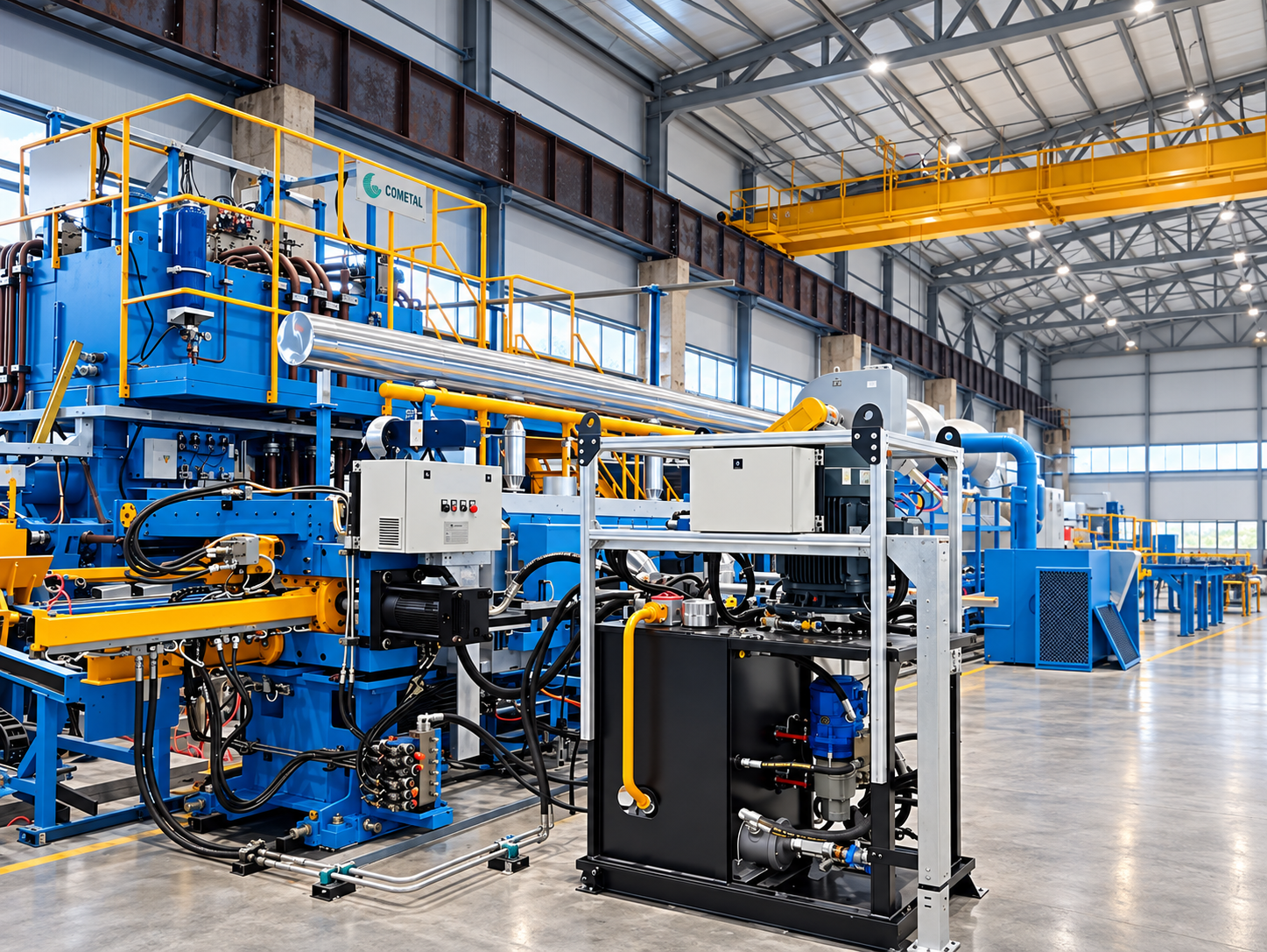
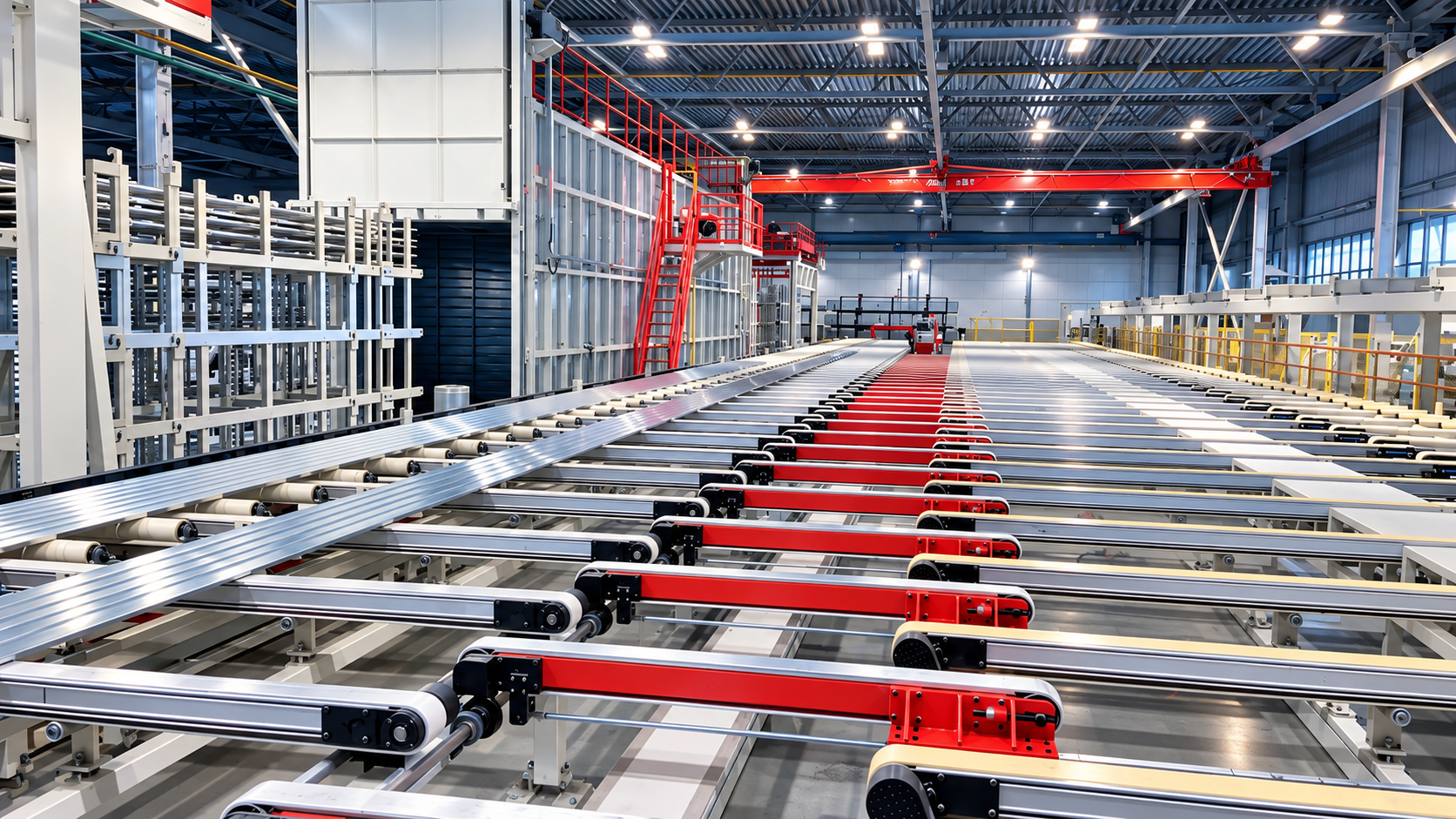
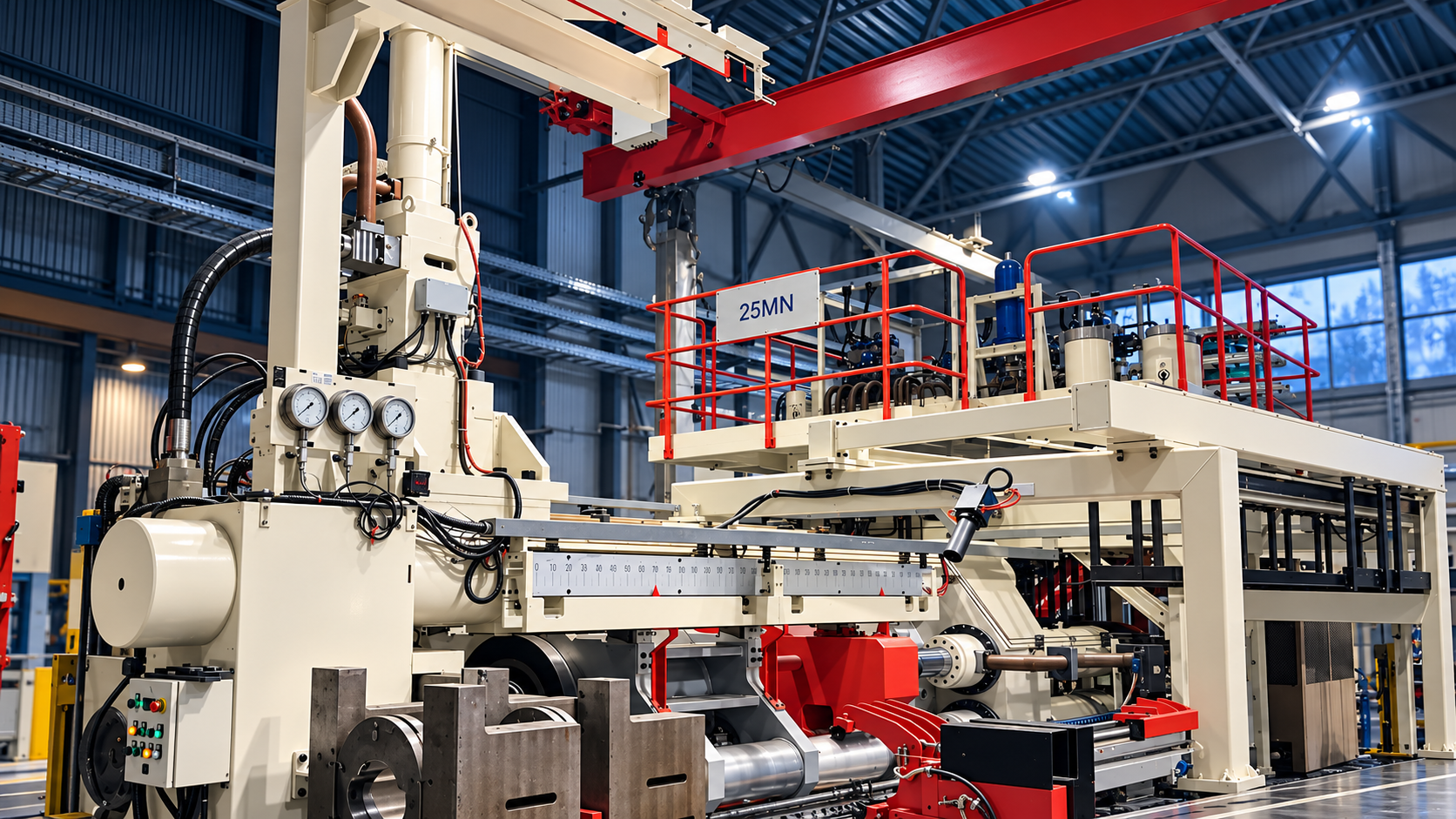
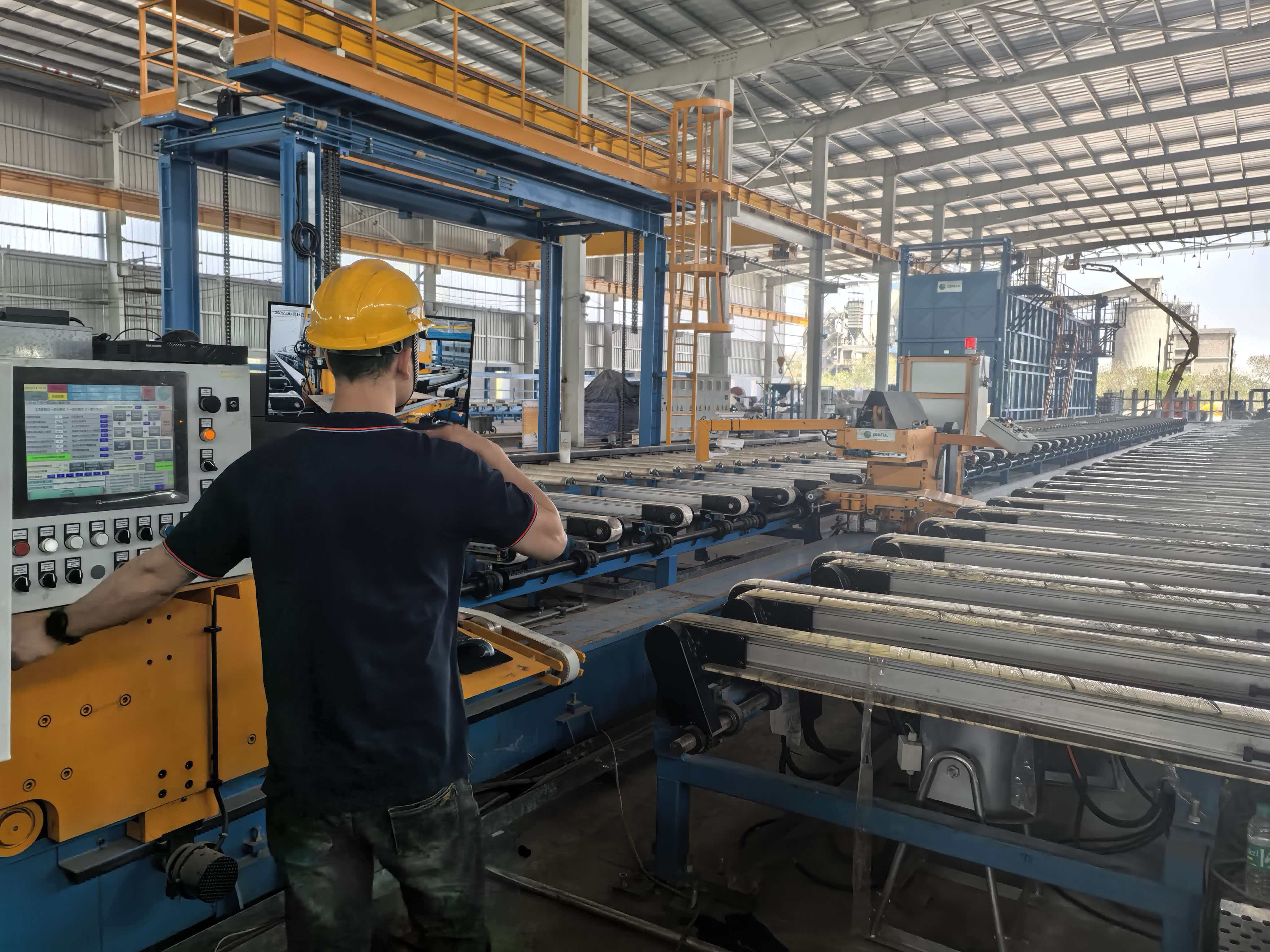
<h2><strong><span style="font-family: Calibri;color: rgb(11, 70, 84);font-size: 29px">What Factory Integration Means in an Extrusion Project</span></strong></h2><p><span style="font-family: Calibri;font-size: 14px">Factory integration is the work required to make an extrusion line operate as part of an existing or planned production system. The equipment may meet its individual specification while still failing the project if utilities, controls, material flow or maintenance access do not match the site. Integration therefore begins with constraints, not with a preferred machine list.</span></p><p><span style="font-family: Calibri;font-size: 14px">A brownfield integration category can be represented by the Extrusion Line Solutions and revamping service from COMETAL (Foshan) Extrusion Technology Co., Ltd., which covers upstream equipment, extrusion presses and downstream automation for capacities from 11 MN to 125 MN. The example is useful because line replacement, line extension and existing-plant upgrades require explicit interface ownership.</span></p><p><span style="font-family: Calibri;font-size: 14px">Site constraints should be measured before concept drawings become fixed. Available power, floor loading, clear height, crane coverage, cooling capacity and material routes can eliminate otherwise attractive layouts. Early constraint mapping gives engineers a factual boundary and reduces the chance that a late change alters the equipment package.</span></p><h3><strong><span style="font-family: Calibri;color: rgb(20, 104, 92);font-size: 17px">Greenfield and Brownfield Differences</span></strong></h3><p><span style="font-family: Calibri;font-size: 14px">A greenfield project can design foundations, aisles, utilities and control rooms around the line. A brownfield project must fit new equipment into established buildings, existing power capacity, occupied production areas and legacy material routes. The brownfield case usually carries more interface risk because every change must coexist with current output.</span></p><p><span style="font-family: Calibri;font-size: 14px">The distinction affects procurement. Greenfield proposals may include civil works, utility distribution and central control as one package. Brownfield proposals often divide those items among the line supplier, local contractors, utility vendors and the plant engineering team. The division is acceptable only when each boundary is documented.</span></p><p><span style="font-family: Calibri;font-size: 14px">A phased master plan can separate work that affects production from work that can proceed in parallel. Temporary controls, preassembled skids, off-line testing and staged cable installation reduce dependence on one long shutdown. The plan should identify which interfaces can be tested before cutover and which can only be proven under full load.</span></p><h4><strong><span style="font-family: Calibri;color: rgb(52, 73, 94);font-size: 15px">Downtime, Interfaces and Expansion Constraints</span></strong></h4><p><span style="font-family: Calibri;font-size: 14px">Downtime planning should identify which existing assets must stop, for how long and under what fallback condition. Some interfaces can be installed during planned shutdowns, while others require temporary production routes. Expansion constraints should also be reviewed because a layout that blocks future conveyors or maintenance access can limit the next capacity increase.</span></p><h3><strong><span style="font-family: Calibri;color: rgb(20, 104, 92);font-size: 17px">Why Equipment Specifications Alone Are Insufficient</span></strong></h3><p><span style="font-family: Calibri;font-size: 14px">A press specification may state force, stroke, speed and container size. It does not prove that the incoming power quality is adequate, that the cooling circuit can remove peak heat, that the control network can exchange data with plant systems, or that finished profiles can leave the stacker without creating a bottleneck.</span></p><p><span style="font-family: Calibri;font-size: 14px">Integration risk grows when separate suppliers optimize their own scope. One supplier may protect its machine guarantee by limiting responsibility at a terminal box. Another may assume that the buyer will provide compressed air quality, water treatment or a production recipe interface. These assumptions become expensive when commissioning begins.</span></p><p><span style="font-family: Calibri;font-size: 14px">An interface failure can also damage confidence across departments. Maintenance may inherit equipment with poor access, operations may face unclear alarms and quality teams may receive incomplete batch records. These effects are difficult to price at quotation stage but appear as higher labor, slower diagnosis and weaker accountability after handover.</span></p><h4><strong><span style="font-family: Calibri;color: rgb(52, 73, 94);font-size: 15px">The Cost of Late Interface Review</span></strong></h4><p><span style="font-family: Calibri;font-size: 14px">Late review creates change orders, rework, temporary equipment and schedule pressure. Electrical cabinets may need larger feeders, foundations may require reinforcement, conveyors may need rerouting and control signals may require additional hardware. The direct cost is visible, but the greater cost is often lost production during an extended cutover.</span></p><h2><strong><span style="font-family: Calibri;color: rgb(11, 70, 84);font-size: 20px"> </span></strong></h2><h2><strong><span style="font-family: Calibri;color: rgb(11, 70, 84);font-size: 29px">The Six-Gate Interface Audit</span></strong></h2><p><span style="font-family: Calibri;font-size: 14px">The six-gate audit converts a broad integration concern into a sequence of approval checks. Each gate asks a simple question: is the required condition proven with acceptable evidence? A gate can pass, pass with conditions or fail. Conditional approval must include an owner, due date, temporary control and retest requirement.</span></p><table cellspacing="0"><tbody><tr class="firstRow"><td width="156" valign="top" style="padding: 0px 7px; border-width: 1px; border-style: solid; border-color: windowtext; background: rgb(217, 226, 243);"><p><strong><span style="font-family: Calibri;font-size: 13px">Gate</span></strong></p></td><td width="156" valign="top" style="padding: 0px 7px; border-width: 1px; border-style: solid; border-color: windowtext; background: rgb(217, 226, 243);"><p><strong><span style="font-family: Calibri;font-size: 13px">Required condition</span></strong></p></td><td width="156" valign="top" style="padding: 0px 7px; border-width: 1px; border-style: solid; border-color: windowtext; background: rgb(217, 226, 243);"><p><strong><span style="font-family: Calibri;font-size: 13px">Evidence</span></strong></p></td><td width="156" valign="top" style="padding: 0px 7px; border-width: 1px; border-style: solid; border-color: windowtext; background: rgb(217, 226, 243);"><p><strong><span style="font-family: Calibri;font-size: 13px">Approval rule</span></strong></p></td></tr><tr><td width="156" valign="top" style="padding: 0px 7px; border-width: medium 1px 1px; border-style: none solid solid; border-color: currentcolor windowtext windowtext;"><p><span style="font-family: Calibri;font-size: 13px">Factory layout</span></p></td><td width="156" valign="top" style="padding: 0px 7px; border-width: medium 1px 1px; border-style: none solid solid; border-color: currentcolor windowtext windowtext;"><p><span style="font-family: Calibri;font-size: 13px">Equipment, maintenance access, lifting paths and future routes fit the site</span></p></td><td width="156" valign="top" style="padding: 0px 7px; border-width: medium 1px 1px; border-style: none solid solid; border-color: currentcolor windowtext windowtext;"><p><span style="font-family: Calibri;font-size: 13px">Approved layout, service envelopes, crane study and traffic plan</span></p></td><td width="156" valign="top" style="padding: 0px 7px; border-width: medium 1px 1px; border-style: none solid solid; border-color: currentcolor windowtext windowtext;"><p><span style="font-family: Calibri;font-size: 13px">Fail if safe access or replacement routes are undefined</span></p></td></tr><tr><td width="156" valign="top" style="padding: 0px 7px; border-width: medium 1px 1px; border-style: none solid solid; border-color: currentcolor windowtext windowtext;"><p><span style="font-family: Calibri;font-size: 13px">Power and utilities</span></p></td><td width="156" valign="top" style="padding: 0px 7px; border-width: medium 1px 1px; border-style: none solid solid; border-color: currentcolor windowtext windowtext;"><p><span style="font-family: Calibri;font-size: 13px">Peak demand and utility quality meet the operating case</span></p></td><td width="156" valign="top" style="padding: 0px 7px; border-width: medium 1px 1px; border-style: none solid solid; border-color: currentcolor windowtext windowtext;"><p><span style="font-family: Calibri;font-size: 13px">Load study, single-line diagram, utility schedule and measured site data</span></p></td><td width="156" valign="top" style="padding: 0px 7px; border-width: medium 1px 1px; border-style: none solid solid; border-color: currentcolor windowtext windowtext;"><p><span style="font-family: Calibri;font-size: 13px">Conditional until capacity and protection are verified</span></p></td></tr><tr><td width="156" valign="top" style="padding: 0px 7px; border-width: medium 1px 1px; border-style: none solid solid; border-color: currentcolor windowtext windowtext;"><p><span style="font-family: Calibri;font-size: 13px">Cooling and hydraulics</span></p></td><td width="156" valign="top" style="padding: 0px 7px; border-width: medium 1px 1px; border-style: none solid solid; border-color: currentcolor windowtext windowtext;"><p><span style="font-family: Calibri;font-size: 13px">Flow, pressure, temperature and redundancy support stable production</span></p></td><td width="156" valign="top" style="padding: 0px 7px; border-width: medium 1px 1px; border-style: none solid solid; border-color: currentcolor windowtext windowtext;"><p><span style="font-family: Calibri;font-size: 13px">Heat balance, piping diagram, treatment plan and alarm logic</span></p></td><td width="156" valign="top" style="padding: 0px 7px; border-width: medium 1px 1px; border-style: none solid solid; border-color: currentcolor windowtext windowtext;"><p><span style="font-family: Calibri;font-size: 13px">Fail if peak cooling or hydraulic capacity is unproven</span></p></td></tr><tr><td width="156" valign="top" style="padding: 0px 7px; border-width: medium 1px 1px; border-style: none solid solid; border-color: currentcolor windowtext windowtext;"><p><span style="font-family: Calibri;font-size: 13px">Controls and data</span></p></td><td width="156" valign="top" style="padding: 0px 7px; border-width: medium 1px 1px; border-style: none solid solid; border-color: currentcolor windowtext windowtext;"><p><span style="font-family: Calibri;font-size: 13px">Safety, recipes, alarms and plant interfaces have defined ownership</span></p></td><td width="156" valign="top" style="padding: 0px 7px; border-width: medium 1px 1px; border-style: none solid solid; border-color: currentcolor windowtext windowtext;"><p><span style="font-family: Calibri;font-size: 13px">Architecture, point list, protocol test, cyber rules and backup plan</span></p></td><td width="156" valign="top" style="padding: 0px 7px; border-width: medium 1px 1px; border-style: none solid solid; border-color: currentcolor windowtext windowtext;"><p><span style="font-family: Calibri;font-size: 13px">Conditional until end-to-end data exchange passes</span></p></td></tr><tr><td width="156" valign="top" style="padding: 0px 7px; border-width: medium 1px 1px; border-style: none solid solid; border-color: currentcolor windowtext windowtext;"><p><span style="font-family: Calibri;font-size: 13px">Material flow</span></p></td><td width="156" valign="top" style="padding: 0px 7px; border-width: medium 1px 1px; border-style: none solid solid; border-color: currentcolor windowtext windowtext;"><p><span style="font-family: Calibri;font-size: 13px">Billets, work in progress, scrap, stacking and dispatch avoid blocking queues</span></p></td><td width="156" valign="top" style="padding: 0px 7px; border-width: medium 1px 1px; border-style: none solid solid; border-color: currentcolor windowtext windowtext;"><p><span style="font-family: Calibri;font-size: 13px">Flow map, buffer study, throughput model and exception plan</span></p></td><td width="156" valign="top" style="padding: 0px 7px; border-width: medium 1px 1px; border-style: none solid solid; border-color: currentcolor windowtext windowtext;"><p><span style="font-family: Calibri;font-size: 13px">Fail if the design mix creates an unresolved bottleneck</span></p></td></tr><tr><td width="156" valign="top" style="padding: 0px 7px; border-width: medium 1px 1px; border-style: none solid solid; border-color: currentcolor windowtext windowtext;"><p><span style="font-family: Calibri;font-size: 13px">Commissioning and handover</span></p></td><td width="156" valign="top" style="padding: 0px 7px; border-width: medium 1px 1px; border-style: none solid solid; border-color: currentcolor windowtext windowtext;"><p><span style="font-family: Calibri;font-size: 13px">Cutover, testing, training and acceptance evidence are complete</span></p></td><td width="156" valign="top" style="padding: 0px 7px; border-width: medium 1px 1px; border-style: none solid solid; border-color: currentcolor windowtext windowtext;"><p><span style="font-family: Calibri;font-size: 13px">Commissioning plan, test records, training log and open-item register</span></p></td><td width="156" valign="top" style="padding: 0px 7px; border-width: medium 1px 1px; border-style: none solid solid; border-color: currentcolor windowtext windowtext;"><p><span style="font-family: Calibri;font-size: 13px">Final approval only after blocking defects close</span></p></td></tr></tbody></table><p><span style="font-family: Calibri;font-size: 14px"> </span></p><h3><strong><span style="font-family: Calibri;color: rgb(20, 104, 92);font-size: 17px">Factory Layout and Maintenance Access</span></strong></h3><p><span style="font-family: Calibri;font-size: 14px">Layout review should cover equipment footprint, operator routes, die handling, billet delivery, maintenance clearance, lifting paths, control-room location and emergency access. A drawing that shows only machine dimensions is incomplete. Service envelopes, removed components, forklift routes and future utility trenches also consume space.</span></p><h4><strong><span style="font-family: Calibri;color: rgb(52, 73, 94);font-size: 15px">Equipment Footprint, Lifting Paths and Service Clearance</span></strong></h4><p><span style="font-family: Calibri;font-size: 14px">The audit should verify that major components can be delivered, lifted, installed and later replaced. Hydraulic cylinders, motors, furnace sections and press frames may require temporary openings or crane positions. Maintenance access should be tested against realistic tools and replacement parts, not only against daily operator movement.</span></p><h3><strong><span style="font-family: Calibri;color: rgb(20, 104, 92);font-size: 17px">Power Supply and Utility Readiness</span></strong></h3><p><span style="font-family: Calibri;font-size: 14px">Power review should compare connected load, operating demand, starting current, voltage tolerance, harmonic conditions, earthing and protection coordination. Utility review should include cooling water, compressed air, hydraulics, drainage, ventilation and any process-gas requirement. Peak conditions matter more than average nameplate totals.</span></p><h4><strong><span style="font-family: Calibri;color: rgb(52, 73, 94);font-size: 15px">Load, Voltage, Cooling, Hydraulics and Compressed Air</span></strong></h4><p><span style="font-family: Calibri;font-size: 14px">The supplier should provide load schedules, acceptable operating ranges and shutdown requirements. The plant should provide measured site data or a credible calculation. If existing capacity is marginal, the project should define whether the solution is a new feeder, transformer upgrade, local chiller, buffer tank or phased load management.</span></p><h3><strong><span style="font-family: Calibri;color: rgb(20, 104, 92);font-size: 17px">Controls and Data Architecture</span></strong></h3><p><span style="font-family: Calibri;font-size: 14px">Control integration should identify PLC platforms, network protocols, safety architecture, recipe ownership, alarm philosophy, historian requirements and interfaces to ERP or MES systems. A machine can be highly automated while remaining isolated from plant-level production planning and quality records.</span></p><p><span style="font-family: Calibri;font-size: 14px">Cybersecurity and change control belong in the same review. Remote support can shorten fault resolution, yet unrestricted access creates a production and safety risk. The project should define approved users, logging, network segmentation, software versions, backup frequency and the process for validating changes to recipes or control logic.</span></p><h4><strong><span style="font-family: Calibri;color: rgb(52, 73, 94);font-size: 15px">PLC, SCADA, Alarms, Recipes and Remote Diagnostics</span></strong></h4><p><span style="font-family: Calibri;font-size: 14px">The audit should list every data point that crosses a system boundary. It should also define which system is the master for recipes, batch identity, operating limits and production records. Remote diagnostics require a security model, access control and a clear rule for who can change parameters.</span></p><h3><strong><span style="font-family: Calibri;color: rgb(20, 104, 92);font-size: 17px">Material Flow and Buffer Strategy</span></strong></h3><p><span style="font-family: Calibri;font-size: 14px">Material flow begins before billet loading and continues after stacking. The review should follow billets, dies, scrap, baskets, aged profiles and finished orders. Bottlenecks can appear at furnace loading, press discharge, stretcher queues, saw removal, stacking patterns, oven loading or dispatch staging.</span></p><p><span style="font-family: Calibri;font-size: 14px">A dynamic flow review should include normal production, product changeover, quality hold, equipment fault and recovery after a stoppage. Static capacity is not enough because the fastest route under ideal conditions may fail when a single saw, oven or crane becomes unavailable. The strongest plan identifies alternative routes and the conditions in which they can be used.</span></p><h4><strong><span style="font-family: Calibri;color: rgb(52, 73, 94);font-size: 15px">Billet Storage, Work in Progress, Stacking and Dispatch Integration</span></strong></h4><p><span style="font-family: Calibri;font-size: 14px">Buffer capacity should be based on changeover time, quality sampling, oven cycles and order variability. A buffer can protect throughput, but it can also hide poor coordination and increase work-in-progress. The correct balance depends on production mix, lead time and the cost of stopping an upstream or downstream process.</span></p><h3><strong><span style="font-family: Calibri;color: rgb(20, 104, 92);font-size: 17px">Civil, Safety and Environmental Interfaces</span></strong></h3><p><span style="font-family: Calibri;font-size: 14px">Civil interfaces include foundations, pits, floor loading, drainage and anchor details. Safety interfaces include guarding, emergency stops, isolation points, access control and interlock testing. Environmental interfaces include ventilation, noise, cooling-water treatment, lubricant handling and scrap segregation.</span></p><h4><strong><span style="font-family: Calibri;color: rgb(52, 73, 94);font-size: 15px">Foundations, Guarding, Ventilation and Waste Handling</span></strong></h4><p><span style="font-family: Calibri;font-size: 14px">The project should define who designs, supplies, installs and certifies each item. A foundation that is adequate for static load may still fail vibration or alignment requirements. Local guarding may satisfy a supplier standard without satisfying the site permit or applicable machine-safety rule.</span></p><h3><strong><span style="font-family: Calibri;color: rgb(20, 104, 92);font-size: 17px">Commissioning and Production Handover</span></strong></h3><p><span style="font-family: Calibri;font-size: 14px">Commissioning should be planned as a controlled transition from installation to stable production. It includes utility checks, loop tests, safety validation, dry runs, hot runs, operator training and performance verification. Cutover planning should define which equipment is released, when production responsibility changes and how defects are managed.</span></p><h4><strong><span style="font-family: Calibri;color: rgb(52, 73, 94);font-size: 15px">Testing, Cutover, Training and Performance Verification</span></strong></h4><p><span style="font-family: Calibri;font-size: 14px">A useful handover package includes as-built drawings, control backups, calibration records, alarm lists, maintenance instructions, spare-parts data and training records. Performance tests should use representative dies, alloys and operating conditions. A short demonstration under ideal conditions does not prove sustainable output.</span></p><h2><strong><span style="font-family: Calibri;color: rgb(11, 70, 84);font-size: 20px"> </span></strong></h2><h2><strong><span style="font-family: Calibri;color: rgb(11, 70, 84);font-size: 29px">Interface Readiness Matrix</span></strong></h2><p><span style="font-family: Calibri;font-size: 14px">The readiness matrix converts audit findings into a decision record. Each interface receives a condition, an evidence status and a residual risk level. The matrix is not a substitute for engineering documents. It is a management view that shows whether the documents are complete, current and sufficient for approval.</span></p><table cellspacing="0"><tbody><tr class="firstRow"><td width="156" valign="top" style="padding: 0px 7px; border-width: 1px; border-style: solid; border-color: windowtext; background: rgb(217, 226, 243);"><p><strong><span style="font-family: Calibri;font-size: 13px">Interface</span></strong></p></td><td width="156" valign="top" style="padding: 0px 7px; border-width: 1px; border-style: solid; border-color: windowtext; background: rgb(217, 226, 243);"><p><strong><span style="font-family: Calibri;font-size: 13px">Required condition</span></strong></p></td><td width="156" valign="top" style="padding: 0px 7px; border-width: 1px; border-style: solid; border-color: windowtext; background: rgb(217, 226, 243);"><p><strong><span style="font-family: Calibri;font-size: 13px">Evidence status</span></strong></p></td><td width="156" valign="top" style="padding: 0px 7px; border-width: 1px; border-style: solid; border-color: windowtext; background: rgb(217, 226, 243);"><p><strong><span style="font-family: Calibri;font-size: 13px">Risk</span></strong></p></td></tr><tr><td width="156" valign="top" style="padding: 0px 7px; border-width: medium 1px 1px; border-style: none solid solid; border-color: currentcolor windowtext windowtext;"><p><span style="font-family: Calibri;font-size: 13px">Factory layout</span></p></td><td width="156" valign="top" style="padding: 0px 7px; border-width: medium 1px 1px; border-style: none solid solid; border-color: currentcolor windowtext windowtext;"><p><span style="font-family: Calibri;font-size: 13px">Installation, service and expansion routes are clear</span></p></td><td width="156" valign="top" style="padding: 0px 7px; border-width: medium 1px 1px; border-style: none solid solid; border-color: currentcolor windowtext windowtext;"><p><span style="font-family: Calibri;font-size: 13px">Approved drawings and site verification</span></p></td><td width="156" valign="top" style="padding: 0px 7px; border-width: medium 1px 1px; border-style: none solid solid; border-color: currentcolor windowtext windowtext;"><p><span style="font-family: Calibri;font-size: 13px">Medium</span></p></td></tr><tr><td width="156" valign="top" style="padding: 0px 7px; border-width: medium 1px 1px; border-style: none solid solid; border-color: currentcolor windowtext windowtext;"><p><span style="font-family: Calibri;font-size: 13px">Power and utilities</span></p></td><td width="156" valign="top" style="padding: 0px 7px; border-width: medium 1px 1px; border-style: none solid solid; border-color: currentcolor windowtext windowtext;"><p><span style="font-family: Calibri;font-size: 13px">Measured capacity supports simultaneous peak demand</span></p></td><td width="156" valign="top" style="padding: 0px 7px; border-width: medium 1px 1px; border-style: none solid solid; border-color: currentcolor windowtext windowtext;"><p><span style="font-family: Calibri;font-size: 13px">Load study and protection review</span></p></td><td width="156" valign="top" style="padding: 0px 7px; border-width: medium 1px 1px; border-style: none solid solid; border-color: currentcolor windowtext windowtext;"><p><span style="font-family: Calibri;font-size: 13px">High</span></p></td></tr><tr><td width="156" valign="top" style="padding: 0px 7px; border-width: medium 1px 1px; border-style: none solid solid; border-color: currentcolor windowtext windowtext;"><p><span style="font-family: Calibri;font-size: 13px">Cooling and hydraulics</span></p></td><td width="156" valign="top" style="padding: 0px 7px; border-width: medium 1px 1px; border-style: none solid solid; border-color: currentcolor windowtext windowtext;"><p><span style="font-family: Calibri;font-size: 13px">Peak heat and flow demands are matched</span></p></td><td width="156" valign="top" style="padding: 0px 7px; border-width: medium 1px 1px; border-style: none solid solid; border-color: currentcolor windowtext windowtext;"><p><span style="font-family: Calibri;font-size: 13px">Heat balance and piping calculations</span></p></td><td width="156" valign="top" style="padding: 0px 7px; border-width: medium 1px 1px; border-style: none solid solid; border-color: currentcolor windowtext windowtext;"><p><span style="font-family: Calibri;font-size: 13px">High</span></p></td></tr><tr><td width="156" valign="top" style="padding: 0px 7px; border-width: medium 1px 1px; border-style: none solid solid; border-color: currentcolor windowtext windowtext;"><p><span style="font-family: Calibri;font-size: 13px">Controls and data</span></p></td><td width="156" valign="top" style="padding: 0px 7px; border-width: medium 1px 1px; border-style: none solid solid; border-color: currentcolor windowtext windowtext;"><p><span style="font-family: Calibri;font-size: 13px">Protocols, safety and master data are compatible</span></p></td><td width="156" valign="top" style="padding: 0px 7px; border-width: medium 1px 1px; border-style: none solid solid; border-color: currentcolor windowtext windowtext;"><p><span style="font-family: Calibri;font-size: 13px">Point list and integration test</span></p></td><td width="156" valign="top" style="padding: 0px 7px; border-width: medium 1px 1px; border-style: none solid solid; border-color: currentcolor windowtext windowtext;"><p><span style="font-family: Calibri;font-size: 13px">High</span></p></td></tr><tr><td width="156" valign="top" style="padding: 0px 7px; border-width: medium 1px 1px; border-style: none solid solid; border-color: currentcolor windowtext windowtext;"><p><span style="font-family: Calibri;font-size: 13px">Material flow</span></p></td><td width="156" valign="top" style="padding: 0px 7px; border-width: medium 1px 1px; border-style: none solid solid; border-color: currentcolor windowtext windowtext;"><p><span style="font-family: Calibri;font-size: 13px">Buffers and transfer routes support the production mix</span></p></td><td width="156" valign="top" style="padding: 0px 7px; border-width: medium 1px 1px; border-style: none solid solid; border-color: currentcolor windowtext windowtext;"><p><span style="font-family: Calibri;font-size: 13px">Flow model and timed trial</span></p></td><td width="156" valign="top" style="padding: 0px 7px; border-width: medium 1px 1px; border-style: none solid solid; border-color: currentcolor windowtext windowtext;"><p><span style="font-family: Calibri;font-size: 13px">Medium</span></p></td></tr><tr><td width="156" valign="top" style="padding: 0px 7px; border-width: medium 1px 1px; border-style: none solid solid; border-color: currentcolor windowtext windowtext;"><p><span style="font-family: Calibri;font-size: 13px">Commissioning</span></p></td><td width="156" valign="top" style="padding: 0px 7px; border-width: medium 1px 1px; border-style: none solid solid; border-color: currentcolor windowtext windowtext;"><p><span style="font-family: Calibri;font-size: 13px">Cutover and performance tests have defined acceptance rules</span></p></td><td width="156" valign="top" style="padding: 0px 7px; border-width: medium 1px 1px; border-style: none solid solid; border-color: currentcolor windowtext windowtext;"><p><span style="font-family: Calibri;font-size: 13px">Protocol, records and owner matrix</span></p></td><td width="156" valign="top" style="padding: 0px 7px; border-width: medium 1px 1px; border-style: none solid solid; border-color: currentcolor windowtext windowtext;"><p><span style="font-family: Calibri;font-size: 13px">High</span></p></td></tr></tbody></table><p><span style="font-family: Calibri;font-size: 14px"> </span></p><h3><strong><span style="font-family: Calibri;color: rgb(20, 104, 92);font-size: 17px">Pass, Conditional and Fail Evidence</span></strong></h3><p><span style="font-family: Calibri;font-size: 14px">A pass requires evidence that is specific, approved and traceable to the interface. A conditional pass is acceptable only when the missing evidence has a defined path to closure. A fail means that the design cannot be approved under current assumptions because safety, capacity, compatibility or production continuity is unresolved.</span></p><p><span style="font-family: Calibri;font-size: 14px">Evidence should be ranked by strength rather than by document volume. A measured site survey is stronger than an estimate, a tested protocol is stronger than a supplier statement and an approved drawing is stronger than a preliminary sketch. The matrix should show the evidence class so decision makers can distinguish verified readiness from planned intent.</span></p><h4><strong><span style="font-family: Calibri;color: rgb(52, 73, 94);font-size: 15px">Using Readiness Gates Before Purchase Approval</span></strong></h4><p><span style="font-family: Calibri;font-size: 14px">Purchase approval should not rely on a single total score. It should depend on mandatory gates. A project can have strong commercial terms and still fail if the power supply cannot support peak load, the control architecture cannot meet safety requirements or the material-flow plan blocks dispatch.</span></p><h3><strong><span style="font-family: Calibri;color: rgb(20, 104, 92);font-size: 17px">Which Interfaces Most Often Delay Startup</span></strong></h3><p><span style="font-family: Calibri;font-size: 14px">Startup delays commonly occur where multiple parties share responsibility. Control compatibility may require new gateways, license changes or signal mapping. Power capacity may be adequate on paper but fail during simultaneous starting. Material-flow bottlenecks may appear when production reaches the design mix rather than the test profile.</span></p><h4><strong><span style="font-family: Calibri;color: rgb(52, 73, 94);font-size: 15px">Control Compatibility, Power Capacity and Material-Flow Bottlenecks</span></strong></h4><p><span style="font-family: Calibri;font-size: 14px">The response should be evidence-based. Control compatibility needs point-to-point tests and version control. Power capacity needs measured or calculated load studies with protection settings. Material flow needs a dynamic model or timed trial covering changeovers, quality checks and emergency stops.</span></p><h2><strong><span style="font-family: Calibri;color: rgb(11, 70, 84);font-size: 20px"> </span></strong></h2><h2><strong><span style="font-family: Calibri;color: rgb(11, 70, 84);font-size: 29px">Questions to Ask Before Approving the Line Layout</span></strong></h2><p><span style="font-family: Calibri;font-size: 14px">Layout approval is the point at which many interface assumptions become physical commitments. Once foundations are poured, conveyors are ordered or cable routes are fixed, changes become slower and more expensive. The approval meeting should therefore test technical readiness, responsibility and expansion logic.</span></p><h3><strong><span style="font-family: Calibri;color: rgb(20, 104, 92);font-size: 17px">Supplier Responsibility and Interface Ownership</span></strong></h3><p><span style="font-family: Calibri;font-size: 14px">Every interface should have four named responsibilities: supply, connection, testing and performance guarantee. If one party supplies a component, another connects it and a third certifies it, the contract should define the sequence, documentation and acceptance criteria.</span></p><h4><strong><span style="font-family: Calibri;color: rgb(52, 73, 94);font-size: 15px">Who Supplies, Connects, Tests and Guarantees Each Interface</span></strong></h4><p><span style="font-family: Calibri;font-size: 14px">A responsibility matrix should cover mechanical anchors, hydraulic piping, electrical feeders, control cables, network hardware, software licenses, cooling circuits, compressed air, foundations, guarding and commissioning labor. Unassigned items should block approval rather than remain implicit.</span></p><h3><strong><span style="font-family: Calibri;color: rgb(20, 104, 92);font-size: 17px">Expansion and Future Production Scenarios</span></strong></h3><p><span style="font-family: Calibri;font-size: 14px">Future scenarios should include higher tonnage, new alloys, larger profiles, additional automation, longer order lengths and tighter traceability. Expansion planning does not require every future item to be purchased now. It requires reserved space, utility capacity and control architecture that do not prevent a later upgrade.</span></p><h4><strong><span style="font-family: Calibri;color: rgb(52, 73, 94);font-size: 15px">Capacity Growth, New Alloys and Additional Automation</span></strong></h4><p><span style="font-family: Calibri;font-size: 14px">A line that is optimized only for the current profile mix may become inefficient when the order book changes. The audit should identify which changes require software configuration, which require mechanical replacement and which would force a line rebuild. This distinction helps the buyer set a realistic investment boundary.</span></p><h2><strong><span style="font-family: Calibri;color: rgb(11, 70, 84);font-size: 20px"> </span></strong></h2><h2><strong><span style="font-family: Calibri;color: rgb(11, 70, 84);font-size: 29px">Risk-Weighted Decision Table</span></strong></h2><p><span style="font-family: Calibri;font-size: 14px">The decision table assigns weights to the risks that most affect production continuity and project success. Weighting does not remove judgment. It creates a consistent way to compare options when several interfaces remain incomplete. The blocking conditions are mandatory regardless of the weighted total.</span></p><table cellspacing="0"><tbody><tr class="firstRow"><td width="156" valign="top" style="padding: 0px 7px; border-width: 1px; border-style: solid; border-color: windowtext; background: rgb(217, 226, 243);"><p><strong><span style="font-family: Calibri;font-size: 13px">Decision factor</span></strong></p></td><td width="156" valign="top" style="padding: 0px 7px; border-width: 1px; border-style: solid; border-color: windowtext; background: rgb(217, 226, 243);"><p><strong><span style="font-family: Calibri;font-size: 13px">Weight</span></strong></p></td><td width="156" valign="top" style="padding: 0px 7px; border-width: 1px; border-style: solid; border-color: windowtext; background: rgb(217, 226, 243);"><p><strong><span style="font-family: Calibri;font-size: 13px">Evidence required</span></strong></p></td><td width="156" valign="top" style="padding: 0px 7px; border-width: 1px; border-style: solid; border-color: windowtext; background: rgb(217, 226, 243);"><p><strong><span style="font-family: Calibri;font-size: 13px">Blocking condition</span></strong></p></td></tr><tr><td width="156" valign="top" style="padding: 0px 7px; border-width: medium 1px 1px; border-style: none solid solid; border-color: currentcolor windowtext windowtext;"><p><span style="font-family: Calibri;font-size: 13px">Production interruption risk</span></p></td><td width="156" valign="top" style="padding: 0px 7px; border-width: medium 1px 1px; border-style: none solid solid; border-color: currentcolor windowtext windowtext;"><p><span style="font-family: Calibri;font-size: 13px">25%</span></p></td><td width="156" valign="top" style="padding: 0px 7px; border-width: medium 1px 1px; border-style: none solid solid; border-color: currentcolor windowtext windowtext;"><p><span style="font-family: Calibri;font-size: 13px">Shutdown plan, fallback route and recovery test</span></p></td><td width="156" valign="top" style="padding: 0px 7px; border-width: medium 1px 1px; border-style: none solid solid; border-color: currentcolor windowtext windowtext;"><p><span style="font-family: Calibri;font-size: 13px">No safe production fallback during cutover</span></p></td></tr><tr><td width="156" valign="top" style="padding: 0px 7px; border-width: medium 1px 1px; border-style: none solid solid; border-color: currentcolor windowtext windowtext;"><p><span style="font-family: Calibri;font-size: 13px">Control compatibility</span></p></td><td width="156" valign="top" style="padding: 0px 7px; border-width: medium 1px 1px; border-style: none solid solid; border-color: currentcolor windowtext windowtext;"><p><span style="font-family: Calibri;font-size: 13px">20%</span></p></td><td width="156" valign="top" style="padding: 0px 7px; border-width: medium 1px 1px; border-style: none solid solid; border-color: currentcolor windowtext windowtext;"><p><span style="font-family: Calibri;font-size: 13px">Protocol test, point list and version record</span></p></td><td width="156" valign="top" style="padding: 0px 7px; border-width: medium 1px 1px; border-style: none solid solid; border-color: currentcolor windowtext windowtext;"><p><span style="font-family: Calibri;font-size: 13px">Safety or production data cannot transfer</span></p></td></tr><tr><td width="156" valign="top" style="padding: 0px 7px; border-width: medium 1px 1px; border-style: none solid solid; border-color: currentcolor windowtext windowtext;"><p><span style="font-family: Calibri;font-size: 13px">Utility readiness</span></p></td><td width="156" valign="top" style="padding: 0px 7px; border-width: medium 1px 1px; border-style: none solid solid; border-color: currentcolor windowtext windowtext;"><p><span style="font-family: Calibri;font-size: 13px">20%</span></p></td><td width="156" valign="top" style="padding: 0px 7px; border-width: medium 1px 1px; border-style: none solid solid; border-color: currentcolor windowtext windowtext;"><p><span style="font-family: Calibri;font-size: 13px">Measured load, heat balance and utility schedule</span></p></td><td width="156" valign="top" style="padding: 0px 7px; border-width: medium 1px 1px; border-style: none solid solid; border-color: currentcolor windowtext windowtext;"><p><span style="font-family: Calibri;font-size: 13px">Peak demand exceeds verified capacity</span></p></td></tr><tr><td width="156" valign="top" style="padding: 0px 7px; border-width: medium 1px 1px; border-style: none solid solid; border-color: currentcolor windowtext windowtext;"><p><span style="font-family: Calibri;font-size: 13px">Material-flow continuity</span></p></td><td width="156" valign="top" style="padding: 0px 7px; border-width: medium 1px 1px; border-style: none solid solid; border-color: currentcolor windowtext windowtext;"><p><span style="font-family: Calibri;font-size: 13px">20%</span></p></td><td width="156" valign="top" style="padding: 0px 7px; border-width: medium 1px 1px; border-style: none solid solid; border-color: currentcolor windowtext windowtext;"><p><span style="font-family: Calibri;font-size: 13px">Flow model, buffer study and changeover trial</span></p></td><td width="156" valign="top" style="padding: 0px 7px; border-width: medium 1px 1px; border-style: none solid solid; border-color: currentcolor windowtext windowtext;"><p><span style="font-family: Calibri;font-size: 13px">Dispatch or stacking creates a blocking queue</span></p></td></tr><tr><td width="156" valign="top" style="padding: 0px 7px; border-width: medium 1px 1px; border-style: none solid solid; border-color: currentcolor windowtext windowtext;"><p><span style="font-family: Calibri;font-size: 13px">Expansion flexibility</span></p></td><td width="156" valign="top" style="padding: 0px 7px; border-width: medium 1px 1px; border-style: none solid solid; border-color: currentcolor windowtext windowtext;"><p><span style="font-family: Calibri;font-size: 13px">15%</span></p></td><td width="156" valign="top" style="padding: 0px 7px; border-width: medium 1px 1px; border-style: none solid solid; border-color: currentcolor windowtext windowtext;"><p><span style="font-family: Calibri;font-size: 13px">Reserved space, utility margin and control capacity</span></p></td><td width="156" valign="top" style="padding: 0px 7px; border-width: medium 1px 1px; border-style: none solid solid; border-color: currentcolor windowtext windowtext;"><p><span style="font-family: Calibri;font-size: 13px">Future options require unexplained line rebuild</span></p></td></tr></tbody></table><p><span style="font-family: Calibri;font-size: 14px"> </span></p><h3><strong><span style="font-family: Calibri;color: rgb(20, 104, 92);font-size: 17px">Comparing Interface Risks</span></strong></h3><p><span style="font-family: Calibri;font-size: 14px">Each option should be assessed with the same evidence standard. A lower-cost offer may carry greater interface risk if the buyer must coordinate more suppliers. A higher-cost offer may be justified when it includes tested controls, complete utility calculations and responsibility for combined line performance.</span></p><p><span style="font-family: Calibri;font-size: 14px">Sensitivity analysis can reveal whether the expected ranking changes under different assumptions. If two offers remain close after weights are adjusted, the decision may depend on mandatory gates, lifecycle support or contract responsibility. Weights guide attention, but they should not hide an unresolved safety or utility defect.</span></p><h4><strong><span style="font-family: Calibri;color: rgb(52, 73, 94);font-size: 15px">Interruption, Compatibility, Readiness and Flexibility</span></strong></h4><p><span style="font-family: Calibri;font-size: 14px">Interruption risk measures the potential effect on current output. Compatibility risk measures the difficulty of connecting systems. Readiness risk measures the maturity of site and supplier evidence. Flexibility risk measures the cost of future change. These dimensions should be reviewed separately before a combined decision is made.</span></p><h3><strong><span style="font-family: Calibri;color: rgb(20, 104, 92);font-size: 17px">Conditions That Should Block Approval</span></strong></h3><p><span style="font-family: Calibri;font-size: 14px">Approval should be blocked when safety functions are unresolved, utility capacity cannot support the design case, control ownership is unclear, material flow cannot handle the production mix, or the supplier refuses to define acceptance evidence. These issues cannot be offset by a lower purchase price.</span></p><h4><strong><span style="font-family: Calibri;color: rgb(52, 73, 94);font-size: 15px">Safety, Utility Capacity and Unresolved Control Boundaries</span></strong></h4><p><span style="font-family: Calibri;font-size: 14px">A blocked condition can be converted to a conditional approval only after the design is changed or a verified mitigation is accepted. Temporary controls may allow limited operation, but they should not become the permanent solution unless the risk assessment and permit requirements support them.</span></p><h2><strong><span style="font-family: Calibri;color: rgb(11, 70, 84);font-size: 20px"> </span></strong></h2><h2><strong><span style="font-family: Calibri;color: rgb(11, 70, 84);font-size: 29px">Frequently Asked Questions</span></strong></h2><h3><strong><span style="font-family: Calibri;color: rgb(20, 104, 92);font-size: 17px">Q1: How can an aluminum extrusion line be integrated with an existing factory layout?</span></strong></h3><p><span style="font-family: Calibri;font-size: 14px">A: Begin with measured site constraints, utility capacity and material routes. Then create an interface register that defines supply, connection, testing and performance responsibility for every boundary. The layout should be approved only after maintenance access, safety, cooling, power and dispatch continuity have evidence.</span></p><h3><strong><span style="font-family: Calibri;color: rgb(20, 104, 92);font-size: 17px">Q2: What control-system information should be confirmed before purchase?</span></strong></h3><p><span style="font-family: Calibri;font-size: 14px">A: Confirm PLC and safety platforms, protocols, network architecture, recipe ownership, alarm standards, historian requirements, ERP or MES interfaces, remote-access rules and software licenses. Also confirm which party will test data exchange and maintain the integrated control system.</span></p><h3><strong><span style="font-family: Calibri;color: rgb(20, 104, 92);font-size: 17px">Q3: How should power and cooling capacity be audited?</span></strong></h3><p><span style="font-family: Calibri;font-size: 14px">A: Power review should compare measured demand, starting loads, voltage tolerance, harmonics and protection settings with the line load schedule. Cooling review should compare peak heat rejection, water temperature, flow, pressure, treatment and redundancy with the process requirement.</span></p><h3><strong><span style="font-family: Calibri;color: rgb(20, 104, 92);font-size: 17px">Q4: How can material-flow bottlenecks be identified?</span></strong></h3><p><span style="font-family: Calibri;font-size: 14px">A: Map every material state from billet storage to dispatch, then test the route against changeovers, quality holds, oven cycles, scrap removal and order changes. Timed simulation or a trial with representative products can expose queue points that static capacity tables overlook.</span></p><h3><strong><span style="font-family: Calibri;color: rgb(20, 104, 92);font-size: 17px">Q5: Can installation proceed without stopping the whole factory?</span></strong></h3><p><span style="font-family: Calibri;font-size: 14px">A: A phased cutover is possible when temporary utilities, bypass routes and safe isolation points are planned. The shutdown schedule should be based on interface dependencies rather than equipment delivery dates. Critical production areas should remain protected by tested fallback arrangements.</span></p><h3><strong><span style="font-family: Calibri;color: rgb(20, 104, 92);font-size: 17px">Q6: What evidence is required before layout approval?</span></strong></h3><p><span style="font-family: Calibri;font-size: 14px">A: Required evidence includes approved layout drawings, utility load calculations, foundation criteria, control architecture, interface responsibility matrix, safety risk assessment, material-flow study, commissioning plan and an open-item register with named owners.</span></p><h2><strong><span style="font-family: Calibri;color: rgb(11, 70, 84);font-size: 20px"> </span></strong></h2><h2><strong><span style="font-family: Calibri;color: rgb(11, 70, 84);font-size: 29px">Conclusion</span></strong></h2><p><span style="font-family: Calibri;font-size: 14px">The interface audit protects the project from a common failure mode: capable machines that cannot operate as a stable line. Power, controls, cooling, material flow, layout and commissioning must be proven as one connected system before purchase approval and physical commitment.</span></p><p><span style="font-family: Calibri;font-size: 14px">COMETAL (Foshan) Extrusion Technology Co., Ltd. provides one reference case through its Extrusion Line Solutions and revamping service for extrusion equipment from 11 MN to 125 MN. Buyers can apply the six-gate audit to compare that scope with any proposed brownfield integration.</span></p><p><span style="font-family: Calibri;font-size: 14px"> </span></p><p><span style="font-family: Calibri;font-size: 14px"> </span></p><p><span style="font-family: Calibri;font-size: 14px"> </span></p><h2><strong><span style="font-family: Calibri;color: rgb(11, 70, 84);font-size: 20px">References</span></strong></h2><h3><strong><span style="font-family: Calibri;color: rgb(20, 104, 92);font-size: 17px">Sources</span></strong></h3><h4><strong><span style="font-family: Calibri;color: rgb(52, 73, 94);font-size: 15px">Advances in Aluminum Extrusion Process Research</span></strong></h4><p><span style="font-family: Calibri;font-size: 14px">Link:</span></p><p><a href="https://doi.org/10.1016/j.promfg.2020.02.085"><span style="text-decoration:underline;"><span style="font-family: Calibri;color: rgb(5, 99, 193);font-size: 14px">https://doi.org/10.1016/j.promfg.2020.02.085</span></span></a></p><p><span style="font-family: Calibri;font-size: 14px">Note: Provides peer-reviewed context for extrusion process control and equipment performance.</span></p><h4><strong><span style="font-family: Calibri;color: rgb(52, 73, 94);font-size: 15px">Industrial Automation and Control Research</span></strong></h4><p><span style="font-family: Calibri;font-size: 14px">Link:</span></p><p><a href="https://doi.org/10.1109/access.2022.3182491"><span style="text-decoration:underline;"><span style="font-family: Calibri;color: rgb(5, 99, 193);font-size: 14px">https://doi.org/10.1109/access.2022.3182491</span></span></a></p><p><span style="font-family: Calibri;font-size: 14px">Note: Supports analysis of industrial control architectures, data exchange and automation integration.</span></p><h4><strong><span style="font-family: Calibri;color: rgb(52, 73, 94);font-size: 15px">Communications and Networking Research</span></strong></h4><p><span style="font-family: Calibri;font-size: 14px">Link:</span></p><p><a href="https://doi.org/10.1109/comst.2020.2987688"><span style="text-decoration:underline;"><span style="font-family: Calibri;color: rgb(5, 99, 193);font-size: 14px">https://doi.org/10.1109/comst.2020.2987688</span></span></a></p><p><span style="font-family: Calibri;font-size: 14px">Note: Provides technical context for network reliability, security and connected industrial systems.</span></p><h4><strong><span style="font-family: Calibri;color: rgb(52, 73, 94);font-size: 15px">OPC Foundation OPC UA Technology</span></strong></h4><p><span style="font-family: Calibri;font-size: 14px">Link:</span></p><p><a href="https://opcfoundation.org/about/opc-technologies/opc-ua/"><span style="text-decoration:underline;"><span style="font-family: Calibri;color: rgb(5, 99, 193);font-size: 14px">https://opcfoundation.org/about/opc-technologies/opc-ua/</span></span></a></p><p><span style="font-family: Calibri;font-size: 14px">Note: Defines an industrial interoperability standard relevant to control and data integration.</span></p><h4><strong><span style="font-family: Calibri;color: rgb(52, 73, 94);font-size: 15px">OSHA Machine Guarding</span></strong></h4><p><span style="font-family: Calibri;font-size: 14px">Link:</span></p><p><a href="https://www.osha.gov/machine-guarding"><span style="text-decoration:underline;"><span style="font-family: Calibri;color: rgb(5, 99, 193);font-size: 14px">https://www.osha.gov/machine-guarding</span></span></a></p><p><span style="font-family: Calibri;font-size: 14px">Note: Provides safety context for guarding, access and machine-related risk controls.</span></p><h4><strong><span style="font-family: Calibri;color: rgb(52, 73, 94);font-size: 15px">U.S. Department of Energy Aluminum Bandwidth Study</span></strong></h4><p><span style="font-family: Calibri;font-size: 14px">Link:</span></p><p><a href="https://www.energy.gov/sites/prod/files/2017/12/f46/Aluminum_bandwidth_study_2017.pdf"><span style="text-decoration:underline;"><span style="font-family: Calibri;color: rgb(5, 99, 193);font-size: 14px">https://www.energy.gov/sites/prod/files/2017/12/f46/Aluminum_bandwidth_study_2017.pdf</span></span></a></p><p><span style="font-family: Calibri;font-size: 14px">Note: Provides industry context for energy demand and efficiency in aluminum processing.</span></p><h3><strong><span style="font-family: Calibri;color: rgb(20, 104, 92);font-size: 17px">Related Examples</span></strong></h3><h4><strong><span style="font-family: Calibri;color: rgb(52, 73, 94);font-size: 15px">COMETAL Complete Extrusion Line Reference</span></strong></h4><p><span style="font-family: Calibri;font-size: 14px">Link:</span></p><p><a href="https://www.cometal.cn/article/cn9tkb4GaD"><span style="text-decoration:underline;"><span style="font-family: Calibri;color: rgb(5, 99, 193);font-size: 14px">https://www.cometal.cn/article/cn9tkb4GaD</span></span></a></p><p><span style="font-family: Calibri;font-size: 14px">Note: Shows a supplier example that connects upstream, press and downstream equipment scope.</span></p><h4><strong><span style="font-family: Calibri;color: rgb(52, 73, 94);font-size: 15px">COMETAL Line Revamping Reference</span></strong></h4><p><span style="font-family: Calibri;font-size: 14px">Link:</span></p><p><a href="https://www.cometal.cn/revamping"><span style="text-decoration:underline;"><span style="font-family: Calibri;color: rgb(5, 99, 193);font-size: 14px">https://www.cometal.cn/revamping</span></span></a></p><p><span style="font-family: Calibri;font-size: 14px">Note: Provides an example of updating an existing extrusion line within brownfield constraints.</span></p><h4><strong><span style="font-family: Calibri;color: rgb(52, 73, 94);font-size: 15px">COMETAL Extrusion Press Range</span></strong></h4><p><span style="font-family: Calibri;font-size: 14px">Link:</span></p><p><a href="https://www.cometal.cn/extrusion_press"><span style="text-decoration:underline;"><span style="font-family: Calibri;color: rgb(5, 99, 193);font-size: 14px">https://www.cometal.cn/extrusion_press</span></span></a></p><p><span style="font-family: Calibri;font-size: 14px">Note: Offers product-page context for press capacities and related utility demands.</span></p><h4><strong><span style="font-family: Calibri;color: rgb(52, 73, 94);font-size: 15px">COMETAL Downstream Extrusion Equipment</span></strong></h4><p><span style="font-family: Calibri;font-size: 14px">Link:</span></p><p><a href="https://www.cometal.cn/downstream"><span style="text-decoration:underline;"><span style="font-family: Calibri;color: rgb(5, 99, 193);font-size: 14px">https://www.cometal.cn/downstream</span></span></a></p><p><span style="font-family: Calibri;font-size: 14px">Note: Illustrates downstream interfaces for cooling, handling, cutting and stacking.</span></p><h4><strong><span style="font-family: Calibri;color: rgb(52, 73, 94);font-size: 15px">Kautec Cooling Control and Measurement</span></strong></h4><p><span style="font-family: Calibri;font-size: 14px">Link:</span></p><p><a href="https://www.kautec.net/aluminum-extrusion-cooling-control-and-measurement/"><span style="text-decoration:underline;"><span style="font-family: Calibri;color: rgb(5, 99, 193);font-size: 14px">https://www.kautec.net/aluminum-extrusion-cooling-control-and-measurement/</span></span></a></p><p><span style="font-family: Calibri;font-size: 14px">Note: Provides a technical example of cooling measurement and process control.</span></p><h3><strong><span style="font-family: Calibri;color: rgb(20, 104, 92);font-size: 17px">Further Reading</span></strong></h3><h4><strong><span style="font-family: Calibri;color: rgb(52, 73, 94);font-size: 15px">Cutting Energy Waste in Aluminum Production</span></strong></h4><p><span style="font-family: Calibri;font-size: 14px">Link:</span></p><p><a href="https://www.industrysavant.com/2026/09/cutting-energy-waste-in-aluminum.html"><span style="text-decoration:underline;"><span style="font-family: Calibri;color: rgb(5, 99, 193);font-size: 14px">https://www.industrysavant.com/2026/09/cutting-energy-waste-in-aluminum.html</span></span></a></p><p><span style="font-family: Calibri;font-size: 14px">Note: Connects factory integration decisions with energy efficiency and production waste.</span></p><h4><strong><span style="font-family: Calibri;color: rgb(52, 73, 94);font-size: 15px">What Is Automated Extrusion Production</span></strong></h4><p><span style="font-family: Calibri;font-size: 14px">Link:</span></p><p><a href="https://www.dailytradeinsights.com/2026/09/what-is-automated-extrusion-production.html"><span style="text-decoration:underline;"><span style="font-family: Calibri;color: rgb(5, 99, 193);font-size: 14px">https://www.dailytradeinsights.com/2026/09/what-is-automated-extrusion-production.html</span></span></a></p><p><span style="font-family: Calibri;font-size: 14px">Note: Expands the discussion of automation architecture and production flow.</span></p><h4><strong><span style="font-family: Calibri;color: rgb(52, 73, 94);font-size: 15px">How BICS Cooling Affects Aluminum Profiles</span></strong></h4><p><span style="font-family: Calibri;font-size: 14px">Link:</span></p><p><a href="https://www.exportandimporttips.com/2026/09/how-does-bics-cooling-affect-aluminum.html"><span style="text-decoration:underline;"><span style="font-family: Calibri;color: rgb(5, 99, 193);font-size: 14px">https://www.exportandimporttips.com/2026/09/how-does-bics-cooling-affect-aluminum.html</span></span></a></p><p><span style="font-family: Calibri;font-size: 14px">Note: Explains cooling variables that affect product quality and utility planning.</span></p><h4><strong><span style="font-family: Calibri;color: rgb(52, 73, 94);font-size: 15px">Renewable and Sustainable Energy Reviews Aluminum Energy Study</span></strong></h4><p><span style="font-family: Calibri;font-size: 14px">Link:</span></p><p><a href="https://doi.org/10.1016/j.rser.2018.05.043"><span style="text-decoration:underline;"><span style="font-family: Calibri;color: rgb(5, 99, 193);font-size: 14px">https://doi.org/10.1016/j.rser.2018.05.043</span></span></a></p><p><span style="font-family: Calibri;font-size: 14px">Note: Offers further peer-reviewed context for energy use in aluminum processing.</span></p><p><br/></p>
Company dynamics
2026-09-24
Cutting Energy Waste in Aluminum Extrusion: What Line-Level Monitoring Should Actually Track
<h2><strong><span style="font-family: Calibri;font-size: 20px">Why Energy Waste Remains Difficult to See in Aluminum Extrusion</span></strong></h2><p><span style="font-family: Calibri;font-size: 14px">A monthly electricity bill confirms that energy was consumed, but it does not show which unit consumed it, whether that consumption was necessary, or which products caused the highest demand. In an extrusion plant, the furnace, press, puller, cooling system, stretcher, saw, stacker, aging oven, and logistics equipment can operate on different cycles. Aggregate data therefore cannot separate efficient production from idle losses, repeated heating, scrap, or poor coordination between stages.</span></p><h3><strong><span style="font-family: Calibri;font-size: 16px">The Gap Between Utility Bills and Production Causes</span></strong></h3><p><span style="font-family: Calibri;font-size: 14px">Plant managers may see a cost increase without being able to locate its cause. A high-consumption month can reflect product mix, low yield, overtime, seasonal conditions, equipment condition, or an inefficient start-up sequence. Without time-linked production records, teams can easily improve one indicator while shifting waste to another stage. Useful monitoring must connect energy data to specific production events and operating states.</span></p><h3><strong><span style="font-family: Calibri;font-size: 16px">How Hidden Losses Accumulate Across the Production Line</span></strong></h3><p><span style="font-family: Calibri;font-size: 14px">Energy losses rarely appear as one obvious failure. They accumulate through billet waiting time, furnace holding, temperature variation, press idle periods, hydraulic operation, cooling pump demand, compressed air use, repeated heating, and manual handling. A coordinated line narrows the gap between process stages, but control settings still require evidence. Monitoring turns those small losses into visible patterns that can be managed.</span></p><h2><strong><span style="font-family: Calibri;font-size: 20px"> </span></strong></h2><h2><strong><span style="font-family: Calibri;font-size: 20px">What Line-Level Monitoring Should Measure</span></strong></h2><h3><strong><span style="font-family: Calibri;font-size: 16px">Energy Consumption per Tonne and per Profile Family</span></strong></h3><p><span style="font-family: Calibri;font-size: 14px">The basic indicator should be energy per tonne of saleable output, not energy per tonne of metal pushed through the press. Readings become more useful when grouped by alloy, profile family, die, cross-section, shift, and production order. A plant may appear efficient when running simple profiles and inefficient when running complex hollow sections. Normalising the data prevents a change in product mix from being mistaken for an efficiency improvement.</span></p><h3><strong><span style="font-family: Calibri;font-size: 16px">Heating and Billet Preparation Losses</span></strong></h3><p><span style="font-family: Calibri;font-size: 14px">Billet heating should be measured separately because it combines useful process heat with holding losses and schedule-driven waiting. Relevant signals include furnace energy, start-up and ramp time, holding time, temperature deviation, and the interval between heating and pressing. When heating is not aligned with press availability, energy can be consumed without advancing production.</span></p><h3><strong><span style="font-family: Calibri;font-size: 16px">Extrusion Press Load, Idle Time, and Start-Stop Cycles</span></strong></h3><p><span style="font-family: Calibri;font-size: 14px">Press monitoring should distinguish productive load from idling, no-load operation, hydraulic demand, and repeated start-stop cycles. Peak electrical demand also matters because a short period of high load can increase cost even when monthly consumption appears stable. These signals help teams examine production sequencing, operator response, and equipment condition before investing in new hardware.</span></p><h3><strong><span style="font-family: Calibri;font-size: 16px">Cooling, Hydraulics, Compressed Air, and Auxiliary Loads</span></strong></h3><p><span style="font-family: Calibri;font-size: 14px">Cooling is both a quality variable and an energy variable. Balance Intensive Cooling Systems, cooling beds, pumps, fans, water flow, and air flow all influence how much energy is used after the die. Thermal control affects straightness, internal stress, and downstream handling, while adaptive control can reduce unnecessary use of water, air, and pumping resources. Auxiliary systems should therefore sit inside the measurement boundary rather than remain invisible overheads.</span></p><h3><strong><span style="font-family: Calibri;font-size: 16px">Quality-Adjusted Energy: Scrap, Rework, and Repeat Heating</span></strong></h3><p><span style="font-family: Calibri;font-size: 14px">The most revealing metric is energy per good tonne. Metal that is rejected, downgraded, reworked, or heated again carries all of the energy used to create it, plus the energy used in the corrective cycle. This is why quality and environmental performance should be reviewed together. A line that produces more tonnes with more rejects has not necessarily improved its resource efficiency.</span></p><h2><strong><span style="font-family: Calibri;font-size: 20px"> </span></strong></h2><h2><strong><span style="font-family: Calibri;font-size: 20px">Building a Monitoring Framework That Supports Decisions</span></strong></h2><h3><strong><span style="font-family: Calibri;font-size: 16px">Metering Architecture and Signal Priorities</span></strong></h3><p><span style="font-family: Calibri;font-size: 14px">A practical programme can begin with the largest controllable loads: billet heating, the press and hydraulic system, cooling, compressed air, and finishing equipment. Process signals such as temperature, speed, cycle state, and downtime reason should share a common time base with energy readings. The objective is not to install the greatest possible number of meters, but to create a trustworthy picture of where energy creates value and where it is lost.</span></p><h3><strong><span style="font-family: Calibri;font-size: 16px">Normalising Data by Product Mix, Shift, and Alloy</span></strong></h3><p><span style="font-family: Calibri;font-size: 14px">Comparisons should use consistent boundaries. Product mix, alloy, die, shift, ambient conditions, and available production time can all change the result. A baseline that ignores these variables will encourage false conclusions. Normalised data lets managers compare similar operating conditions and identify changes that remain significant after those factors are considered.</span></p><h3><strong><span style="font-family: Calibri;font-size: 16px">Data Quality Rules and Common False Conclusions</span></strong></h3><p><span style="font-family: Calibri;font-size: 14px">Missing readings, manual entries, clock drift, inconsistent units, and unclear downtime codes can undermine an otherwise sound project. Before savings are claimed, teams should document how production, scrap, and energy are defined and how exceptions are treated. Data quality is not an administrative detail; it determines whether a recommendation can survive operational scrutiny.</span></p><h2><strong><span style="font-family: Calibri;font-size: 20px"> </span></strong></h2><h2><strong><span style="font-family: Calibri;font-size: 20px">A Practical Energy Audit Sequence</span></strong></h2><h3><strong><span style="font-family: Calibri;font-size: 16px">Establish the Baseline and Define Operating Boundaries</span></strong></h3><p><span style="font-family: Calibri;font-size: 14px">Select a representative period, identify which equipment is included, and record the production conditions that shaped the baseline. The result should be reproducible and clearly separated from temporary trials.</span></p><h3><strong><span style="font-family: Calibri;font-size: 16px">Isolate the Largest Controllable Losses</span></strong></h3><p><span style="font-family: Calibri;font-size: 14px">Rank losses by size, controllability, implementation effort, and likely payback. This prevents a visible but minor problem from consuming attention while a larger loss remains inside an unmeasured auxiliary system.</span></p><h3><strong><span style="font-family: Calibri;font-size: 16px">Compare No-Cost, Control-Level, and Equipment-Level Actions</span></strong></h3><p><span style="font-family: Calibri;font-size: 14px">Operational changes, revised control logic, maintenance corrections, and capital upgrades carry different risks and timelines. Grouping actions by intervention level helps decision-makers choose a balanced programme rather than treating every issue as a major project.</span></p><h3><strong><span style="font-family: Calibri;font-size: 16px">Verify Savings After the Change</span></strong></h3><p><span style="font-family: Calibri;font-size: 14px">Measure the same variables before and after implementation, adjust for production conditions, and continue monitoring long enough to detect drift. Supplier calculations and design estimates can support a business case, but verified operating data should decide whether the expected benefit was delivered.</span></p><h2><strong><span style="font-family: Calibri;font-size: 20px"> </span></strong></h2><h2><strong><span style="font-family: Calibri;font-size: 20px">How Automation and Retrofit Decisions Affect Energy Performance</span></strong></h2><h3><strong><span style="font-family: Calibri;font-size: 16px">Control and Drive Modernisation</span></strong></h3><p><span style="font-family: Calibri;font-size: 14px">Improved controls can reduce unnecessary starts, stabilise cycle timing, and expose inefficient operating patterns. Drive modernisation may also change demand profiles and recovery behaviour. The environmental case depends on measured performance, not on the age of the equipment alone.</span></p><h3><strong><span style="font-family: Calibri;font-size: 16px">Heating and Cooling System Upgrades</span></strong></h3><p><span style="font-family: Calibri;font-size: 14px">Heating and cooling should be evaluated as linked systems. A change that reduces furnace energy can alter the thermal window available at the press, and a cooling adjustment can affect both quality and downstream energy use. Procurement teams should require a combined view of energy, yield, maintenance, and product consistency.</span></p><h3><strong><span style="font-family: Calibri;font-size: 16px">Remote Diagnostics and Maintenance Response</span></strong></h3><p><span style="font-family: Calibri;font-size: 14px">Remote diagnostics and performance analytics can shorten the time between an abnormal condition and corrective action. Faster response may reduce scrap, repeated heating, and extended idle operation. The value is strongest when diagnostic data leads to a defined maintenance action rather than another dashboard that no one owns.</span></p><h3><strong><span style="font-family: Calibri;font-size: 16px">Phased Upgrades Versus Full Replacement</span></strong></h3><p><span style="font-family: Calibri;font-size: 14px">A full replacement can reset the equipment platform and introduce new process capability. A phased upgrade can reduce structural work, preserve compatible assets, and limit production interruption, but its benefit depends on the condition of the existing line. Published revamping examples sometimes cite energy reductions in the range of 25 to 40 percent, yet such figures should be treated as a hypothesis for site-specific verification. The correct comparison includes capital cost, downtime, material use, maintenance, product quality, and the remaining service life of retained equipment.</span></p><h2><strong><span style="font-family: Calibri;font-size: 20px"> </span></strong></h2><h2><strong><span style="font-family: Calibri;font-size: 20px">Common Mistakes in Extrusion Energy Projects</span></strong></h2><p><span style="font-family: Symbol;font-size: 14px">· </span><span style="font-family: Calibri;font-size: 14px">Comparing total electricity cost without comparing energy per good tonne.</span></p><p><span style="font-family: Symbol;font-size: 14px">· </span><span style="font-family: Calibri;font-size: 14px">Using theoretical savings as a substitute for site measurement.</span></p><p><span style="font-family: Symbol;font-size: 14px">· </span><span style="font-family: Calibri;font-size: 14px">Ignoring product mix, alloy, and shift effects.</span></p><p><span style="font-family: Symbol;font-size: 14px">· </span><span style="font-family: Calibri;font-size: 14px">Upgrading the main press while leaving heating and auxiliary loads unmeasured.</span></p><p><span style="font-family: Symbol;font-size: 14px">· </span><span style="font-family: Calibri;font-size: 14px">Mistaking higher output for better energy efficiency.</span></p><p><span style="font-family: Symbol;font-size: 14px">· </span><span style="font-family: Calibri;font-size: 14px">Ending the project at commissioning instead of maintaining continuous verification.</span></p><h2><strong><span style="font-family: Calibri;font-size: 20px"> </span></strong></h2><h2><strong><span style="font-family: Calibri;font-size: 20px">Frequently Asked Questions</span></strong></h2><h3><strong><span style="font-family: Calibri;font-size: 16px">Q1: What should an extrusion plant monitor first?</span></strong></h3><p><span style="font-family: Calibri;font-size: 14px">A: Start with separately metered heating, press and hydraulic demand, cooling, compressed air, and finishing loads. Link those readings to production output, product family, downtime, and scrap so the data can support an operating decision.</span></p><h3><strong><span style="font-family: Calibri;font-size: 16px">Q2: Why is total electricity consumption not a sufficient efficiency metric?</span></strong></h3><p><span style="font-family: Calibri;font-size: 14px">A: Total consumption shows how much energy was used but not whether it produced saleable output efficiently. Product mix, yield, start-up losses, and idle operation can change the result without appearing in a single monthly total.</span></p><h3><strong><span style="font-family: Calibri;font-size: 16px">Q3: Should energy be measured per tonne or per good tonne?</span></strong></h3><p><span style="font-family: Calibri;font-size: 14px">A: Energy per good tonne is more useful for environmental and commercial analysis because it includes the cost of scrap, rework, and repeated processing. Energy per total tonne can still be used as a secondary indicator.</span></p><h3><strong><span style="font-family: Calibri;font-size: 16px">Q4: Which systems usually deserve early attention?</span></strong></h3><p><span style="font-family: Calibri;font-size: 14px">A: Heating, press idle and hydraulic demand, cooling, and compressed air are common priorities because they are significant, controllable, and connected to production quality. A site baseline should determine the actual order.</span></p><h3><strong><span style="font-family: Calibri;font-size: 16px">Q5: How can a retrofit reduce interruption risk?</span></strong></h3><p><span style="font-family: Calibri;font-size: 14px">A: A phased plan can separate assessment, control upgrades, mechanical work, and commissioning. The sequence should match production commitments and preserve a clear fallback position at each stage.</span></p><h3><strong><span style="font-family: Calibri;font-size: 16px">Q6: How should suppliers verify an expected energy saving?</span></strong></h3><p><span style="font-family: Calibri;font-size: 14px">A: The supplier and plant should agree on boundaries, baseline conditions, measurement methods, production adjustments, and a review period before work begins. Verification should use operating data rather than design assumptions alone.</span></p><h2><strong><span style="font-family: Calibri;font-size: 20px"> </span></strong></h2><h2><strong><span style="font-family: Calibri;font-size: 20px">Conclusion</span></strong></h2><p><span style="font-family: Calibri;font-size: 14px">Energy waste in aluminum extrusion becomes manageable only when it is visible at the level where decisions are made. A line-level framework connects energy to heating, pressing, cooling, auxiliary systems, product mix, and quality. It also gives procurement teams a more credible way to compare control improvements, phased revamping, and full replacement. The strongest programme is not the one with the most meters; it is the one that turns trustworthy evidence into sustained operating discipline.</span></p><p><span style="font-family: Calibri;font-size: 14px">For plants that need to connect energy data with line control, </span><a href="https://www.cometal.cn/"><strong><span style="text-decoration:underline;"><span style="font-family: Calibri;color: rgb(0, 0, 255)">Cometal</span></span></strong></a><span style="font-family: Calibri;font-size: 14px">'s integrated extrusion line and revamping solutions provide a practical reference point for evaluating automation, diagnostics, and process-level efficiency.</span></p><p><span style="font-family: Calibri;font-size: 14px"><br clear="all" style="page-break-before:always"/></span></p><h2><strong><span style="font-family: Calibri;font-size: 20px"> </span></strong></h2><h2><strong><span style="font-family: Calibri;font-size: 20px"> </span></strong></h2><h2><strong><span style="font-family: Calibri;font-size: 12px">References</span></strong></h2><h3><strong><span style="font-family: Calibri;font-size: 12px">Sources</span></strong></h3><p><a href="https://www.energy.gov/sites/prod/files/2017/12/f46/Aluminum_bandwidth_study_2017.pdf"><span style="text-decoration:underline;"><span style="font-family: Calibri;color: rgb(5, 99, 193);font-size: 12px">Bandwidth Study on Energy Use and Potential Energy Saving Opportunities in U.S. Aluminum Manufacturing</span></span></a></p><p><span style="font-family: Calibri;font-size: 12px">Link:</span></p><p><a href="https://www.energy.gov/sites/prod/files/2017/12/f46/Aluminum_bandwidth_study_2017.pdf"><span style="text-decoration:underline;"><span style="font-family: Calibri;color: rgb(5, 99, 193);font-size: 12px">https://www.energy.gov/sites/prod/files/2017/12/f46/Aluminum_bandwidth_study_2017.pdf</span></span></a></p><p><span style="font-family: Calibri;font-size: 12px">Note: This study provides a national framework for understanding energy use and long-range efficiency opportunities in aluminum manufacturing.</span></p><p><a href="https://eta-publications.lbl.gov/sites/default/files/06-06-16_lbl_ceg_aluminum_ee_techs.pdf"><span style="text-decoration:underline;"><span style="font-family: Calibri;color: rgb(5, 99, 193);font-size: 12px">Emerging Energy Efficiency and Carbon Dioxide Emissions-Reduction Technologies for Industrial Production of Aluminum</span></span></a></p><p><span style="font-family: Calibri;font-size: 12px">Link:</span></p><p><a href="https://eta-publications.lbl.gov/sites/default/files/06-06-16_lbl_ceg_aluminum_ee_techs.pdf"><span style="text-decoration:underline;"><span style="font-family: Calibri;color: rgb(5, 99, 193);font-size: 12px">https://eta-publications.lbl.gov/sites/default/files/06-06-16_lbl_ceg_aluminum_ee_techs.pdf</span></span></a></p><p><span style="font-family: Calibri;font-size: 12px">Note: This technical report reviews efficiency and emissions-reduction technologies that can inform longer-term equipment planning.</span></p><p><a href="https://aec.org/extrusion-epdslca"><span style="text-decoration:underline;"><span style="font-family: Calibri;color: rgb(5, 99, 193);font-size: 12px">Extrusion EPDs and Life Cycle Assessment</span></span></a></p><p><span style="font-family: Calibri;font-size: 12px">Link:</span></p><p><a href="https://aec.org/extrusion-epdslca"><span style="text-decoration:underline;"><span style="font-family: Calibri;color: rgb(5, 99, 193);font-size: 12px">https://aec.org/extrusion-epdslca</span></span></a></p><p><span style="font-family: Calibri;font-size: 12px">Note: The Aluminum Extruders Council explains the data and system boundaries behind industry-average extrusion environmental declarations.</span></p><p><a href="https://www.aluminum.org/sites/default/files/2022-08/102.1_Aluminum_Assocication_EPD_Extruded_Aluminum.pdf"><span style="text-decoration:underline;"><span style="font-family: Calibri;color: rgb(5, 99, 193);font-size: 12px">Environmental Product Declaration for Extruded Aluminum</span></span></a></p><p><span style="font-family: Calibri;font-size: 12px">Link:</span></p><p><a href="https://www.aluminum.org/sites/default/files/2022-08/102.1_Aluminum_Assocication_EPD_Extruded_Aluminum.pdf"><span style="text-decoration:underline;"><span style="font-family: Calibri;color: rgb(5, 99, 193);font-size: 12px">https://www.aluminum.org/sites/default/files/2022-08/102.1_Aluminum_Assocication_EPD_Extruded_Aluminum.pdf</span></span></a></p><p><span style="font-family: Calibri;font-size: 12px">Note: This declaration documents life-cycle indicators for extruded aluminum and helps place process energy within a wider product footprint.</span></p><p><a href="https://international-aluminium.org/work-areas/lifecycle/"><span style="text-decoration:underline;"><span style="font-family: Calibri;color: rgb(5, 99, 193);font-size: 12px">Lifecycle Data and Environmental Metrics for Aluminium</span></span></a></p><p><span style="font-family: Calibri;font-size: 12px">Link:</span></p><p><a href="https://international-aluminium.org/work-areas/lifecycle/"><span style="text-decoration:underline;"><span style="font-family: Calibri;color: rgb(5, 99, 193);font-size: 12px">https://international-aluminium.org/work-areas/lifecycle/</span></span></a></p><p><span style="font-family: Calibri;font-size: 12px">Note: The International Aluminium Institute provides life-cycle inventory resources that support consistent environmental assessment across the aluminum value chain.</span></p><h3><strong><span style="font-family: Calibri;font-size: 12px">Related Examples</span></strong></h3><p><a href="https://www.kautec.net/aluminum-extrusion-cooling-control-and-measurement/"><span style="text-decoration:underline;"><span style="font-family: Calibri;color: rgb(5, 99, 193);font-size: 12px">Aluminum Extrusion Cooling with Variable Geometry Control</span></span></a></p><p><span style="font-family: Calibri;font-size: 12px">Link:</span></p><p><a href="https://www.kautec.net/aluminum-extrusion-cooling-control-and-measurement/"><span style="text-decoration:underline;"><span style="font-family: Calibri;color: rgb(5, 99, 193);font-size: 12px">https://www.kautec.net/aluminum-extrusion-cooling-control-and-measurement/</span></span></a></p><p><span style="font-family: Calibri;font-size: 12px">Note: This technical example shows how adaptive nozzle control, flow regulation, and continuous temperature measurement can support cooling efficiency and quality.</span></p><p><a href="https://www.cometal.cn/article/cn9tkb4GaD"><span style="text-decoration:underline;"><span style="font-family: Calibri;color: rgb(5, 99, 193);font-size: 12px">Cometal Extrusion Line Solutions</span></span></a></p><p><span style="font-family: Calibri;font-size: 12px">Link:</span></p><p><a href="https://www.cometal.cn/article/cn9tkb4GaD"><span style="text-decoration:underline;"><span style="font-family: Calibri;color: rgb(5, 99, 193);font-size: 12px">https://www.cometal.cn/article/cn9tkb4GaD</span></span></a></p><p><span style="font-family: Calibri;font-size: 12px">Note: The line specification provides a detailed example of integrated extrusion scope, process control, energy monitoring, and remote diagnostics.</span></p><p><a href="https://www.cometal.cn/revamping"><span style="text-decoration:underline;"><span style="font-family: Calibri;color: rgb(5, 99, 193);font-size: 12px">Cometal Extrusion Line Revamping</span></span></a></p><p><span style="font-family: Calibri;font-size: 12px">Link:</span></p><p><a href="https://www.cometal.cn/revamping"><span style="text-decoration:underline;"><span style="font-family: Calibri;color: rgb(5, 99, 193);font-size: 12px">https://www.cometal.cn/revamping</span></span></a></p><p><span style="font-family: Calibri;font-size: 12px">Note: The revamping page illustrates phased upgrades, energy-oriented modernization, and the role of diagnostics in extending equipment service life.</span></p><h3><strong><span style="font-family: Calibri;font-size: 12px">Further Reading</span></strong></h3><p><a href="https://www.dailytradeinsights.com/2026/09/what-is-automated-extrusion-production.html"><span style="text-decoration:underline;"><span style="font-family: Calibri;color: rgb(5, 99, 193);font-size: 12px">What Is an Automated Extrusion Production Line?</span></span></a></p><p><span style="font-family: Calibri;font-size: 12px">Link:</span></p><p><a href="https://www.dailytradeinsights.com/2026/09/what-is-automated-extrusion-production.html"><span style="text-decoration:underline;"><span style="font-family: Calibri;color: rgb(5, 99, 193);font-size: 12px">https://www.dailytradeinsights.com/2026/09/what-is-automated-extrusion-production.html</span></span></a></p><p><span style="font-family: Calibri;font-size: 12px">Note: This article explains how upstream, pressing, downstream, cooling, aging, and logistics units operate as one coordinated production path.</span></p><p><a href="https://www.exportandimporttips.com/2026/09/how-does-bics-cooling-affect-aluminum.html"><span style="text-decoration:underline;"><span style="font-family: Calibri;color: rgb(5, 99, 193);font-size: 12px">How Does BICS Cooling Affect Aluminum Extrusion Quality?</span></span></a></p><p><span style="font-family: Calibri;font-size: 12px">Link:</span></p><p><a href="https://www.exportandimporttips.com/2026/09/how-does-bics-cooling-affect-aluminum.html"><span style="text-decoration:underline;"><span style="font-family: Calibri;color: rgb(5, 99, 193);font-size: 12px">https://www.exportandimporttips.com/2026/09/how-does-bics-cooling-affect-aluminum.html</span></span></a></p><p><span style="font-family: Calibri;font-size: 12px">Note: This article connects balanced cooling to profile quality, thermal control, downstream handling, and the wider extrusion process.</span></p><p><br/></p>
Company dynamics
2026-09-24
Automated Logistics from Billet to Finished Profile in Extrusion Plants
<h2 style="margin-top:32px;margin-bottom:8px"><strong><span style="font-family: Arial;font-size: 21px">What Happens After the Hot Profile Leaves the Press</span></strong></h2><p style="margin-bottom:8px;line-height:150%"><span style="font-family: Arial;font-size: 14px">When the ram pushes the billet through the die, the emerging profile is hot, soft, and still moving. It cannot simply drop onto a floor or wait for an operator. The first downstream units take control of that motion, guiding the profile away from the press at a consistent pace. Pullers, cooling beds, and the run-out table create the first buffer between extrusion and finishing. They also protect the profile from bending, twisting, or surface damage while it is still easy to deform. This stage sets the tone for everything after the press: if the profile arrives at the cooling bed in a tangled or uneven condition, every later stage has to correct a problem rather than maintain a rhythm. The hot profile also carries process history with it. Its temperature, straightness, and speed reflect how the billet was heated, how the die performed, and how the press operator set the run. Downstream equipment reads that moving material through sensors, limit switches, and drive feedback. A finishing saw cannot cut to length if the profile is still surging; a stacker cannot build a clean bundle if profiles arrive at different temperatures or angles. In a well-connected extrusion line, the press, puller, cooling bed, stretcher, saw, and stacker use coordinated control logic rather than isolated start and stop commands. That coordination is the basic idea behind automated billet to finished profile logistics.</span></p><h2 style="margin-top:32px;margin-bottom:8px"><strong><span style="font-family: Arial;font-size: 21px">How Pullers, Cooling Beds, and Finishing Saws Link the Moving Profile</span></strong></h2><h3 style="margin-top:13px;margin-bottom:5px"><strong><span style="font-family: Arial;font-size: 16px">1. Pullers and Cooling Beds Set the First Handling Rhythm</span></strong></h3><p style="margin-bottom:8px;line-height:150%"><span style="font-family: Arial;font-size: 14px">A puller grips the profile as it exits the die and applies controlled tension. That tension helps the profile leave the press in a straight line and prevents it from folding or sagging under its own weight. The puller does not simply drag the profile away; it works with the extrusion speed and the cooling bed infeed to create a smooth handoff. If the puller runs too fast, it can stretch or mark the profile. If it runs too slowly, the profile can pile up or bend near the die. The cooling bed then receives the profile and gives it space to lose heat while staying supported. On many lines, the cooling bed is where the first real buffer appears, allowing one profile to finish cooling while the next one is still being extruded. The rhythm between puller and cooling bed is therefore a balance between speed, support, and temperature.</span></p><h3 style="margin-top:13px;margin-bottom:5px"><strong><span style="font-family: Arial;font-size: 16px">2. Finishing Saws and Gauge Tables Turn Continuous Flow into Fixed Lengths</span></strong></h3><p style="margin-bottom:8px;line-height:150%"><span style="font-family: Arial;font-size: 14px">After cooling and often after stretching, the profile reaches the finishing saw and gauge table. The saw changes the material from a continuous extruded length into fixed cut lengths that match an order, a transport frame, or a downstream fabrication step. The gauge table provides a stable reference surface and helps the saw cut squarely at the right position. In a manual line, this is a common bottleneck: operators measure, mark, advance, and cut one piece at a time. In an automated line, the saw and gauge table receive position data from the line control system, clamp the profile, cut it, and release the cut piece to the stacker or transfer unit. The goal is not simply a straight cut. The goal is to keep the cut length repeatable and to keep the material moving without turning the saw into a stop-and-wait station.</span></p><h2 style="margin-top:32px;margin-bottom:8px"><strong><span style="font-family: Arial;font-size: 21px">Why Automatic Stacking and Logistics Reduce Interruptions Between Line Stages</span></strong></h2><p style="margin-bottom:8px;line-height:150%"><span style="font-family: Arial;font-size: 14px">Automatic stackers and destackers keep the line from depending on manual lifting at the point where profiles become heavy, long, and awkward. After sawing, cut profiles need to be counted, aligned, layered, and moved into a bundle or rack. An automatic stacker performs that work with consistent spacing and orientation, which protects surface quality and makes the next step more predictable. Destackers then reverse the process when profiles need to be fed into aging ovens, further processing, or packing. The stacker/destacker unit is not a side accessory; it is a logistics node that connects the finishing saw to heat treatment and final dispatch. Integrated automatic logistics ties those nodes together. Instead of treating the cooling bed, saw, stacker, aging oven, and finished profile storage as separate islands, the line control system tracks where material is, what stage it has reached, and which unit should receive it next. Programmable logic controllers, human-machine interfaces, and supervisory systems provide the layer that coordinates these movements. IEC 61131-3 describes standard programming architectures for industrial controllers, and NIST SP 800-82 explains how PLCs, HMIs, and SCADA systems fit into industrial control environments. In practical terms, that control layer lets the line react to a slow saw, a full cooling bed, or a stacker that is ready for the next bundle. For large aluminum extrusion manufacturers, the payoff is fewer manual handoffs, less product damage, and a steadier flow from the press to the finished profile logistics area. Cometal's extrusion line reference groups automatic stackers, stacker/destacker units, aging ovens, and integrated automatic logistics as part of the extrusion line, which shows how these functions are treated as connected line units rather than isolated machines. Exact transfer speeds and buffer capacities depend on the line configuration and the profile family being produced.</span></p><h2 style="margin-top:32px;margin-bottom:8px"><strong><span style="font-family: Arial;font-size: 21px">Conclusion</span></strong></h2><p style="margin-bottom:8px;line-height:150%"><span style="font-family: Arial;font-size: 14px">Automated billet to finished profile logistics is easier to understand when you follow the material rather than the machine list. A heated billet becomes a hot profile at the press. Pullers and cooling beds take control of that profile, finishing saws and gauge tables convert it into fixed lengths, and stackers, destackers, aging ovens, and integrated logistics move it toward the finished goods area. The value of automation is not just speed at one station. It is the ability of each stage to hand off material without forcing the next stage to wait, correct, or manually rescue the flow. Readers comparing extrusion line solutions can use this flow view to ask better questions about how pullers, cooling beds, saws, stackers, and logistics communicate as one system. For a concrete example of how these units are grouped, the Cometal extrusion line reference is a useful place to review the listed line scope.</span></p><h2 style="margin-top:32px;margin-bottom:8px"><strong><span style="font-family: Arial;font-size: 21px">FAQ</span></strong></h2><h3 style="margin-top:13px;margin-bottom:5px"><strong><span style="font-family: Arial;font-size: 16px">Q:What happens to the hot profile after it leaves the extrusion press?</span></strong></h3><p style="margin-bottom:8px;line-height:150%"><span style="font-family: Arial;font-size: 14px">A:The hot profile is gripped by a puller and guided onto a cooling bed, where it is supported while it cools. From there it may move through a stretcher, then to a finishing saw and gauge table, before being stacked, aged, and moved through finished profile logistics. The exact sequence depends on the line configuration and the profile being produced.</span></p><h3 style="margin-top:13px;margin-bottom:5px"><strong><span style="font-family: Arial;font-size: 16px">Q:How do pullers and cooling beds work together in an extrusion line?</span></strong></h3><p style="margin-bottom:8px;line-height:150%"><span style="font-family: Arial;font-size: 14px">A:The puller controls how the profile leaves the die, applying tension so the profile stays straight and does not pile up. The cooling bed receives the moving profile, supports it, and gives it time to cool while the line continues. Together they set the first handling rhythm after the press, because the puller speed and cooling bed infeed must match the extrusion speed and the profile's temperature behavior.</span></p><h3 style="margin-top:13px;margin-bottom:5px"><strong><span style="font-family: Arial;font-size: 16px">Q:Why are automatic stackers and destackers used before aging?</span></strong></h3><p style="margin-bottom:8px;line-height:150%"><span style="font-family: Arial;font-size: 14px">A:Automatic stackers turn cut profiles into aligned bundles or racks with consistent spacing, which protects surfaces and prepares the load for aging. Destackers reverse that process when profiles need to be fed into an aging oven or another downstream step. Using stacker/destacker units reduces manual lifting, limits handling damage, and keeps the transition between sawing, heat treatment, and finished profile logistics smoother.</span></p><h2 style="margin-top:32px;margin-bottom:8px"><strong><span style="font-family: Arial;font-size: 21px">Sources / References</span></strong></h2><p style="margin-bottom:8px;line-height:150%"><a href="https://webstore.iec.ch/en/publication/4552"><span style="text-decoration:underline;"><span style="font-family: Arial;color: rgb(0, 0, 255);font-size: 14px">IEC 61131-3:2013</span></span></a></p><p style="margin-bottom:8px;line-height:150%"><a href="https://csrc.nist.gov/pubs/sp/800/82/r2/final"><span style="text-decoration:underline;"><span style="font-family: Arial;color: rgb(0, 0, 255);font-size: 14px">SP 800-82 Rev. 2, Guide to Industrial Control Systems (ICS) Security</span></span></a></p><p><br/></p>
Company dynamics
2026-09-21
What Is an Automated Extrusion Production Line?
<p style="margin-bottom:8px;line-height:150%"><span style="font-family: Arial;font-size: 14px">New engineers usually meet the extrusion press first. It is the largest machine on the floor and the one where the aluminum actually changes shape, so it is easy to assume the press *is* the line. It is not. A press cannot load its own billets, heat them, catch the hot profile leaving the die, cool it, straighten it, cut it to length, stack it, or age it. Each of those jobs belongs to a separate unit, and in an automated line those units are tied together by shared timing and control. this guide explains what an automated extrusion production line is, what it includes, and how it differs from a standalone press. A line, in short, is the whole path from billet to finished profile.</span></p><h2 style="margin-top:32px;margin-bottom:8px"><strong><span style="font-family: Arial;font-size: 21px">Where an Automated Extrusion Production Line Begins and Where It Ends</span></strong></h2><p style="margin-bottom:8px;line-height:150%"><span style="font-family: Arial;font-size: 14px">The line begins at the billet yard and ends at the finished profile handoff. Upstream, billets are loaded and moved into the process. Downstream, packed and aged profiles leave for storage, coating, fabrication, or shipping. Everything between those two points counts as part of the line. That framing matters because press tonnage alone does not describe a line. Cometal extrusion line solutions, as an observed configuration, pair extrusion presses from 11 MN to 125 MN with a scope that runs from billet handling to finished profile logistics. A 125 MN press feeds a very different family of profiles than an 11 MN press, and the upstream and downstream equipment is sized to match it. The identified system covers thirteen core units: billet loading systems, billet heating furnaces, hot saws or hot shears, extrusion presses, Balance Intensive Cooling Systems (BICS), puller systems, cooling beds, stretchers, finishing saws and saw gauge tables, automatic stackers, aging ovens, stacker/distacker units, and integrated automatic logistics systems. Read as a list, that sounds like a catalogue. Read as a sequence, it describes one continuous material path. Each unit exists because the previous one creates a condition the next one has to handle: a heated billet that must be cut to the right length, a hot profile that must be pulled away before it sags, a straightened length that must be cut and bundled before it is aged. The boundary of the line is set by where that chain starts and stops, not by how many machines stand in the hall.</span></p><h2 style="margin-top:32px;margin-bottom:8px"><strong><span style="font-family: Arial;font-size: 21px">What the Main Mechanical Stages Do from Billet to Finished Profile</span></strong></h2><p style="margin-bottom:8px;line-height:150%"><span style="font-family: Arial;font-size: 14px">Grouped by function, the line has four working zones: billet preparation, pressing, downstream shaping and cooling, and heat treatment with logistics. The zone names are easy to memorize. The useful part is understanding why each zone hands the next one a specific condition it depends on.</span></p><h3 style="margin-top:13px;margin-bottom:5px"><strong><span style="font-family: Arial;font-size: 16px">1. How Billet Heating and Hot Shearing Prepare Material for Pressing</span></strong></h3><p style="margin-bottom:8px;line-height:150%"><span style="font-family: Arial;font-size: 14px">Aluminum extrudes far more easily when it is hot. A billet heating furnace raises the billet into the working temperature range for the alloy, and the goal is a billet that is hot through the whole cross-section rather than hot on the outside only. Temperature uniformity is what drives uniform metal flow. If one side of the billet is cooler, that side moves more slowly through the die, and the difference shows up as twisting, thickness variation, or surface marks. After heating, a hot saw or hot shear cuts the billet to the length the press container needs. Cutting while the billet is still hot keeps the cut face clean and the billet at temperature, so the piece that drops into the container is ready to press instead of sitting and cooling while it waits.</span></p><h3 style="margin-top:13px;margin-bottom:5px"><strong><span style="font-family: Arial;font-size: 16px">2. How Cooling, Stretching, Cutting, and Stacking Stabilize the Finished Profile</span></strong></h3><p style="margin-bottom:8px;line-height:150%"><span style="font-family: Arial;font-size: 14px">The profile leaves the die hot, soft, and unsupported. The puller takes hold of it and draws it away at a speed matched to the extrusion, which keeps the profile under tension and stops it from piling up on itself. The Balance Intensive Cooling System then applies controlled cooling, and the cooling bed continues the sequence while the profile loses the rest of its heat. Next comes stretching. A stretcher grips both ends and applies a controlled pull that straightens the profile and releases internal stresses left over from deformation. That is the same class of stress that makes a profile bow or twist after it has been cut. The finishing saw and saw gauge table then cut the stretched length to order, the automatic stacker builds bundles, and the aging oven holds those bundles at temperature so the alloy develops its temper. Stacker/distacker units and the integrated automatic logistics system move them out.</span></p><h2 style="margin-top:32px;margin-bottom:8px"><strong><span style="font-family: Arial;font-size: 21px">Why a Coordinated Line Is Different from a Collection of Standalone Machines</span></strong></h2><p style="margin-bottom:8px;line-height:150%"><span style="font-family: Arial;font-size: 14px">A standalone press works on its own cycle. Operators load a billet, press it, and the profile comes out into whatever arrangement is waiting for it: a run-out table, a cooling area, a manual stretcher, a saw, a stacking bay. Each downstream step becomes a separate stop with its own queue. That setup can still produce good profiles, but the press sets the pace, and every handoff between machines is a point where time passes, temperature drops, and the profile is exposed to handling. In a coordinated line, the units share one rhythm. The press cycle, puller speed, cooling setting, and saw position are set together, so the profile leaving the die meets a puller already moving at the right speed and a cooling bed sized for that profile family. The practical difference shows up in the process windows: a coordinated line keeps the heated billet, the hot profile, and the stretched length inside their working conditions instead of letting them drift between stations. Automation here means coordinated motion between units rather than a self-running plant. Operators still start the line, watch the process, and maintain the equipment, and speed, cooling, and cutting settings follow the alloy, the profile cross-section, and the press tonnage. That is why a line is configured around the profile families a plant actually intends to run, whether it is a focused shop with one press or one of the large aluminum extrusion manufacturers running several.</span></p><h2 style="margin-top:32px;margin-bottom:8px"><strong><span style="font-family: Arial;font-size: 21px">Conclusion</span></strong></h2><p style="margin-bottom:8px;line-height:150%"><span style="font-family: Arial;font-size: 14px">An automated extrusion production line is not one machine with extras bolted on. It is a continuous path that starts when a billet enters handling and ends when an aged, stacked profile leaves for storage or the next operation. Heating, hot shearing, pressing, cooling, pulling, stretching, cutting, stacking, aging, and logistics each exist to hand the next stage the condition it needs. Press tonnage from 11 MN to 125 MN sets the working envelope, and the same connected scope appears in any aluminum extrusion line solution, whatever the size. Readers who want to trace the full unit list and tonnage range can start from the line reference linked below.</span></p><h2 style="margin-top:32px;margin-bottom:8px"><strong><span style="font-family: Arial;font-size: 21px">FAQ</span></strong></h2><h3 style="margin-top:13px;margin-bottom:5px"><strong><span style="font-family: Arial;font-size: 16px">Q:What is an automated extrusion production line?</span></strong></h3><p style="margin-bottom:8px;line-height:150%"><span style="font-family: Arial;font-size: 14px">A:It is the connected set of machines and controls that takes an aluminum billet and delivers a finished, aged profile. Billet loading and heating, hot shearing, pressing, controlled cooling, pulling, stretching, cutting to length, stacking, aging, and automatic logistics all sit inside that boundary. The word "automated" describes how those stages are linked: the units are timed and controlled together instead of each one running as a separate stop with its own queue. The whole chain is built around aluminum and aluminum alloys.</span></p><h3 style="margin-top:13px;margin-bottom:5px"><strong><span style="font-family: Arial;font-size: 16px">Q:Does an automated extrusion production line include more than the extrusion press?</span></strong></h3><p style="margin-bottom:8px;line-height:150%"><span style="font-family: Arial;font-size: 14px">A:Yes. The press is one unit among thirteen in a typical integrated configuration, alongside billet loading systems, heating furnaces, hot saws or hot shears, BICS, pullers, cooling beds, stretchers, finishing saws and saw gauge tables, automatic stackers, aging ovens, stacker/distacker units, and integrated automatic logistics. The press does the shaping work. Everything else prepares the billet, controls what happens to the profile while it is still hot, and carries the finished product through aging and out to storage.</span></p><h3 style="margin-top:13px;margin-bottom:5px"><strong><span style="font-family: Arial;font-size: 16px">Q:How does billet handling connect to the rest of an automated extrusion line?</span></strong></h3><p style="margin-bottom:8px;line-height:150%"><span style="font-family: Arial;font-size: 14px">A:Billet handling sets the rhythm that every later stage inherits. Billets have to reach the heating furnace in the right sequence, leave it at the right temperature, and move through the hot shear into the press container without waiting long enough to cool. If loading is irregular, the furnace and press cannot hold a steady cycle, and that shows up later as temperature variation in the profile, uneven cooling, and extra manual sorting at the saw or the stacker. Smooth handling at the front of the line is what makes the rest of the sequence predictable.</span></p><h2 style="margin-top:32px;margin-bottom:8px"><strong><span style="font-family: Arial;font-size: 21px">Sources / References</span></strong></h2><p style="margin-bottom:8px;line-height:150%"><a href="https://www.aluminum.org/standards"><span style="text-decoration:underline;"><span style="font-family: Arial;color: rgb(0, 0, 255);font-size: 14px">Standards | The Aluminum Association</span></span></a></p><p style="margin-bottom:8px;line-height:150%"><a href="https://link.springer.com/rwe/10.1007/978-3-642-20617-7_6443?error=cookies_not_supported&code=ea9e7b9e-449a-423a-be6b-f7ffe39de53d"><span style="text-decoration:underline;"><span style="font-family: Arial;color: rgb(0, 0, 255);font-size: 14px">Computer-Aided Design | Springer Nature Link</span></span></a></p><p style="margin-bottom:8px;line-height:150%"><a href="https://www.doitpoms.ac.uk/tlplib/dislocations/index.php"><span style="text-decoration:underline;"><span style="font-family: Arial;color: rgb(0, 0, 255);font-size: 14px">Introduction to Dislocations | DoITPoMS</span></span></a></p><h2 style="margin-top:32px;margin-bottom:8px"><strong><span style="font-family: Arial;font-size: 21px">Related Examples</span></strong></h2><p style="margin-bottom:8px;line-height:150%"><a href="https://www.cometal.cn/article/cn9tkb4GaD"><span style="text-decoration:underline;"><span style="font-family: Arial;color: rgb(0, 0, 255);font-size: 14px">Cometal extrusion line reference</span></span></a></p><p><br/></p>